

Tesla dropped a bombshell by introducing not one, but two Standard models, with the Model 3 also getting the base treatment alongside the already-anticipated Model Y. Exclusive to the US for the moment, both cars – which in the Model 3’s case replaces the regular rear-wheel-drive version – have seen a significant reduction in features to hit a lower price point.
First, some good news – the Model 3 Standard is actually an upgrade over the outgoing RWD in terms of range, which has gone up from 438 km to 517 km on the US’ stringent EPA cycle. This is shared with the Model Y Standard, despite the latter being bigger and heavier.
As before, the Model 3 Standard gets from zero to 60 mph (97 km/h) in 5.8 seconds, with the Model Y taking a second longer at 6.8 seconds (1.4 seconds slower than the RWD model); both will hit a top speed of 201 km/h. They also only accept up to 225 kW of DC Supercharging, which is down from the 250 kW offered on other models, so a 15-minute charge will net you 274 km of range (272 km for the Model Y).


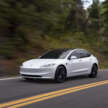
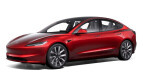
Now on to the not-so-good news – what’s been cut. Starting with the Model 3 Standard, not much has been changed over the regular variants, which have now been renamed Premium. On the outside, the 18-inch wheels gain a new Prismata fully-covered design (these are the rollers that were teased previously), although buyers can opt for larger 19-inch Nova alloys, just like on any other non-Performance Model 3. The bumpers, LED headlights (replete with adaptive high beam) and C-shaped taillights remain untouched.
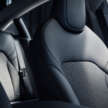
Inside, you no longer get the ambient light strips that were added to the Project Highland facelift, while the powered front seats – which gain a new design – come with part-fabric upholstery and ditch their ventilation function (no heated rear seats, either).
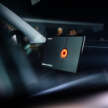
The steering wheel adjustment is also now manually operated, which will at least be welcomed by those irked by the touchscreen-based adjustment on other models. What they won’t welcome is the front seats losing their own discrete physical controls, so the only way to adjust them is through that screen. Power-folding door mirrors and all-around double glazing have also been dropped.


Elsewhere, the centre console now has lidless cupholders and no rear touchscreen, the space there being taken up by manually-adjustable air vents. There is, of course, still a 15.4-inch touchscreen at the front, twin Qi wireless chargers, a panoramic glass roof and seven speakers, but the FM radio has been removed.
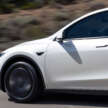
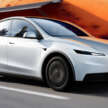
If you thought the Model 3 Standard was austere, the Model Y Standard takes things to a whole new level. As undisguised units showed, the front light bar and split headlights have been replaced by slim one-piece lamps (no adaptive high beam here), and the air intake design has also been simplified into a single wide “mouth”. The 18-inch wheels (with unique Aperture covers) remain, but while Tesla offers an upgrade here too, it’s only to the 19-inch Crossflow rollers fitted as standard on the Premium variants.
Moving to the rear, the Project Juniper facelift’s novel indirect taillight illumination is no more, with just a black bar joining the simple inverted L-shaped lamps. The latter integrate the indicator and reverse light functions, so the rear diffuser now only houses the reflectors.


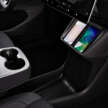
The Model Y Standard’s interior has gone through the same decontenting as the Model 3 Standard, just even more. The centre console, previously housing a lidded storage cubby, has been swapped for a gaping hole underneath the wireless chargers. The cupholders and front armrest remain, situated atop a floating “island”. Even the carpets are now optional.
Somewhat bizarrely, there’s still a glass roof, but Tesla has chosen to cover it with full headlining, eliminating its entire reason for being. The Standard also lacks the HEPA filter and Bioweapon mode on other Model Ys (these are not fitted to any Model 3) and has manual- rather than power-folding rear seats. Not only do the changes make the Standard look very obviously like a bargain-basement model, but all these bespoke panels and componentry will have cost Tesla a pretty penny – which kinda defeats the point, doesn’t it?
Under the skin, both Standard models ride on regular passive dampers, rather than the (still-passive) frequency-selective shocks found elsewhere. Another area where Tesla has taken a buzzsaw to is the driver assists – with no more lane centring assist, these two variants no longer offer Autopilot functionality.


However, autonomous emergency braking, adaptive cruise control, lane keeping assist and blind spot monitoring are still fitted as standard, as are the eight cameras that include a front camera. This being Tesla, you can still opt for the (supervised) Full Self Driving pack, costing US$8,000 (RM33,700) in the US.
The insistence of building all-new parts means that the Model Y Standard is not all that much cheaper than the Premium versions, costing just US$5,000 (RM21,000) less at US$39,990 (RM168,600) – not a lot considering the amount of features you lose in the process.
The US$36,990 (RM155,900) Model 3 Standard, meanwhile, is priced US$5,500 (RM23,200) lower than the Premium RWD (previously called the Long Range RWD), but this figure doesn’t take into account the discontinuation of the old US$38,990 (RM164,400) RWD base model. In other words, the base price of the Model 3 has only dropped by US$2,000 (RM8,400).
All this price-slashing goes only half the way to cover the loss of the US$7,500 (RM31,600) federal tax credit for EVs, which the Trump administration ended last week. Over to you now – would you like to see a cheaper Model 3 and Model Y in Malaysia for less than the current starting prices of RM169,000 and RM195,450 respectively? Let us know in the comments.
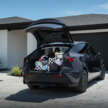
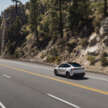
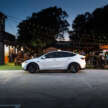
GALLERY: 2026 Tesla Model Y Standard







GALLERY: 2026 Tesla Model 3 Standard





Looking to sell your car? Sell it with Carro.






This is a great copy to compete with others.
No wonder these clowns are getting clobbered by Chinese companies. And Trump is insisting for companies to produce their stuff in America. What a bunch of delusional frogs underneath coconut shells.
So many choices now, who still buy this overpriced yet kosong of a car. Most of Elons products are all show and no go.
elons reusable starship rockets is pretty impressive
as Mike Tee mentioned below its the opposite of “all show no go” this is a kosong-spec low-profile car but with 500 bhp fast enough to smoke a porsche.
Elon is doing his best to devalue Tesla cars…
All for what? Just RM20K price difference… only a few ringgit extra monthly you can get the better models already
All show no go means the car looks mean and fast but does not actually go fast. That is the opposite of Teslas.
Example being Toyota GR86
Oh, like the Civic Type R, Golf Gti MK8 6.4seconds too.
6.4 secs is because fwd traction limited. but their track times are superior to gr86
Tulis banyak banyak tapi tak bagi tahu apa bateri pack. Lithium ion ke Lithium Iron. Kalau Lithium Ion tak guna lah murah macam mana pun
Tesla no longer excite consumers especially when China’s products offers much more at lower prices. Either you price em on par with your features or let go of your market share which is already getting smaller by the way.
How long is Tesla going to keep regurgitating old models with minor changes? Is developing a new model too hard?
Tesla Rahmah
the exterior base model Y appeals to me, really like the split, makes it look more ‘normal’, but the double glazing removed is a huge downgrade. also dont need a panaromic glass roof, just do steel cover can already. all those that they have removed can be retro-fitted without much cost. manual adjustments are better to me. but the cost of reduction should’ve been more significant rather than just 5,500 usd. seems like they still focusing on high margin business model, i expect a price cut mid next year
hello tesla please dont learn from bmw and mercedes