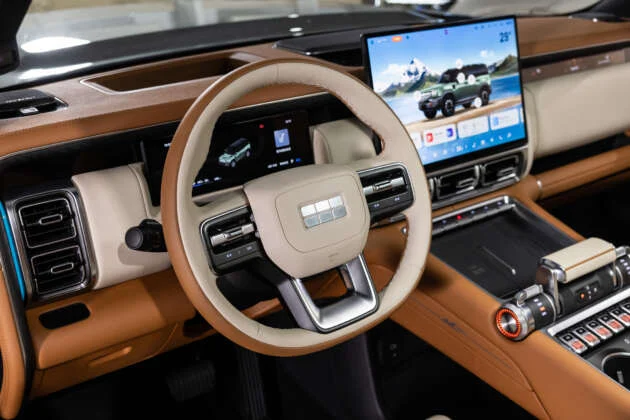





















2026 Proton Saga review - all the good & bad in full detail


Sell your car to Carro, get paid in 24 hours

Latest Stories

  • China’s Neolix cleared for autonomous delivery vehicle trials in Malaysia – a RoboVan showdown with Zelos?

    China’s Neolix cleared for autonomous delivery vehicle trials in Malaysia – a RoboVan showdown with Zelos?

    Chinese autonomous logistics firm Neolix has been named among the first batch of companies approved by the Ministry of Transport (MOT) to begin public-road sandbox testing of driverless delivery vehicles in Malaysia. The approval was granted under the country’s National Regulatory Sandbox (NRS) framework for autonomous delivery vehicles, the Beijing-based company announced.

    The move is notable not just because it puts driverless vans on Malaysian public roads, but because it plants a second major Chinese autonomous-delivery player on local soil – setting Neolix directly against rival Zelos, whose vehicles have been running with Pos Malaysia since January. Two of China’s largest RoboVan makers are now vying for the same Malaysian last-mile market.

    Road trials are expected to begin in the coming weeks in Cyberjaya, Malaysia’s flagship smart city and tech hub just south of Kuala Lumpur. The company says testing will span closed-road, semi-open and public-road environments across Cyberjaya and several other locations, evaluating vehicle performance under real-world urban conditions – think traffic signals, intersections and speed bumps. Testing is set to be carried out in phases throughout the second half of 2026.

    China’s Neolix cleared for autonomous delivery vehicle trials in Malaysia – a RoboVan showdown with Zelos?

    Cyberjaya is home to Malaysia’s official Malaysia Autonomous Vehicle (MyAV) testing route, a roughly 7 km public-road testbed developed jointly by the MOT and Futurise under the National Regulatory Sandbox initiative. The route has been operational since around 2019 to 2020, letting companies validate their autonomous systems on live public roads before seeking wider approvals.

    Companies in the programme must first clear technical and safety evaluations by the MyAV Evaluation Committee before they’re allowed to operate on public roads. The NRS guideline also doesn’t override existing rules – trials still have to comply with the Road Transport Act 1987 and prevailing road traffic regulations.

    Neolix’s Malaysia pilot will be run with a consortium of local and regional partners including Tiong Nam Logistics, Asia Mobiliti (operator of Trek) and MindHub. Together, the group plans to evaluate several use cases – express parcel delivery, campus logistics and on-demand e-commerce fulfilment.

     
  • Cyberattack on Smart Selangor, Flexi Parking apps – Selangor tells local councils not to issue summonses

    Cyberattack on Smart Selangor, Flexi Parking apps – Selangor tells local councils not to issue summonses

    As reported earlier, both Flexi Parking and Smart Selangor Parking mobile applications have been down for the past day or so following a technical disruption, which was apparently caused by a cyberattack that managed to hack into into the operator’s system. With Suasa Efektif continuing to restore use of the applications, the question of summonses as a result of being unable to pay for parking has inevitably cropped up.

    There should be no issue about this in Selangor, as local councils have been requested to hold off on issuing summonses during the temporary shutdown of the Selangor Intelligent Parking (SIP) system, as The Star reports. According to state local government committee chairman Datuk Ng Suee Lim, the cyberattack, which paralysed parking payment platforms across 64 local councils nationwide, forced an immediate temporary shutdown of SIP.

    He said that as repairs were ongoing, the public is expected to face problems paying for parking over the next few days. “Because of this, we have officially requested all affected local councils not to summon motorists during this downtime,” he said, adding that the breach involved data transactions.

    The security breach, which struck over the last 48 hours, disabled digital parking payments within Selangor and several other states utilising the same platform. Ng said that operations were suspended to protect user data integrity and enable a forensic recovery process.

    Asked by reporters about potential lapses in security prioritisation, he said the vulnerability did not stem from the state’s SIP private concessionaire, Rantaian Mesra. “Instead, the breach targeted the centralised Flexi Parking platform, which recently took over the network to manage parking, including major Selangor cities and municipalities like Shah Alam, Subang Jaya and Selayang,” he stated, adding that the transition to the nationwide Flexi Parking system was what resulted in the widespread disruptions.

     
  • Budi Diesel – finance ministry has approved over 30,000 applications for additional monthly fuel quota

    Budi Diesel – finance ministry has approved over 30,000 applications for additional monthly fuel quota

    The ministry of finance (MoF) has approved more than 30,000 applications to increase the Budi Madani Diesel (Budi Diesel) quota from 200 litres to 300 litres a month for eligible high-volume users, reported New Straits Times.

    The quota increase was introduced after considering feedback from small traders, hawkers and service providers operating in rural areas, said finance minister II Datuk Seri Amir Hamzah Azizan.

    “In the implementation of Budi Diesel, we understand that the target groups include small traders, hawkers, and those providing services to rural residents whose usage might be higher. “Therefore, we opened up avenues for them to apply for a higher quota of up to 300 litres. As of yesterday, more than 30,000 people have applied and received approval through the application provided,” Amir Hamzah said.

    Budi Diesel – finance ministry has approved over 30,000 applications for additional monthly fuel quota

    The Budi Diesel subsidised diesel fuel programme began today, and it is expected to benefit around 400,000 private diesel vehicle owners in Peninsular Malaysia and another 300,000 in Sabah, Sarawak and Labuan, the finance ministry has said.

    This expanded significantly upon the previous Budi Diesel Individu, which involved around 180,000 recipients of monthly cash assistance in Peninsular Malaysia to cover part of the cost of purchasing diesel at market prices.

    Meanwhile, the finance ministry announced last Friday (June 26) that eligible individuals may transfer their Budi Diesel quota to a family member; this is how it works. Regarding the transfer of Budi Diesel quota, more than 1,000 people have applied to transfer their quotas to immediate family members, Amir Hamzah said.

     
  • 2026 Mitsubishi Attrage facelift launched in Thailand – new front bumper, ADAS; 1.2L CVT only; from RM69k

    2026 Mitsubishi Attrage facelift launched in Thailand – new front bumper, ADAS; 1.2L CVT only; from RM69k

    The sixth-generation Mitsubishi Attrage has received its third facelift in Thailand as the B-segment sedan continues to live on despite being well over a decade old. The sedan version of the Mirage hatchback first debuted in Thailand in 2013, with the first facelift revealed in 2015 and the second in 2019.

    Visual changes include a revised Dynamic Shield face with more black surfacing as well as a hexagonal-shaped grille. The headlamps also get reshaped to fit the new nose and the alloys wheels are of a new design, but the interior stays pretty much unchanged.

    In Thailand, the Attrage is offered in two variants, with the base option being the Active that retails for 564,000 baht (about RM69k). The top-spec variant is called the Smart, which is priced at 619,000 baht (RM76k).

    Both share the same gasohol-compliant 3A92 naturally-aspirated inline-three engine with 1.2 litres of displacement that serves up 78 PS (76 hp or 57 kW) and 100 Nm of torque. This comes with idling stop technology and is paired exclusively with Mitsubishi’s INVECS III CVT driving the front wheels. Mitsubishi says the 3A92 is a Euro 6-compliant engine and capable of delivering 23.3 km/litre.

    In terms of kit, the Active comes with multi-reflector halogen headlamps, LED taillights, powered side mirrors, piano black and carbon print interior trim, analogue gauges with a multi-info display, manual air-conditioning, a multi-function steering wheel, a seven-inch touchscreen head unit with Android Auto and Apple CarPlay support, fabric seat upholstery, keyless entry as well as 14-inch steel wheels.

    Moving up to the Smart brings upgrades like automatic LED projector headlamps with integrated daytime running lights, side mirror indicators, a leather-wrapped steering wheel and gear knob, cruise control, automatic AC, an auto-dimming rear-view mirror, synthetic leather upholstery, keyless start, a rear-view camera and 15-inch two-tone alloys.

    On the safety front, both variants come with just two airbags in addition to passive systems like ABS, EBD, Active Stability Control, traction control and hill start assist. The Attrage does come with some driver assistance systems, with an ADAS camera being fitted to the Active for forward collision warning and lane departure warning.

    As for the Smart variant, it gets a forward collision mitigation system but this operates at a low-speed range. There’s also a radar sensor for the misacceleration mitigation system that works up to four metres ahead of the vehicle. The Attrage is available with White Diamond, Graphite Gray and Jet Black Mica exterior finishes.

     
  • Volkswagen Golf GTI in Malaysia with Huntsville Adamantium Dark alloys – 50 units only, no extra cost

    Volkswagen Golf GTI in Malaysia with Huntsville Adamantium Dark alloys – 50 units only, no extra cost

    To celebrate the Golf GTI’s golden jubilee, Volkswagen Malaysia is introducing limited-edition 18-inch five-spoke Huntsville Adamantium Dark alloys for just 50 new units of the hot hatch at no extra cost, offering a slightly clearer view of the red callipers than the standard Richmond turbines.

    The facelifted Mk8.5 Golf GTI was launched in Malaysia in November. It’s locally assembled (CKD) in Pekan, Pahang, and the current RRP is RM255,990, inclusive of the Volkswagen Assurance Package (VAP) five-year unlimited-mileage warranty and free service.

    You get a 265 PS/370 Nm 2.0 litre EA888 turbo four-cylinder engine, a seven-speed wet-clutch DSG, a 5.9-second 0-100 km/h time, variable-ratio steering, an XDS electronic front diff lock, adaptive dampers and a lot more – read our launch report for the full lowdown.

    Volkswagen Golf GTI Mk8.5 with Huntsville Adamantium Dark alloys

    Volkswagen Golf GTI Mk8.5 Malaysian launch

     
  • BMW Clubhouse in Malaysia, July 17 to 19 – M3 CS Touring, M2 CS to be launched this month?

    BMW Clubhouse in Malaysia, July 17 to 19 – M3 CS Touring, M2 CS to be launched this month?

    Every year, BMW Group Malaysia holds a brand showcase to launch its new models, with last year’s MY BMW World hosting the local debut of the latest 2 Series Gran Coupé. This year will see the BMW Clubhouse take place on July 17 to 19 at Factory 19 in Petaling Jaya – and it looks like this time there will be far more exciting stuff that will be introduced here.

    The company released a teaser video on social media, and while the car is blurred out, we can just about make out the M3 LCI‘s “fanged” headlights. Also visible are the cross-spoke alloy wheels (19 inches at the front, 20 inches at the rear) that are exclusive to the M3 CS and…hang on a minute – a wagon body?

    Yes, we could be looking at the M3 CS Touring being launched in Malaysia. It’s practically unheard of for hardcore CS and CSL models to be brought in through official means, let alone a longroof one. Such is the low demand for wagons that even regular non-M models are only available via indent order, so something like this should be celebrated.

    In case you need a refresher, the CS (short for Competition Sport) is a more focused version of the already-wild M3 Touring. A mild lightweighting effort that adds a vented carbon fibre bonnet, a pared-back carbon centre console and standard-fit M Carbon bucket seats result in a 15 kg weight saving over the “standard” model, and there’s also an aggressive front splitter, a more open grille and a smattering of other carbon bits.

    The S58 3.0 litre twin-turbo straight-six has also been breathed on the produce an extra 20 PS over stock, at 550 PS and 650 Nm of torque. With the Touring’s standard eight-speed ZF auto and an M xDrive all-wheel drive system, the CS is able to sprint from zero to 100 km/h a tenth of a second quicker at 3.5 seconds, while its top speed with the M Driver’s Package is some 20 km/h higher at 300 km/h.

    Additionally, the car gains new engine mounts and retuned steering and adaptive suspension for even sharper handling. Of course, the CS Touring won’t come cheap, not when the M3 Competition sedan with M xDrive already starts from RM847,800.

    Another teaser, this time posted on LinkedIn of all places, shows a variety of cars that include an M2 CS, as denoted by those cross-spoke wheels and gaping kidney grilles. The same CS treatment applies here too, with carbon components inside and out (including a ducktail boot lid) slashing 30 kg from the kerb weight, while the fettled suspension drops the ride height by a not-insignificant 30 mm.

    The S58 has been slightly defanged for the smaller coupé, but it still makes 530 PS and an unchanged 650 Nm, 50 PS and 50 Nm more than the base M2. Driving only the rear wheels, it nevertheless manages to push the CS to 100 km/h in 3.8 seconds – two tenths quicker – on its way to a 17 km/h higher M Driver’s Package top speed of 302 km/h. Again, expect a healthy price increase over the RM656,800 regular M2.

    New non-M cars and variants are also promised, although we don’t yet know what these are. The aforementioned LinkedIn teaser also showed the standard 3 Series, X7, iX1, 2 Series Gran Coupé and iX, so there may be new variants of these cars being launched at the Clubhouse. The event, BMW Group Malaysia says, will offer buyers the “power of choice” by showcasing its “technology openness” with electric, plug-in hybrid and internal combustion models.

    GALLERY: BMW M3 CS Touring


    GALLERY: BMW M2 CS

     
  • 2026 BYD Atto 3 facelift full gallery in Malaysia – RM126k FWD, or RM139k RWD with 800V architecture?

    2026 BYD Atto 3 facelift full gallery in Malaysia – RM126k FWD, or RM139k RWD with 800V architecture?

    The 2026 BYD Atto 3 facelift is off to a good start. With 1,000 orders collected in just 10 days since its June 5 launch, BYD Sime Motors could even proudly say in a release that history had repeated itself – the model was for a long time Malaysia’s best-selling EV, with over 12,000 units sold.

    By far the most special thing about this facelift is that you get to choose between front- (FWD) and rear-wheel drive (RWD) on the same model! The only other example we can think of in the world of cars (besides vans like the Mercedes-Benz Vito, which had FWD and RWD options) is the Rover 75/MG ZT, and that was only available in Malaysia as a FWD car, so this is a first for the country.

    Fork out RM125,800 nett and you’ll get the FWD Ultra, which has pretty much the same mechanicals as before (204 PS/310 Nm, 0-100 km/h in 7.3 seconds, 60.48-kWh Blade LFP battery, 420 km WLTP). However, it now charges faster – peak DC has soared from 88 to 110 kW, so you can get from 30-80% in 30 minutes instead of 40. Peak AC remains at 7 kW, though.

    For RM138,800 nett, you’ll be a RWD Premium owner. This guy has a 313 PS/380 Nm rear motor, a 5.5-second century sprint time, a 180 km/h top speed, a 101-litre frunk, a 74.88-kWh battery for 510 km WLTP, 800-volt architecture, 220 kW DC (10-80% in 25 minutes) and 11 kW AC (full charge in eight hours) charging, plus new dual-jointed MacPherson strut front and five-link (previously four) rear suspension.

    Outwardly, both variants look similar, brandishing sportier front and rear bumpers with body-coloured ‘tusks’, cascading triangular tail lamp graphics and a new tailgate spoiler incorporating a third brake lamp shaped like the pause symbol. The D-pillars have also been made sleeker with new rear quarter light windows and the ditching of the old car’s ‘scales’.

    The front passenger door now has a keyless entry button – the pre-facelift didn’t have this. By the way, are we the only ones who think the cheaper variant’s two-tone alloys (above left) look more premium than the Premium’s (above right)?

    Inside, the Atto 3 has dispensed with much of its eccentric fitness- and muscle-inspired touches, including the ribbed dashboard and door panels. They’re now all smooth with classy stitching, although the pull-back door openers and the door pocket ‘guitar strings’ remain. The 15.6-inch touch-screen no longer rotates, and an 8.8-inch instrument panel replaces the previous five-incher.

    You’ll also see the steering wheel from the Atto 2 (with a less ornate design), and a new column gear selector (no more kettlebell-like gear lever on the centre console) allows the inclusion of twin phone holders, one of which houses a faster 50-watt Qi wireless charger with integrated cooling. By the way, the standard floor mats are the carpets seen on the Premium version here and not the Ultra’s rubber mats.

    Thinking of buying one? Read our buyer’s guide. You can also read our full launch report to learn more about the 2026 BYD Atto 3 facelift. But if for you a picture paints a thousand words, there are no fewer than 366 of them below – knock yourself out!

    2026 BYD Atto 3 facelift Ultra and Premium

    2026 BYD Atto 3 facelift Ultra

    2026 BYD Atto 3 facelift Premium

     
  • Permanent closure of Jalan Ampang’s Thai embassy traffic light junction from today, divider will be built

    Permanent closure of Jalan Ampang’s Thai embassy traffic light junction from today, divider will be built
    Click to enlarge

    Ampang Hilir residents and those who use Jalan Ampang, take note. DBKL has announced the permanent closure of the traffic light intersection on Jalan Ampang, where the Royal Thai Embassy and Lorong Ampang 2 is. The closure is effective today, July 1.

    The city council says that the closure of the traffic light intersection is part of an upgrade project of the Jalan Ampang stretch from Jalan Tun Razak to the MRR2. The aim is to improve the road network, safety of motorists and also to smoothen traffic flow on this major corridor.

    This 3.2-km upgrade project involves ‘more systematic infrastructure’ including the setting up of road dividers, a four-lane two-way road, pedestrian walkways that are safer and more comfortable, and upgraded lighting.

    At the Royal Thai Embassy location, a divider will put in place. DBKL says that this development is expected to reduce ‘traffic weaving’ and improve the overall traffic flow on Jalan Ampang.

    So, if your route is now blocked, make a U-turn at the huge Jalan Ampang – Jalan Tun Razak junction, or at Jalan Ampang Hilir. Not too much trouble as the roads in the area are all connected; it’s just a matter of getting used to the new system. Drive safe.

     
  • Budi95 petrol, Budi Diesel subsidy spending by Malaysia to reach RM40 billion this year – PM Anwar

    Budi95 petrol, Budi Diesel subsidy spending by Malaysia to reach RM40 billion this year – PM Anwar

    The Malaysian government’s spending on petrol and diesel fuel subsidies will approach RM40 billion this year, or more than double the RM15 billion that has been allocated under Budget 2026, said prime minister Datuk Seri Anwar Ibrahim, reported The Star.

    Anwar, who is also finance minister of Malaysia, said that the government has spent nearly RM800 million a month on diesel and RON 95 petrol subsidies in January and February, and that figure rose sharply to around RM5 billion a month in March and April, the report wrote.

    “If current market prices persist, the government is expected to spend close to RM40 billion to subsidise petroleum products for 2026,” Anwar said in a written parliamentary reply to Salamiah Mohd Nor (PN-Temerloh) who asked the finance ministry to state the latest allocation for petrol and diesel subsidies, reported The Star.

    The increase in subsidy allocation had allowed the government to continue offering RON 95 petrol at the present subsidised rate of RM1.99 per litre, said the prime minister, adding that Malaysia’s petroleum supply remains stable and sufficient, the report wrote.

    Last month, the Malaysian government’s spending was projected to drop to RM2 billion and RM1.5 billion a month to subsidise RON 95 petrol and diesel respectively for a total of RM3.5 billion a month, following a slight drop in global Brent crude pricing. This followed a peak of RM7.5 billion a month in April.

     
  • Tesla Malaysia mantains pricing as MITI’s July 1 CBU EV RM200k CIF, 180 kW motor power ruling kicks in

    July is here, and with it comes the new MITI ruling for fully imported (CBU) electric vehicles that we’ve been tracking since May. From today, July 1, 2026, CBU EVs brought into Malaysia need to clear two hurdles – a minimum CIF (cost, insurance and freight) value of RM200,000, and a minimum power output of 180 kW, equivalent to 245 PS or 241 hp. Ready stock and cars already in transit are exempted.

    In practice, that CIF floor pushes the effective entry price of a compliant CBU EV with a RM200k CIF to around RM300,000 once import duty, excise duty and SST are stacked on top, but we suppose someone could declare a car that is intended for cheaper sale at RM200k CIF and just pay more tax on it.

    Naturally, all eyes have been on Tesla. Every Tesla sold here is a CBU import from Giga Shanghai, and the entire local line-up sits below RM300,000. That fuelled plenty of speculation over the past few weeks that Tesla would be forced into a hefty price hike, or would have to drop its more affordable variants altogether, the moment the calendar flipped to July.

    Tesla Malaysia prices from July 1 2026

    Tesla Malaysia mantains pricing as MITI’s July 1 CBU EV RM200k CIF, 180 kW motor power ruling kicks in

    Well, the calendar has flipped – and as of this morning, Tesla Malaysia’s order pages show no price increase whatsoever. New orders are going through at exactly the same prices that have been in place for months.

    Model 3 – unchanged

    • Model 3 Rear-Wheel Drive (Standard) – RM147,600
    • Model 3 Premium Rear-Wheel Drive – RM169,000
    • Model 3 Premium Long Range Rear-Wheel Drive – RM185,000
    • Model 3 Performance All-Wheel Drive – RM229,000

    Model Y – unchanged

    • Model Y Premium Rear-Wheel Drive – RM195,450
    • Model Y Premium Long Range Rear-Wheel Drive – RM216,450
    • Model Y Premium Long Range All-Wheel Drive – RM242,450
    • Model Y L Premium All-Wheel Drive – RM260,000

    The entry point is still the “Tesla Rahmah” Model 3 Standard RWD at RM147,600 – less than half the roughly RM300k floor the new ruling implies for CBU EVs.

    Tesla doesn’t operate through the usual franchise AP route – it’s the sole member of MITI’s BEV Global Leaders Programme, which came with its own set of obligations (Supercharger rollout, local investment, a Cyberjaya presence, and so on) in exchange for market access without a Bumiputera equity partner.

    The July 1 CIF-and-power ruling was issued to franchise AP holders, and Tesla, being outside that framework, appears to fall outside its scope too – going by the fact that nothing has moved on pricing today.

    A few caveats before anyone celebrates too hard – none of these has been confirmed in black and white and it’s just our interpretation of what has happened. But for anyone placing an order today, the practical takeaway is simple – the feared July price jump hasn’t materialised.

    FSD one-time purchase is gone – “subscription coming soon”

    Tesla Malaysia mantains pricing as MITI’s July 1 CBU EV RM200k CIF, 180 kW motor power ruling kicks in

    There is one change on the order page, though it isn’t a pricing one – and it’s something we flagged last month. The one-time purchase option for Full Self-Driving (FSD) Capability has disappeared.

    As previously reported, Tesla Malaysia told customers that the RM32,000 outright FSD purchase would only be available until June 30, 2026, after which the feature would move to a subscription model – mirroring what Tesla has already done in the US, Europe and other regional markets. True to that notice, the one-time FSD option is no longer on the configurator as of today.

    In its place, the Autopilot Packages section now reads “Full Self-Driving Subscription coming soon” at the top. Below that, the only add-on you can actually buy right now is Enhanced Autopilot at RM16,000, which bundles Basic Autopilot plus driver-initiated assisted driving from highway on-ramp to off-ramp, lane changes and overtaking, along with Autopark and Dumb Summon (Smart Summon is noted as coming in a future update, pending development and regulatory approval).

    Basic Autopilot – Autosteer and traffic-aware cruise control – remains included as standard on every car.

     
  • Audi A4 to return as an EV in 2028, according to report – built on VW Group’s SSP with Radical Next styling

    Audi A4 to return as an EV in 2028, according to report – built on VW Group’s SSP with Radical Next styling

    Audi is planning to bring back the A4 as a fully electric e-tron model in 2028 to do battle against BMW’s i3 as well as Mercedes-Benz’s C-Class Electric, reports Australia’s GoAuto.

    Speaking to Audi’s chief technical officer Rouven Mohr, the A4 e-tron is set to be one of the brand’s first volume models to combine the Volkswagen Group’s Scalable Systems Platform (SSP), a zonal electric architecture and Audi’s ‘Radical Next’ design language.

    The forthcoming A4 e-tron won’t be the first to show off Audi’s new design direction because that honour goes to the limited-run Nuvolari, with deliveries of the flagship sports car set to commence in 2027. A production version of the Concept C that debuted ‘Radical Next’ is also said to arrive before the A4 returns as an electric vehicle (EV) in 2028.

    To go along with the radical new exterior, Audi is also redesigning its interiors with significant improvement in material quality in mind. Mohr also stated less emphasise on screens in favour of bringing back more physical controls.

    The return of the A4 could see internal combustion engine (ICE) versions of the A5, which was first introduced as the A4’s replacement, be renamed to ‘A4’ when the e-tron version arrives. This is to create a sense of unification within the range, with a substantial facelift possibly in the works for the A5 to bring both it and the returning A4 visually in line.

     
  • Boon Siew Honda opens new Sales Headquarters in Kota Damansara – one integrated facility

    Boon Siew Honda opens new Sales Headquarters in Kota Damansara – one integrated facility

    Honda motorcycle distributors for Malaysia, Boon Siew Honda, has opened a new Sales Headquarters. Located in Kota Damansara, the new headquarters is a three-storey facility with sales, marketing, and after-sales parts and services spread across 650 square meters.

    Serving the central region of Peninsular Malaysia, the new building has two dedicated training rooms and a full-fledged technical centre for training staff and dealers. This centralisation of operations is a first for Boon Siew Honda, and facilitates co-ordination and communication between departments.

    There are also dedicated workspaces, meeting rooms, and a collaboration space for work on campaign planning and media engagement, along with dealer development and after-sales support. Locating the Sales Headquarters in Kota Damansara also positions Boon Siew Honda’s leadership teams in immediate proximity to its business and industry partners.

    “The three teams inside this building talk to each other every day. Now they can do it in the same corridor rather than across a phone call. That is not a small thing when the pace of what we do demands that kind of speed,” said Boon Siew Honda’s Kunitomo Asano, Boon Siew Honda’s Managing Director and Chief Executive Officer.

    The Kota Damansara Sales Headquarters is also a dedicated warranty parts support point for Boon Siew Honda’s authorised dealer network. The facility is located in Taman Sains Selangor, Kota Damansara, with operating hours Monday to Friday from 9.00 a.m. to 5.00 p.m.

     
  • Smart Selangor, Flexi Parking mobile payment apps reportedly hacked, system restoration still in progress

    Smart Selangor, Flexi Parking mobile payment apps reportedly hacked, system restoration still in progress

    If you tried to pay for parking with the Flexi Parking or Smart Selangor Parking mobile applications yesterday, you might have found both out for the count. This, according their operator Suasa Efektif, was due to technical disruptions. It apologised to users, adding that its technical team was working to restore use of the applications while conducting thorough checks on its system, as FMT reports.

    The report added that the outage to the Flexi Parking system also affected parking payments in Tanah Merah, Kelantan, and Seremban, Negeri Sembilan. Meanwhile, both Petaling Jaya and Subang Jaya city councils indicated that the disruption had also affected the JomParking app and the parking payment features under Touch ‘n Go eWallet, Setel and NINE.

    While no reasons for the service disruption were mentioned, software solutions provider Gotchaa Lab indicated in a blog post that Flexi Parking had been hacked over the weekend, with the hackers taking advantage of two old, preventable bugs to gain access into the system.

    In any case, the operator said in updates posted on both Flexi Parking and Smart Selangor Parking Facebook pages that system recovery works were still ongoing, and technical teams were working to ensure the service was restored safely and reliably. A quick check on the Smart Selangor Parking app revealed it to be running, but actual usage capability was not confirmed. Have you tried accessing either of the apps for parking payment, and are they still unavailable?

     
  • Green Energy Tariff – how to subscribe to GET to avoid paying AFA in your TNB electricity bill

    Green Energy Tariff – how to subscribe to GET to avoid paying AFA in your TNB electricity bill

    With the Automatic Fuel Adjustment (AFA) rate climbing to +3.59 sen/kWh for July 2026 – and TNB’s own three-month outlook projecting it to more than double to over +8 sen/kWh by September – you might be wondering whether there’s a legitimate way to escape the surcharge entirely.

    There is: it’s called the Green Electricity Tariff (GET), and subscribers are exempted from AFA on the green energy units they use. Here’s how GET works, whether it actually makes financial sense right now, and how to apply.

    What is the Green Electricity Tariff (GET)?

    Green Energy Tariff – how to subscribe to GET to avoid paying AFA in your TNB electricity bill

    GET is a government-introduced, subscription-based programme that lets any TNB customer – residential or business – buy low-carbon electricity from the grid without having to install their own solar rooftop or other renewable energy system.

    The renewable energy behind GET comes from solar plants under the Large-Scale Solar (LSS) programme, TNB’s hydropower stations, and other renewable plants approved by the Energy Commission.

    In return, subscribers get three things:

    An AFA exemption

    Customers who subscribe to GET retain the AFA exemption for the actual green energy units they consume. AFA replaced the old Imbalance Cost Pass-Through (ICPT) from July 1, 2025, and GET subscribers who were previously ICPT-exempt carry that exemption over to AFA. In plain terms, the units you cover with GET blocks don’t get hit by the monthly AFA surcharge.

    1.6% KWTBB (Kumpulan Wang Tenaga Boleh Baharu exaemption

    GET subscribers are also exempt from the 1.6% Kumpulan Wang Tenaga Boleh Baharu (KWTBB) renewable energy fund levy on the actual green energy units consumed. This is a second saving on top of the AFA exemption. Note that KWTBB is charged as 1.6% of the bill rather than a flat sen/kWh figure, and doesn’t apply to domestic users consuming 300 kWh or less a month in the first place.

    Malaysia Renewable Energy Certificates (mRECs)

    At the end of each calendar year, subscribers receive mRECs certifying the green electricity they consumed – useful for companies chasing ESG or carbon-reduction targets. Note that this is a bundled mREC programme, so you can’t pick the specific renewable source.

    Crucially, GET isn’t a discount on your normal bill. You still pay the standard tariff for your monthly consumption, plus a GET premium on top. The trade-off is that the premium is fixed and known, whereas AFA moves every month.

    How much does GET cost?

    Following the July 1, 2025 tariff restructuring, the old category-based premium rates (10 sen/kWh for domestic and low-voltage, 20 sen/kWh for medium/high-voltage) were scrapped in favour of a single-tier structure with premiums cut by up to 80%. The longer you commit, the cheaper the rate:

    • 1-year subscription: 5 sen/kWh
    • 2-year subscription: 4 sen/kWh
    • 3-year subscription: 3 sen/kWh

    These rates apply to all customer categories under the new single-tier structure.

    Does it actually make sense to switch to GET?

    Green Energy Tariff – how to subscribe to GET to avoid paying AFA in your TNB electricity bill

    This is the important part. For most of 2025, the answer was a clear no – AFA was deeply negative (a rebate), bottoming out at -8.91 sen/kWh in November 2025. Paying a GET premium to avoid a charge that was actually paying money back to consumers made no sense.

    That calculus has flipped. Here’s the math at current rates:

    July 2026 AFA is +3.59 sen/kWh. A three-year GET subscriber pays a 3 sen/kWh premium but avoids that 3.59 sen surcharge – a net saving of around 0.59 sen/kWh. This is the first month the cheapest GET rate has undercut AFA.

    If TNB’s projection holds and AFA hits +8.94 sen/kWh in September 2026, a three-year subscriber avoiding an 8.94 sen surcharge while paying a 3 sen premium would be roughly 5.94 sen/kWh ahead.

    So on paper, GET looks compelling right now. But there’s a significant catch: GET is a one-to-three-year lock-in, and you’re betting that AFA stays high for the entire period.

    AFA is volatile and directly tied to global coal and gas prices. If fuel prices fall and AFA swings back into rebate territory – as it did for most of last year – GET subscribers get the worst of both worlds: they keep paying the fixed premium and forgo the AFA rebate that non-subscribers enjoy.

    You also can’t simply exit; terminating mid-subscription incurs a 2 sen/kWh penalty on the remaining balance.

    There’s also two more things to keep in mind. Low-usage households shouldn’t bother, as AFA is already waived for total consumption of 600 kWh and below per month, so there’s nothing to save by subscribing to GET. GET only makes economic sense for higher-consumption households and businesses that actually pay AFA. And unlike AFA, which can be positive or negative, the GET premium is always a cost.

    In short: at July 2026 rates and given the rising outlook, GET is – for the first time – a break-even-to-favourable proposition for higher users who believe fuel prices will stay elevated. But unless you specifically want your electricity consumption to be from green sources, it’s a hedge, not a guaranteed win. Anyone weighing it up should treat it as a multi-year bet on fuel prices rather than a guaranteed monthly saving.

    Who is eligible?

    Green Energy Tariff – how to subscribe to GET to avoid paying AFA in your TNB electricity bill

    GET is open to all TNB consumers. You subscribe in blocks of 100 kWh for residential customers, and blocks of 1,000 kWh for non-residential. The minimum is one block, and you can subscribe up to 130% of your average monthly consumption, as determined by TNB.

    Total subscriptions across all customers are capped by the published GET quota, and TNB reserves the right to review your subscription if your actual consumption falls well below what you’ve subscribed for, to keep the limited quota fairly shared.

    How to apply for GET, step by step

    1. Log in to the myTNB portal at mytnb.com.my. If you don’t have an account, register first.
    2. Add your contract account to the portal if it isn’t already linked.
    3. Navigate to the GET subscription section and start a new subscription.
    4. Choose your number of blocks – minimum one block (100 kWh residential / 1,000 kWh non-residential), up to 130% of your average monthly usage.
    5. Select your subscription period – 1, 2 or 3 years, which fixes your premium rate at 5, 4 or 3 sen/kWh respectively. Longer terms are cheaper but lock you in for longer.
    6. Submit and enter the GET agreement. Applications are processed on a first-come, first-served basis, subject to TNB’s assessment and quota availability, and are typically reviewed within about five working days. Once approved, you’ll enter into a GET contract with TNB.

    Your existing TNB meter is used to measure consumption, so there’s no new hardware to install. A full step by step guide has been published by TNB.

    GET won’t suit everyone – and for low-usage households it makes no sense at all – but for higher-consumption homes and businesses staring down an AFA rate that’s projected to keep climbing, it’s now a genuine option worth running the numbers on.

     
  • Porsche takes over Pavilion Bukit Jalil – experience the enhanced 2026 Cayenne and more this July 1 to 5!

    Porsche takes over Pavilion Bukit Jalil – experience the enhanced 2026 Cayenne and more this July 1 to 5!

    Do you live, work or spend time in Bukit Jalil? Well, you are in luck, because Porsche is taking over the Centre Court of Pavilion Bukit Jalil this week, July 1 to 5. Get up close and personal with your dream Porsche with SUVs, all-electric models and even two-door sports cars on display at the roadshow.

    Among the cars on display will be the enhanced 2026 Porsche Cayenne, available as the practical yet dynamic SUV model and the sporty Cayenne S E-Hybrid Coupé with exhilarating electrically-assisted performance. Both now come standard with 21-inch RS Spyder Design wheels for an even sharper look, as well as ten years of Porsche Connect online services, up from two years previously. The Cayenne is also now available in a bold new colour, Arctic Grey.

    Porsche takes over Pavilion Bukit Jalil – experience the enhanced 2026 Cayenne and more this July 1 to 5!

    Those looking for a more attainable entry into Porsche ownership can opt for Porsche Approved pre-owned vehicles. The team of Porsche experts present will be able to walk you through your available options. You will also be able to purchase new threads to match the ride with a selection of Porsche Lifestyle merchandise on offer, now with up to 30% off selected items.

    Motoring enthusiasts will also have something to look forward to this weekend. Immerse yourself in the action from Bangsaen, Thailand as Round 7 and 8 of the 2026 Porsche Carrera Cup Asia will be broadcast live, right at the showcase. Cheer on Team Porsche Malaysia next to the Porsche 718 Cayman GT4 RS Clubsport, decked out in the exact blue, orange and white livery raced by the team and driver Naquib Azlan.

    Porsche takes over Pavilion Bukit Jalil – experience the enhanced 2026 Cayenne and more this July 1 to 5!

    Speaking of Naquib, the 26-year-old racer had his start in sim racing, winning the 2025 Porsche Esports Sprint Challenge Malaysia in the Driven Dreamers category. Now, you will be be able to watch the next budding talent battle it out in the competition that he conquered last year, with Pavilion Bukit Jalil hosting the final qualifying round for the 2026 edition. The top ten racers of each category will vie for a spot in the final races, happening at the next Porsche Carrera Cup Asia round in Sepang.

    So, whether you are looking for a new Porsche, a Porsche Approved pre-owned car, or simply a place to satisfy your fascination of all things Porsche, head over to Pavilion Bukit Jalil this July 1 to 5 from 10 am to 10 pm. For more information, visit the official Porsche Malaysia website.

     
  • ST sets TNB AFA for July 2026 at +3.59 sen/kWh

    ST sets TNB AFA for July 2026 at +3.59 sen/kWh

    The Energy Commission’s (ST) Automatic Fuel Adjustment (AFA) rate for July 2026 has been set at +3.59 sen per kWh, which is up from +2.59 sen/kWh in June 2026.

    Just like the case in June 2026, the real AFA is actually 5.55 sen/kWh (RM583 million) but Kumpulan Wang Industri Elektrik (KWIE) funds have covered 35% of the increased cost (i.e. RM206 million, equivalent to 1.96 sen/kWh). This is the third month that AFA has been positive, and also the third month that KWIE has subsidised the AFA surcharge.

    Here’s a list of the monthly AFA rates so far and a forecast for the next 3 months:

    • July 2025: 0.00 sen/kWh
    • August 2025: -1.45 sen/kWh
    • September 2025: -1.10 sen/kWh
    • October 2025: -6.50 sen/kWh
    • November 2025: -8.91 sen/kWh
    • December 2025: -6.42 sen/kWh
    • January 2026: -4.99 sen/kWh
    • February 2026: -2.77 sen/kWh
    • March 2026: -2.15 sen/kWh
    • April 2026: -0.47 sen/kWh
    • May 2026: +1.38 sen/kWh
    • June 2026: +2.59 sen/kWh
    • July 2026: +3.59 sen/kWh

    ST sets TNB AFA for July 2026 at +3.59 sen/kWh

    AFA outlook from August to October 2026 is projected to range from +8.04 sen/kWh to +8.94 sen/kWh – more than double the July rate, so brace for higher bills in the months ahead.

    However, do note that the eventual actual AFA paid by the consumer might be lower than the forecasted amount because of the KWIE subsidy that has been historically applied whenever it is positive.

    What has contributed to a rising AFA?

    ST sets TNB AFA for July 2026 at +3.59 sen/kWh

    According to Single Buyer’s website, fuel prices in July 2026 are higher than the baseline prices used in tariff setting, resulting in an overall increase in generation costs.

    Coal price for July 2026 is recorded at 122.37 USD/MT (Base price: 97 USD/MT), while Tier 2 gas price for July is recorded higher than the Base price: 75.58 RM/mmBTU (Base price: 46 RM/mmBTU). Tier 1 gas, on the other hand, is actually below base at 27.00 RM/mmBTU (Base price: 35 RM/mmBTU).

    A stronger ringgit is softening the blow somewhat. With the July 2026 exchange rate at 3.9455 RM/USD (against a base rate of 4.307 RM/USD), that USD-denominated coal price of 122.37 USD/MT translates to just 22.12 RM/mmBTU – not far above the 19.14 RM/mmBTU base – so forex is partly offsetting the higher fuel cost.

    What is Automatic Fuel Adjustment (AFA)?

    AFA is a component of your electricity bill. To recap, AFA replaces the previous Imbalance Cost Pass-Through (ICPT) and is automatically calculated as either a surcharge or discount of up to 3 sen/kWh depending on fuel prices – this is revised monthly, with any larger changes (beyond 3 sen) requiring cabinet approval.

    Introduced as part of the Electricity Tariff Restructuring that took effect from July 1, 2025, the AFA is one of five components or ‘charges’ used to calculate your electricity bill:

    • Generation charge: 27.03 sen/kWh for total consumption of 1,500 kWh and below per month or 37.03 sen/kWh for total consumption more than 1,500 kWh per month. This covers the actual cost of generating electricity from power plants.
    • Capacity charge: 4.55 sen/kWh. This covers the cost of maintaining sufficient electricity supply capacity.
    • Network charge: 12.85 sen/kWh. This covers the cost of operating and maintaining the grid and the local network to deliver electricity.
    • Retail charge: RM10/month; waived for total consumption of 600 kWh and below a month. This is a fixed cost for metering, billing and customer service.
    • AFA rate: +1.38 sen/kWh for the month of May 2026; waived for total consumption of 600 kWh and below a month.

    You can use our TNB Bill Calculator tool to get a rough estimate on how much your electricity bill will be for the month. Essentially, if you use over 1,500 kWh a month, you add the generation, capacity and network charges (totalling 54.43 sen/kWh) to retail charge (RM10) and the AFA rate (-0.47 sen/kWh for April 2026; negative number, so it’s a discount).

    Alternatively, if your usage is below 1,500 kWh a month, it’s 44.43 sen/kWh plus the retail charge and AFA rate. For total consumption of 600 kWh and below a month, it would only be 44.43 sen/kWh – retail and AFA charges are waived.

    Domestic consumers who use less than 1,000 kWh a month can enjoy a discount called ‘Insentif Cekap Tenaga’ or ‘Energy Efficiency Incentive’. The discount provided is relative to consumption (higher usage, lower incentive), with the maximum discount being 25 sen/kWh.

    Domestic users who have smart meters also have option to enter the Time of Use (ToU) scheme, allowing them to change their electricity usage patterns and take advantage of lower tariff rates during off-peak hours to enjoy savings on their monthly bill.

    The scheme has two time zones, with off-peak timings being from 10pm to 2pm from Monday to Friday and throughout the day (24 hours) for weekends. Peak hours are from 2pm to 10pm on weekdays. Here are the energy charges under this scheme:

    For usage of 1,500 kWh and below per month

    • Peak tariff: 28.52 sen per kWh
    • Off-peak tariff: 24.43 sen per kWh

    For usage above 1,500 kWh per month

    • Peak tariff: 38.52 sen per kWh
    • Off-peak tariff: 34.43 sen per kWh

    Is there a way to escape from paying AFA?

    Yes actually, there are two ways.

    Firstly, you can use use less electricity. AFA is waived for total consumption of 600 kWh and below a month.

    Secondly, there is something called Green Energy Tariff (GET) which you can opt for. This exempts you from AFA. However, GET itself costs 5 sen/kWh if you lock in for a 1 year subscription, 4 sen/kWh for 2 years, and 3 sen/kWh for 3 years, thus it only makes economic sense to subscribe to it if AFA is more than what GET costs across the entire period that you subscribe it for.

     
  • JPJ eBid: BSY and QCX number plates up for bidding

    JPJ has announced that BSY and QCX are the next number plate series to go up for bidding on its online auction platform, JPJ eBid.

    Selangor’s latest running number series is ‘BSY’, and it will open for tender on July 3. The bidding period on JPJeBid is five days, ending 10pm on July 7. As usual, the results will be out the following day. The whole process is online now, as it has been for some time, and bidders will get the good (or bad) news via email.

    Also available on JPJ eBid is the Sarawak series ‘QCX’. The bidding period starts on July 16, and will close at 10pm on July 20. Results will be out the day after the auction closes.

    New car coming soon and want a nice number plate for the new ride? Why not DIY and skip the reseller’s markup and runner fees? If you have never bid for a number yourself, check out our step-by-step guide on how to navigate JPJ eBid and the techniques needed to get your preferred number at “retail price”.

     
  • Budi Diesel – KPDN removes restriction on sale of subsidised diesel in Sabah, Sarawak and Labuan

    Budi Diesel – KPDN removes restriction on sale of subsidised diesel in Sabah, Sarawak and Labuan

    The ministry of domestic trade and cost of living (KPDN) has lifted the directive that restricted the sale of diesel fuel for land transport vehicles in Sabah, Sarawak and Labuan, including the volume limits of 50 litres, 100 litres and 150 litres, effective today, Bernama has reported.

    The revocation of the directive issued in March this year follows the announcement that the price of subsidised diesel fuel will be standardised at the price of RM2.10 per litre effective today, July 1, 2026, said KPDN director-general for enforcement Datuk Azman Adam.

    “All retail licence holders selling petrol or diesel in Sabah, Sarawak and Labuan are advised that the diesel sale restriction directive is no longer in force from that date,” Azman said in a statement, adding that the ministry is confident that the new subsidy mechanism will ensure targeted and efficient distribution of subsidised diesel while facilitating transactions for eligible consumers.

    Budi Diesel – KPDN removes restriction on sale of subsidised diesel in Sabah, Sarawak and Labuan

    Early access to Budi Diesel for eligible private diesel vehicle owners in Peninsular Malaysia began on June 27, when Malaysian citizens with a valid identity card (MyKad) and driving licence (LMM) owning a privately-owned diesel vehicle with a valid road tax (LKM) gained access to diesel at the same RM2.15 per litre price as those in Sabah, Sarawak and Labuan for a short period of time before the July 1 nationwide implementation of RM2.10 per litre diesel.

    The finance ministry said that the Budi Madani portal received more than 18,000 applications for the additional 100 litre subsidised diesel quota as of Sunday, June 28. The diesel fuel subsidy will also be extended to privately-owned diesel vehicles with valid road tax, including vehicles of pick-up and jip body types.

     
  • Budi Diesel begins – 700,000 vehicle owners expected to benefit from RM2.10 per litre subsidised diesel

    Budi Diesel begins – 700,000 vehicle owners expected to benefit from RM2.10 per litre subsidised diesel

    The implementation of the Budi Madani Diesel (Budi Diesel) programme, which began today, is expected to benefit approximately 400,000 private diesel vehicle owners in Peninsular Malaysia and another 300,000 in Sabah, Sarawak and Labuan, said the finance ministry.

    This is a significant expansion of users from the previous Budi Diesel Individu, which involved approximately 180,000 recipients of monthly cash assistance in Peninsular Malaysia to cover part of the cost of purchasing diesel at market prices, it said in a statement released yesterday evening.

    The ministry added that early access for eligible recipients in Peninsular Malaysia, which started on June 27, progressed smoothly, with there being no serious issues reported by subsidy recipients, with the MyKad verification system functioning well.

    Budi Diesel begins – 700,000 vehicle owners expected to benefit from RM2.10 per litre subsidised diesel

    In terms of volume shifted since the early access began, the ministry said that as of noon yesterday (June 30), approximately 80,000 transactions had been recorded, involving the purchase of around 3.2 million litres of subsidised diesel worth almost RM7 million at the early access price of RM2.15 per litre, ahead of the transition today to the designated RM2.10 per litre price under the Budi Diesel programme.

    The ministry reminded eligible owners of diesel-powered pickup trucks and SUVs that that may apply for an additional 100 litres per month through the official Budi Madani portal, subject to the specified conditions. It said that as of 9am on June 30, more than 22,000 applications had been received through the portal for the additional monthly allocation.

    As for the Budi Diesel eligibility transfer for vehicles used by immediate family members, the ministry said that nearly 1,000 transfer applications had been received by the ministry as of 9am yesterday.

     
  • JPJ reminds drivers how to correctly use hazard lights

    JPJ reminds drivers how to correctly use hazard lights

    Here goes the road transport department (JPJ) again with another public reminder, this time to do with hazard lights. Colloquially known in Malaysia as ‘danger lights’, ’emergency lights’ or ‘double signals’, this feature, activated usually by pushing a button with a white double triangle on a bright red background, still sees its fair share of misuse among drivers.

    The primary job of hazard lights is to warn other motorists of, well, hazards. Like a stationary (not parked) vehicle. If your vehicle has broken down and is stranded by the roadside or is involved in an accident that’s rendered it immovable, you turn the hazard lights on to draw attention and make yourself more visible. This lowers the risk of you getting hit by other vehicles inadvertently.

    JPJ reminds drivers how to correctly use hazard lights

    Hazard lights are to be used only when the vehicle is stationary. They may not be used when the vehicle is moving (we’re looking at you, wedding convoys), including when driving in the rain. This is because when the hazard lights are on, your directional indicators (turn signals) do not work, so other motorists will know nothing about your intentions. The increased danger as a result of this far outweighs the perceived higher visibility that comes from using hazard lights in the rain.

    JPJ also says hazard lights are not to be used when “berhenti seketika untuk mengambil atau menurunkan penumpang” (stopping briefly to pick up or drop off passengers), which has us scratching our heads a bit, but perhaps the “di tempat yang tidak dibenarkan” (where it is not allowed) proviso that follows suggests that one should not do that in the first place, hazard lights or not. And of course, the Japanese practice of flashing one’s hazards twice as a thank you gesture is not officially in the Malaysian highway code.


Sell your car to Carro, get paid in 24 hours


Latest Fuel Prices

PETROL
BUDI 95 RM1.99
RON 95 RM3.37 (-0.10)
RON 97 RM4.00 (-0.10)
RON 100 RM6.45
VPR RM7.68
DIESEL
BUDI RM2.10
EURO 5 B10 RM3.97 (-0.10)
EURO 5 B7 RM4.17 (-0.10)
Last Updated Jul 01, 2026

Latest Videos


Tools


Related PaulTan.org Content: Malaysia: Malaysia | 2025 | Tech | Reviews: Reviews | Electric: Electric | News: News