
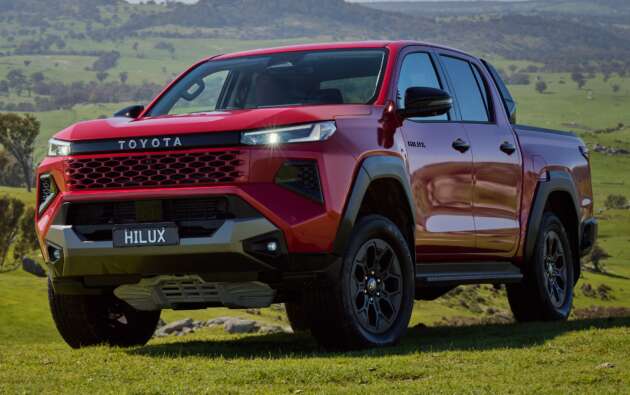
We’ve been seeing leaks and spyshots of this truck for so long that it’s frankly shocking that it hasn’t been officially unveiled yet. But Toyota has at last, finally, pulled the covers off the new ninth-generation Hilux today ahead of the Thai Motor Expo, bearing the likely Thailand-only Travo suffix. This replaces the ever-popular Revo that has been in production for ten years.
The Hilux continues to be built on the Innovative International Multi-purpose Vehicle (IMV) platform that was introduced on the seventh-generation Vigo, retaining the ladder frame, cab and doors but with a significantly redesigned exterior and interior, plus new technologies. Despite its age, the IMV project remains important to Toyota, with new products including the Hilux Champ and the Land Cruiser FJ.
To that end, the Hilux has received substantial mechanical updates that Toyota rather oddly calls Dynamic Cloud. This includes additional body mounting points for increased rigidity, uprated suspension for smoother handling, hydraulic engine mounts and shear-type body mounts to reduce vibration, and a larger steering shaft for greater precision and response.
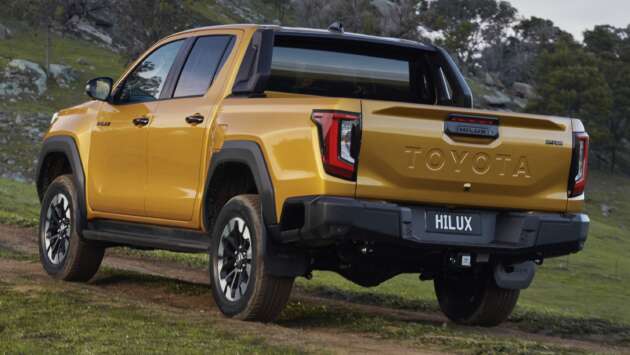
You also now get optional rear disc brakes and a new electric power steering system, the latter already found in 48-volt mild hybrid versions of the Revo. This replaces the old hydraulic setup and allows for the fitment of the latest Toyota Safety Sense 3.0 suite of driver assists, featuring enhanced adaptive cruise control and lane centring assist for Level 2 semi-autonomous driving functionality.
Another feature lifted from the mild hybrid model is the Multi-Terrain System (MTS), a rotary dial with selectable Dirt, Sand, Mud, Rock and Snow drive modes that control throttle and gearbox response. Users also benefit from a Multi-Terrain Monitor with surrounding and underfloor views built into the new 360-degree camera system. Four-wheel drive models now come standard with a rear locking differential.
In Thailand, all Hilux models are now fitted with the 1GD-FTV 2.8 litre four-cylinder diesel, producing 204 PS from 3,000 to 3,400 rpm and 500 Nm of torque between 1,600 to 2,800 rpm. The six-speed manual (capped at 420 Nm) and automatic transmissions have been carried over, as has the mild hybrid system in Europe and Australia that provides 12 PS/65 Nm in electrical assistance.
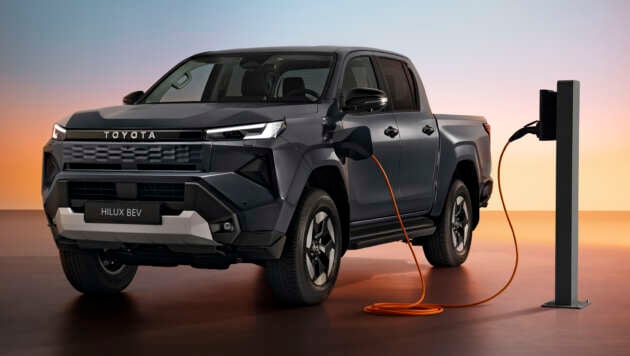
In response to demand in markets such as Europe and the UK, the ninth gen also finally sees the production debut of the full-electric Hilux, sold in Thailand as the Travo-e. This is aimed at pushing the one-tonne pick-up towards the direction of carbon neutrality.
Despite this, the Travo-e retains the Hilux’s trademark worksite and off-road prowess with features such as 500 mm of wheel articulation, 700 mm of maximum water-wading depth and 1,600 kg of towing capacity, although payload capacity is estimated to be a scant 715 kg. As there is a rear motor, the usual solid rear axle has been replaced by a De Dion setup.
Power comes from dual motors producing 112 PS (82 kW) and 205 Nm at the front and 176 PS (129 kW) and 268 Nm at the rear, resulting in a total output of 196 PS (144 kW). The 59.2 kWh battery is rather small for such a heavy vehicle, and the result is a range of just 240 km on the WLTP cycle (315 km NEDC), although the Diamond Shield battery cage does enable it to shrug off damage from rocks or debris. The Travo-e supports up to 125 kWh of DC fast charging and 10 kW of AC charging through its front fender-mounted port.
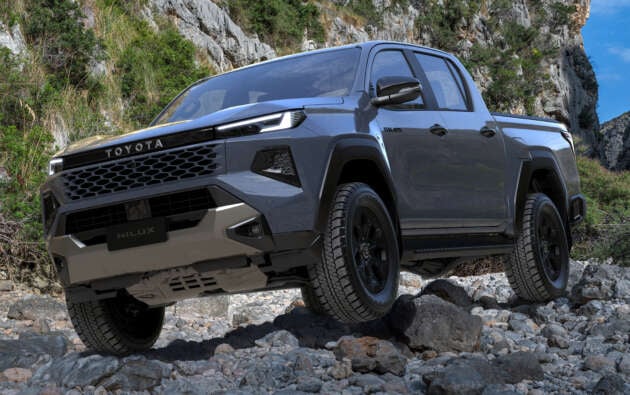
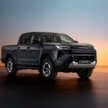
Designed under the concept of “Cyber Sumo”, the new Hilux’s exterior is bang on what the renders and leaked patents suggested, with the new front fascia featuring slim headlights that now feature LED projectors as standard; higher-end variants receive L-shaped daytime running lights as shown in a previous teaser. These are joined together by a black bar embossed with the Toyota script.
Below this sits a large rectangular grille available in either body colour – as per the new RAV4 – or black, flanked by triangular fake inlets. A hexagonal skid plate and plastic surround houses the air intake and available fog lights.
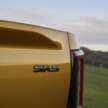
Moving rearwards, you’ll find more prominent fender box flares and more hexagons in the wheel arch trims, while the Revo’s triangular taillights have been flipped upside down to match its segment rivals. The new lamps come with wraparound “tails” and C-shaped graphics on LED versions. There’s also a built-in tailgate spoiler, the stamped Toyota script and steps by the rear bumper to improve access to the bed, the latter similar to the latest Ford Ranger.
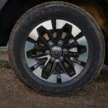
The Travo also debuts a new range-topping Overland trim that replaces the Revo Rocco/Rogue, set apart by a more aggressive front skid plate, mesh bumper corners, black 18-inch cross-spoke alloy wheels, grippier side steps and an integrated rear sports bar with LED lighting. There’s also a tailgate damper to make for a smoother opening.
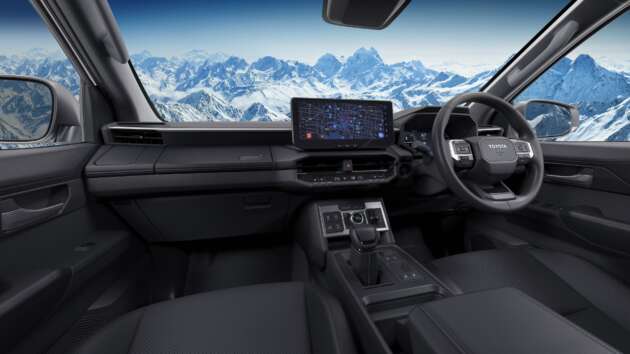
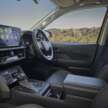
Inside, the revisions are similarly wide-ranging, with an angular dashboard and door cards. The centre console and instrument cluster continue with the hexagonal theme, while the in-car technologies have been updated with seven- and 12.3-inch digital instrument displays and eight- and 12.3-inch infotainment touchscreens. You still get corner cupholders by the air vents, dual gloveboxes and a stitched dash.
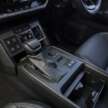
Lower down, you find new push-button digital climate controls (manual knobs are still available) and the MTS knob, plus a new toggle switch for the part-time 4WD and an electronic parking brake on certain models. There are also bits lifted from the Land Cruiser Prado/250, such as the steering wheel with a square airbag boss and Toyota script and a wider, flatter gearlever and stitched boot. The seats have been redesigned for greater ergonomic comfort and are upholstered in either Caretex fabric or SofTex faux leather.

The Hilux is available in Thailand as a 4×4 Single Cab, suicide-doored Smart Cab in 4×2 Prerunner and 4×4 4Trex variants, and Double Cab in Prerunner, 4Trex and Overland versions. Prices range from 767,000 baht (RM98,800) to 1,366,000 baht (RM175,900), with the Travo-e costing a whopping 1,491,000 baht (RM192,000). Only the high-riding version is offered for now – the country’s huge low-rider market is still being served by the outgoing Revo and Hilux Champ.
Outside the Land of Smiles, the Hilux will be launched in Asia starting next year, with Japan receiving the truck in mid-2026. Aside from the electric version, Toyota is also working on a hydrogen fuel cell-powered version for Europe and Oceania, slated to enter production in 2028. Are you excited for the new Hilux? Let us know in the comments.
GALLERY: 2026 Toyota Hilux Rogue, Australia




GALLERY: 2026 Toyota Hilux SR5, Australia





GALLERY: 2026 Toyota Hilux Invincible, Europe





GALLERY: 2026 Toyota Hilux BEV, Europe



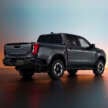





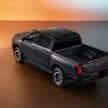
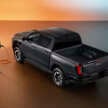
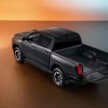


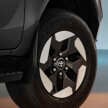
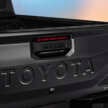

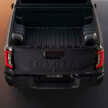
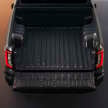









GALLERY: 2026 Toyota Hilux, Japan




Looking to sell your car? Sell it with Carro.

















A Hilux trucks are for construction workers or layman but for 200 thousands riinggit or equals to a top spec crv so as a boss or manager overlooking these workers what should he be driving ? So if a manager only drive a 200k top spec crv so same standard as a construction workers
why does boss limite himself to a hilux ? how about a landcruiser which costs 500k or a G-wagen or landrover which costs over a million?
Boss like to hadiah Hilux dedikasi anak buah tersayang
What a funny joke! Then more than a million pulibc bus for a bus driver, then the boss? Supercar?
Well, this is the segment where the Chinese failed to compete . Otherwise the Japanese toyol wouldn’t priced them to their liking .
Ford and others also not progressive in competing for this sunset market.
JDM kaizen banzai tech produced a truck EV With 240km range.
People do not even border to compete, at least for now. Pick up truck is supposed for work purpose but many Malaysians like to own pick up truck for private use! Because the car owners think that they can do whatever they like, cross the road divider, bully small cars,…..
shut up and take my MONEY!!!
Oh no, current Hilux owners will be modding their Revo to look like this ugly thing.
Lack of competitors now,
so can heavy facelift, no need rebuild chasis for new generation yet,
or still waiting for the Aussie team?
JAC T9 EV rated at 340km WLTP and with better and safer batteries. For EV China Win. For Diesel ICE Japan Win.
When the competitors like Ranger Dmax Triton Navara Collorado aren’t ready,
TNGA-F is not coming yet, maybe a TNGA-F paired with 1.5, 2.0 Super Hybrid EV. Toyota announced earlier new generation drivetrain could drive the future models.
The Hilux is the important model because the platform engine parts interior everything will also be for land cruiser fj and fortuner different body on same frame
The electric version seems pointless with that kind of anaemic range.
kaizen banzai tech produced a truck EV With 240km range.
nanti tengah off road, tiba2 batt kong
as if diesel engine can carry limitless amount of fuel inside
as if normal diesel trucks wont kong offroad
Do watch the vid below before you decide which UTE to choose. Be wise mate!
https://youtu.be/VCXUCCV1oqo
finally rear disc brake…