
Comparison is the thief of joy, as they always say. The Proton Saga has been the prime example of this – as the national carmaker’s first car and its perpetual best-seller with over 2.1 million examples finding buyers, it should be feeling pretty smug about itself. If it weren’t for that meddling Perodua Bezza…
It didn’t use to be this way. Introduced in 1985, the Saga shot to the top of the sales charts and continued to figure near the head of the standings, even as much newer models came to the fore. Even once the seminal Perodua Myvi arrived in 2005 and Perodua stole the sales crown from Proton, the Saga could count on being the sole entry-level sedan on the market, bolstered by an all-new Base Line Model (BLM) in 2008.
All that changed with the arrival of the Bezza in 2016. Smaller on the outside but bigger on the inside, and offering Japanese powertrain technology and near-unshakable resale values, the little four-door proceeded to usurp the Saga as Malaysia’s favourite sedan. Incredibly, despite being mostly unchanged, the Bezza is doing even better now than it did then, becoming the outright best-seller as demand from ride-sharing (i.e. Grab) drivers surged; it now sells over 100,000 units annually.
Now, 40 years on from the beginning, there’s a new Proton Saga, priced from RM37,990 to RM48,990 until December 31. Almost entirely redesigned and loaded with new features – including a more powerful and efficient engine – it’s poised to steal sales from its sworn rival at a time when a replacement for the Bezza still seems a ways away. But is this MC3 overhaul actually good enough to do that? We drive the car to the heights of the Belum rainforest to find out.
Winning the on-paper comparison – for once

For the first time, the new Saga actually enters the comparison game in a favourable position. We’ve written in minute detail about the car multiple times, and for the sake of brevity (this is already a very long review), you can simply read our comprehensive launch report to find out everything you need to know. Suffice it to say, the Saga offers more tech, a longer list of safety equipment and an engine that’s much more powerful than the Bezza – without giving away much in terms of fuel efficiency. It looks good…on paper.
Let’s get over the disappointing bit first. Despite the “all-new” tag, it’s clear to everyone that the new Saga has undergone more of a heavy facelift. The structure – save for hot-press-formed (HPF) steel reinforcements on the B-pillars and floor cross member, along with an advanced-high-strength steel roof cross member and high-strength steel door bars – is very much carried over from the 2016 model, and you can trace the car’s roots all the way back to the Savvy from 2005.
This has resulted in the Saga retaining some unusual old-car quirks – as you’ll read further along in this review – but in all other aspects it has been brought bang up to date. This is the first model to receive bits from the Advanced Modular Architecture (AMA) that will underpin all of Proton’s indigenously-designed products moving forward, including a new electrical architecture that powers the new tech and driver assists.


We’re told that future models – rumoured to form a new Saga family – will receive significant structural modifications in the quest for modularity, so hopefully means we won’t see the same limitations that have hampered this MC3 (the third “minor change,” as Proton’s own internal nomenclature denotes) sedan.
These models include an SUV and an MPV, both of which will be offered as a hybrid with a version of the eMas 7 PHEV‘s powertrain, as well as a possible hatchback derivative of the new Saga. All will be designed with left-hand-drive conversions in mind.
This is because Proton has global aspirations for this architecture, with Geely rebadging its models for overseas markets (as the Chinese conglomerate no longer has any A-segment models it can count on) instead of the other way around. In fact, Geely has already confirmed that the Saga will enter its first major LHD market in years, with a Philippine launch slated for 2026.
Modern design touches on an old body

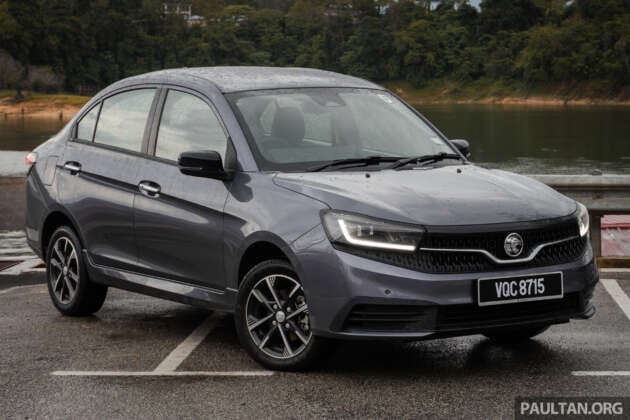
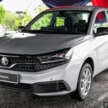
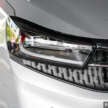
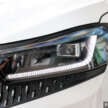
All that is to come – for now, we’re judging the new Saga as it sits, still a little gawky with its too-big grille and bubble-shaped glasshouse. There are some neat touches, however – the projector LED headlights (which are standard, by the way) provide a modern look and incorporate cool cascading dual-bar LED indicators, while the L-shaped daytime running lights that flow into the “Ethereal Bow” grille bar is a nice flourish.
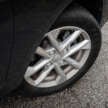
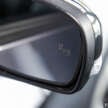
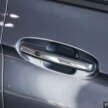
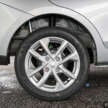
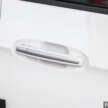
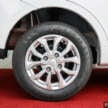
I also like the 15-inch “arrow” wheels on the Executive (full silver) and Premium (two-tone), as opposed to the curiously shuriken-like rollers on the outgoing model. Keen onlookers will notice the shapelier Lotus Evora-derived door mirrors and the chrome strips on the door handles.
Tacked onto the Premium are side skirts that give the car a fuller-bodied look. Unlike its Premium S predecessor, the top-spec version of the new Saga does not come with a complete bodykit with front and rear skirtings. That’s a curious choice given that many Malaysian sedan buyers see such a kit as compulsory – even though to my eyes, the car is all the better for it. We’re told that Proton is evaluating providing a bodykit as an option in the future.


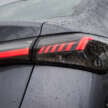
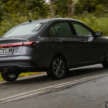
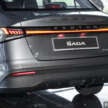
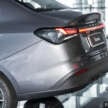
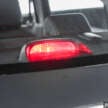
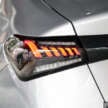
But by far the most impressive aspect of the redesign is the big, wide LED taillight bar. This, more than anything else, is the one design cue that drags the Saga into the present day, giving it heaps of presence from the rear. It doesn’t hurt that it also provides a familial link to the larger S70.
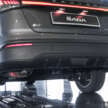
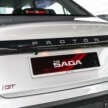
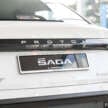
Unfortunately, the full effect can only be seen on Premium, as the other variants do not receive the illuminated strip on the boot lid, just a gloss black bar. This causes the rear of the car to look disjointed, as there aren’t even any extensions to help complete the taillight graphic, like there are on the base S70 Executive. It just looks unfinished.
The lower-end versions also lose the external boot lid release that was introduced on the 2022 Saga (the MC2), meaning that you still have to either press a button on the key fob or reach inside and pull a lever, which isn’t very practical.

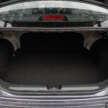
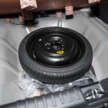
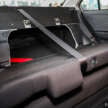
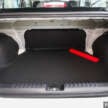
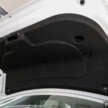
That boot lid opens to reveal the same 420 litres of luggage space, much smaller than the Bezza’s absolutely commodious 508 litres, but still decently sized – it fits both BM colleague Farid Awaluddin and my luggage and backpacks with plenty of space to spare. The rear bench still folds flat in a single piece (no 60:40 split here), but there’s at least a new boot lid cover that hides the old car’s unsightly wires.
The unchanged boot space is no surprise given the largely identical dimensions. While the 4,390 mm length is 55 mm longer – all of which, we assume, is at the front – the width is same at 1,690 mm, and so is the wheelbase at 2,465 mm. The height, however, has been bumped up by 10 mm to 1,525 mm, as the ground clearance had to be raised to protect the new engine, which sits lower down in its bay. That has had the undesirable effect of making the car look even more ungainly, especially from its tonggek rear.
Overall, then, the Saga has been freshened up rather nicely, but there’s no denying that the basic structure is long in the tooth and looks it – it’s worryingly close to how ancient the LMST appeared when it was launched in 2003. The MC3 is thankfully a much better car than that, and with it soon being sold as a Geely overseas, the extra volume will hopefully enable Proton to finally afford a full redesign.
A thoroughly spiffened-up cabin
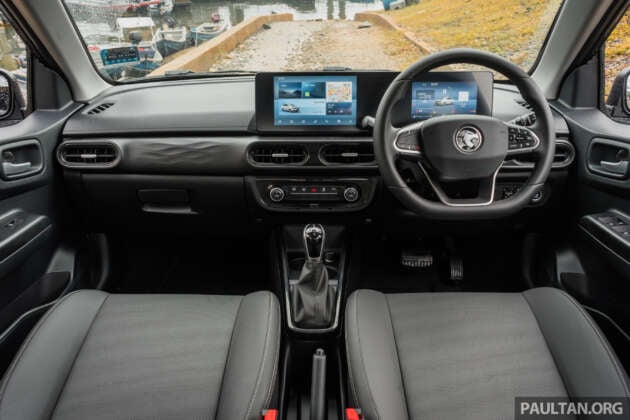
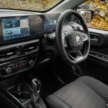
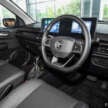
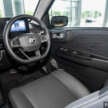
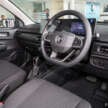
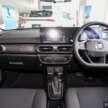
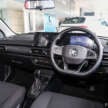
The same could be said about the interior – the same old surroundings but with brand-new furnishings. There’s a completely redesigned dashboard (with the same faux stitching on hard plastic; I guess some habits do die hard) with a modern horizontal design, oval congkak board-inspired air vents and a rather classy wave pattern on the dash and door cards, but it all still feels strangely familiar.
Build quality on a whole is about on par with expectations. This being a sub-RM50,000 car, the Saga is entirely devoid of soft-touch materials, with hard plastics present throughout. You also won’t find a soft-opening glovebox or masses of shiny metal-look trim.
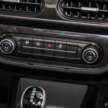
However, the car does feel well screwed together. The door and grab handles are well damped, the air-con knobs are tight and emit a satisfying click at each detent, and all the switchgear have a tough feel to them. It’s notable that even at the budget end, Proton’s in-house-designed products feel of better quality than Perodua’s own effort – the RM80,000 (excluding the battery leasing cost) QV-E EV.
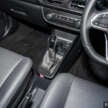
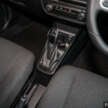
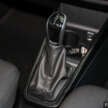
It is also pretty obvious that there are bits in the cabin destined to be shared with more expensive AMA-based vehicles – such as the aforementioned air-con controls and the gearlever with its stitched boot – as they feel far more polished than the rest of the Saga’s interior. This bodes well for those models.
Headline-grabbing screens, simple software

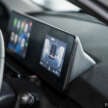
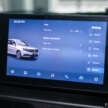
Of course, the main draw is the widescreen display panel that houses a seven-inch instrument display and a nine-inch infotainment touchscreen. The big black bezels resulting from the screens’ squarish aspect ratios do mean that I’d much rather have two individual panels instead of one big piece, but there’s no denying that the latter is cheaper to produce and has greater showroom appeal.
Less impressive is the lack of an anti-reflective coating that results in the transparent covering regularly throwing back unflattering reflections of the driver (me); this has the added effect of reducing the contrast of the already cheap-looking displays. Not great under our harsh sun, it has to be said.
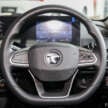
As for the screens themselves, the instrument display is clearly laid out and fuss-free. It enables drivers to quickly check their instant fuel consumption and the average fuel consumption and speed for both “short drive” (since the start of the trip) and “long drive” (since reset), although the small fonts make the data a little difficult for me to read at a glance. Not quite so sure about the “traditional dials,” which are meant to mimic analogue dials but feature zero indices, making them absolutely useless for discerning information.
The infotainment system, meanwhile, is a simplified version of the Atlas operating system found in other Proton models, without the ability to use outside applications such as Spotify. Some dubious remaining English translations (including the old chestnut, “vehicle setting” instead of “settings”) aside, this interface is actually the preferable one to use, with large, clear icons and easier-to-navigate menus – no doubt helped by the fewer features and the surfeit of physical controls versus models like the facelifted X50.


We have just a few minor niggles, all of which pertain to the implementation of wireless Apple CarPlay and Android Auto, as nice as it is to have at this price range. Firstly, the icon to access this functionality from the home screen is exceedingly small – you can’t simply tap on the big rectangle around it that says “Apple CarPlay” or “Android Auto.” There’s also no other way to easily access the smartphone mirroring screens aside from tapping on the phone icon, which brings you to your phone’s call menu.
More annoying is the fact that we are having a bit of trouble connecting to both Apple CarPlay and Android Auto, as the prompt to enable either system would occasionally fail to appear on the touchscreen. Our phones do eventually connect, however, and we have no subsequent problems, the Saga displaying none of the lagging or GPS accuracy issues seen on some competing systems.
We’ve also heard of owners that have had their infotainment systems freeze and restart mid-drive, reportedly due to an issue when connecting to the latest iPhone 17 models. This is definitely concerning, and Proton has to be commended for providing a fix so quickly, alerting users to an update last week. But we should also point out that even big-name brands are not immune from software crashes and system restarts; it’s happened more than once on my Hyundai Ioniq 6, for example.
Sub-optimal driving position continues to frustrate
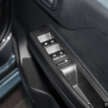
Beyond the impressive tech, the Saga’s interior is pretty barren in more ways than one. As ever, the Malaysian market loses out on air-con directional control (and with it, the front demister), and even the auto-down driver’s side window is reserved for the Premium – and of course, you can’t get auto-up windows at all.
The lack of these basic features may be shocking to those used to more expensive cars, but given everything else the Saga offers for the money (particularly in all-singing, all-dancing Premium trim), it’s a price worth paying. It’s the driving position – one of the most obvious areas compromised by the carried-over structure – that is the more pressing matter.
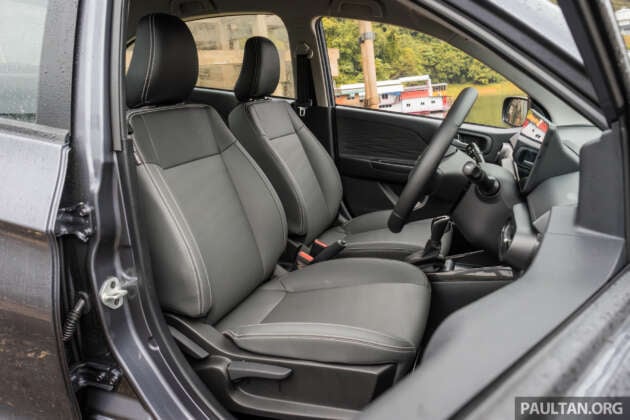
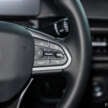
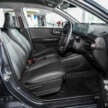
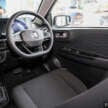
You still sit very high up relative to the rest of the car, making you feel as if you’re sitting on top instead of in the vehicle. This is because there’s a cross member running under the front seats, preventing them from being mounted any lower. This does at least grant you great forward visibility, and to Proton’s credit, the addition of the X50’s flat-bottomed steering wheel means it no longer feels like it’s dumped onto your knees.
But ironically, the one major addition meant to improve the driving position has actually made it worse. See, the Premium gains a new seat height adjuster that moves the entire seat by simply ratcheting a lever on the side, rather than only moving the seat base using a Carpal tunnel-inducing knob.

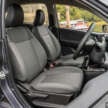
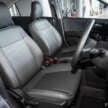
However, the new mechanism has inadvertently lifted the driver’s seat even higher, making you feel even more like you’re driving around in Noddy’s car. Both Farid and I agree that the older mechanism in the other models seats us lower, giving us not only more headroom but also a more purposeful driving position. The bigger seats versus the Bezza do make for more comfortable places to sit on longer journeys, so there’s that.
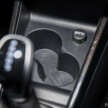
Elsewhere, storage space is curiously lacking, with slim door bins and a narrow centre console providing precious little space to stow a smartphone while driving. The cupholders, made larger thanks to them being arranged diagonally, take up valuable real estate below the dash, so the only spaces left are under the handbrake – not ideal for obvious reasons – and the rear cupholder aft of the USB ports.
Thankfully, the presence of wireless Apple CarPlay and Android Auto means you can keep your phone in your pocket. But that won’t help if you want to charge it, and if you do, you should know that the sole front USB-A port is mounted uncomfortably close to the driver’s left knee.
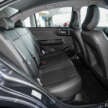
At the back, the Saga continues to offer decent but not outstanding head- and legroom. The front seats have cleverly scalloped backs to free up some knee room, but you won’t be able to make full use of it as the protruding base will prevent you from sliding your feet further forward. The rear bench is also flat and offers little in lateral or lumbar support, although the new adjustable headrests provide a modicum of extra comfort.
Basic driver assists with Tesla-style display

A quick word on the driver assists that have been added to the Premium, which includes basic things such as autonomous emergency braking, lane departure warning, blind spot monitoring, rear collision warning and auto high beam. This puts it on par with the Bezza, which has had similar systems since 2020.
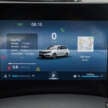
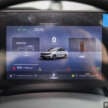
Not much we can say apart from the fact that the systems are unobtrusive (we have the lane departure warning switched off here), and that there’s a surprise Tesla-style display showing the surrounding cars. One small remark – the blind spot indicators use bare LEDs that seem to shine straight into your retinas if there’s a car or motorcycle present. Still, it’s better than nothing, I suppose.
Joining the list of features on the range-topper are six airbags, adding side and curtain airbags for the first time and pulling the Saga ahead of the Bezza in terms of safety – it’s good to see Proton taking the lead in this area once again. The curtain ‘bags have resulted in a noticeable bulge in the headliner, so if you’re one of those people who use the grab handles while seated at the back, your hand will be right in front of your face.
More power, but this is no sports sedan

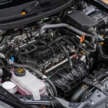
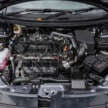
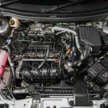
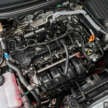
The picture gets much rosier as we pull away from Proton’s Centre of Excellence showroom in Shah Alam. Under the bonnet lies a new Geely-sourced BHE15-CFN 1.5 litre naturally-aspirated four-cylinder engine, which Proton is badging as Intelligent Green Technology (i-GT). Goodbye, old CamPro, you will not be missed – the Saga gets a startlingly modern mill for the first time.
No, you don’t get direct injection here, but the engine does incorporate some snazzy new features such as Atkinson-cycle operation, dual variable valve timing and an electric water pump to improve efficiency without sacrificing power. Joy of joys, there’s also finally a maintenance-reducing timing chain (on a Proton!), replete with a toothed design to reduce noise and vibration.
The on-paper figures certainly excite – 120 PS at 6,100 rpm and 150 Nm of torque from 4,000 to 5,000 rpm are 25 PS and 29 Nm up over the Saga’s arch nemesis, the Bezza 1.3, and a 25 PS and 30 Nm increase over the old car. It’s hard to overstate just how much of a massive leap those numbers are, as the Saga isn’t merely more powerful than before – it’s jumped an entire size class in terms of outputs.
But those of you salivating at the notion of a Saga sports sedan should temper your expectations, as this engine isn’t a firecracker like Honda’s K-series or even Proton’s old CPS. For one thing, it doesn’t rev particularly high, topping out at just over 6,000 rpm. It also doesn’t provide a noticeable shove in the back when you mash the throttle.
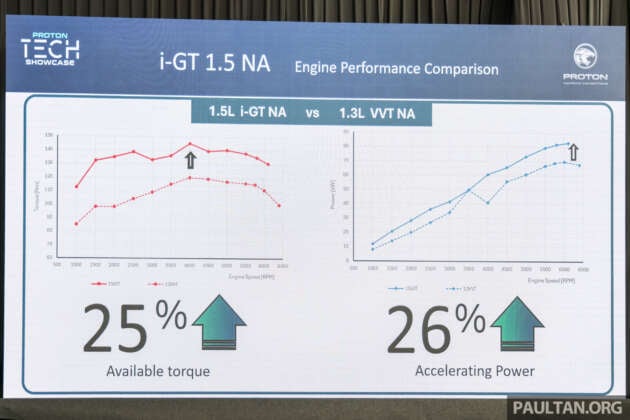
Instead, the power builds gradually, and before you know it you are travelling way faster than you would’ve in the old Saga – there’s just more torque everywhere. This is accompanied by a much smoother engine note, one that is far less gruff than that of the preceding CamPro VVT. Less sporty, perhaps, but it makes the car feel more “normal,” more in line with other cars from larger makes.
Mind you, this is still a buzzy engine, as exhibited by the vibrations coming from the accelerator past 3,000 rpm. This, together with the unusually heavily-sprung pedal, make the Saga a more tiresome car to drive long distances than it perhaps should be. Less of this vibration can be felt through the steering wheel this time around, because the Saga has switched from a hydraulic power steering system to an electric one, helping to alleviate some of the strain.
The BHE15-CFN’s raucous nature is accentuated on models with the Aisin-sourced four-speed automatic gearbox. The lack of speeds make for widely-spaced ratios – every downshift that comes as I flex my right foot is met with a soaring rise in revs, and the transmission holds onto a gear for a touch too long before shifting to the next. Dare I say it, the new Saga may have outgrown the traditional four-speeder.
A far more convincing CVT this time around
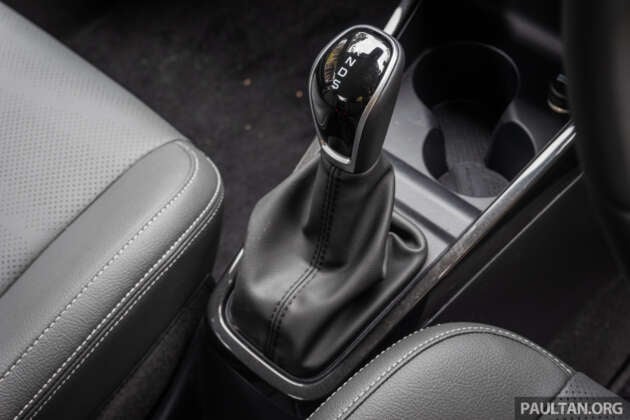
Shock, horror – the CVT-equipped Premium is actually the more enjoyable car to drive. Proton has gone back to Punch Powertrain for the top variant’s transmission; yes, the same one it ditched in favour of a slushbox in 2019. It has been a contentious decision, not least because the company is returning to a clutch-operated unit that had dogged previous models, rather than the more desirable torque converter.
Engineers at the event tell us that Proton chose Punch this time around because it was far more receptive to hardware spec changes than it had been before – previously, the Belgian supplier would simply provide the transmission and Proton had to tune the car around it. Here, the two companies have worked together to develop a CVT that fits the Saga and its new engine, with a wider ratio spread being the key change.
In the real world, this one tweak has enabled the CVT to keep the revs consistently lower than the auto; at the national speed limit of 110 km/h, the engine is being held at around 2,600 rpm, versus 2,800 rpm on the auto-equipped Executive we’re also sampling. Those 200 fewer revs may not seem like much, but they make all the difference at highway speeds.
The CVT is also more content in letting the car surf on the engine’s slug of mid-range torque, instead of wringing the mill out to gain speed. This helps to make the Saga feel much more refined – even with the throttle almost completely opened, the revs only rise for less than a second before dropping. Crucially, this keeps the engine out of the 3,000 to 5,000 rpm range where it feels the most uncouth.

You might think that the stepless transmission’s more laidback demeanour would result in the car being slower, but you’d be wrong. We time both cars (not with any specialist equipment, I’ll admit, just an iPhone stopwatch) from zero to 100 km/h on a damp surface, and the best the auto can muster is 13.8 seconds – in part because the second-to-third shift occurs just before the 100 km/h mark. The CVT Premium takes an entire second out of the century sprint, with a best time of 12.6 seconds.
As reference, the Saga has an official zero-to-100 km/h time of 11.6 seconds, and that discrepancy can be put down to a lack of grip as the Atlas AS380 tyres scrabble for traction in the wet. By the way, despite offering similar outputs to the Honda City petrol (121 PS, 145 Nm), the Proton would be trounced by the (much more expensive) Japanese B-segment sedan, which completes the same benchmark in 10.2 seconds.
The raw numbers only tell part of the story, because this CVT is also a big improvement from units in past Protons when it comes to step-off response. Sure, the clutch operation still feels slightly robotic next to a torque converter, making the engine rev higher when moving away from a standstill or reversing.
But whereas previous Punch CVTs would struggle to put the engine’s power into actual forward motion, this one is far more responsive and, crucially, isn’t a hindrance in stop-start driving; perhaps the new engine’s increased muscle is helping to paper over any deficiencies. And while the Premium still rolls back on very steep inclines where the “creep” function isn’t sufficiently strong enough, the hill start assist is very generous in holding the car still, providing ample time to move from the brake pedal to the throttle.
Surprisingly achievable fuel economy claims

Performance is one thing, but far more important is fuel consumption, and this is one area where the Saga shows a drastic improvement. We start the drive in the automatic Executive, travelling the vast majority of our route on the North-South Highway, and even with extended stints cruising above the speed limit, the car returns an impressive 5.8 litres per 100 km (17.2 km per litre). This proves that Proton’s claim of 5.1 litres per 100 km (19.6 km per litre) combined for the auto models is very much achievable, for once.
The long highway stretch also enables us to gauge the car’s refinement. Road noise is kept to a relative minimum at higher speeds, although the wind noise does get pretty immense – as I mentioned, the A/T’s engine roar and vibration is more of an issue. If you want to tamp the noise down, you can purchase sound-insulating panels for the bonnet, boot lid and all four doors, totalling up to RM605.
The Premium is having a tougher time in our hands, being driven up hilly country roads with plenty of traffic lights, and every time it comes to a stop it has to be gunned quite hard to get back up to speed. As a result, its significantly worse fuel economy figure of 6.9 litres per 100 km (14.5 km per litre) is not comparable to the Executive’s – we’ll have to wait until we spend some more time with the CVT car to see if it can actually hit the claimed figure of 4.9 litres per 100 km (20.4 km per litre).
Even when taken purely at face value, however, the Premium’s fuel consumption during the drive is pretty decent. And even if it ends up being thirstier than the auto models in daily use, I suspect the CVT’s significantly better refinement would be worth the additional fuel used.
Proton ride and handling is back

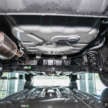
But the real shocker comes as we hustle the Saga up the sinewy roads leading to the Belum Rainforest Resort. While retaining much of the same hard points and MacPherson strut front and torsion beam rear suspension as before, the car has received a redesigned rear subframe cross member, along with revised springs and dampers and a larger-diameter rear anti-roll bar. There are also stiffer bushings at the rear, and the structure is so much stiffer than before that the front strut brace could be deleted.
Those changes may seem trivial, but the overall effect they have on the handling is profound. Whereas the Saga previously felt a touch flighty at the rear, this new one displays commendable poise even when driven in anger, and exhibits little noticeable body roll. Sure, the changes have resulted in the Saga riding a touch firmer than before, especially over larger speed bumps that the old car would’ve glided over.
But what little it gives away in pliancy it more than makes up for in composure. The mountain roads are pretty broken in places, yet the Saga stays true to its path and refuses to get knocked out of line. This is in spite of the rudimentary rear twist beam setup, with only the patter over minor surface imperfections – particularly on concrete highway surfaces – exposing the chassis’ lack of sophistication.
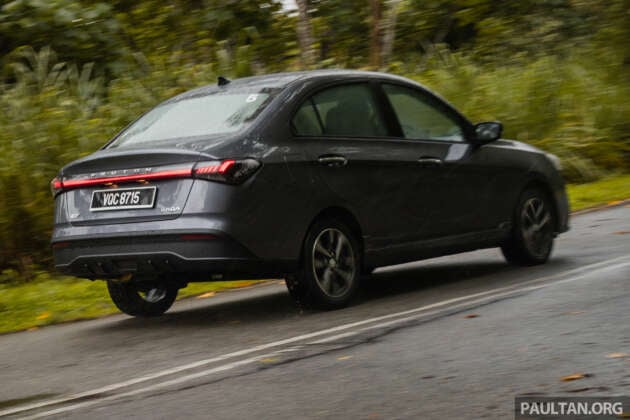
And we’re still convinced Proton’s electric power steering engineers are practicing witchcraft. Switching from a hydraulic setup should’ve robbed the Saga of precious steering feel, but the EPS actually adds feedback to the rim, providing a level of tactility missing from the company’s Geely-derived products. We’re told that the system (all-new and not derived from the Iriz and Persona) was developed from the ground up and not simply an off-the-shelf Geely part – and it shows.
Plus, the extra precision and accuracy of the system makes the Saga feel more agile and incisive in the corners, even if we’d appreciate a little extra heft. And while grip levels from the cheap Chinese tyres are certainly modest, the chassis seems to be tuned well to suit the amount of traction available, and not once does the car feel unruly or unsafe, even in the wet. The brakes, which initially felt a bit wooden at low speeds, also come to their own here, offering plenty of stopping power.
The fact is, the harder we push the car, the more it seems to relish it – something that cannot be said about rivals (read: Peroduas) in this price range. The Saga has always been tuned for comfort and ease of driving first, but with no other in-house models in its lineup (at least, not yet), Proton’s chassis engineers appear to have been given room to show off their talents here. A return to form, indeed.
A budget sedan you can no longer ignore
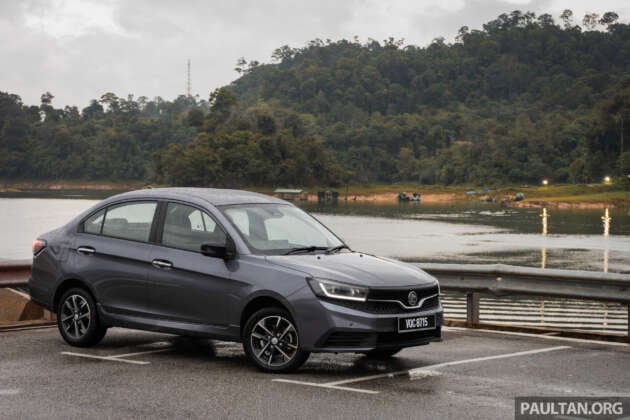
Make no mistake – the MC3 is the Saga transformed. Blessed with that new engine and a massive tech and safety upgrade, it’s a car that no longer has any obvious flaws, at least compared to the Bezza. The much-improved efficiency is a major boon, as it should make for significantly lower running costs – important for the large swath of people who buy these cars for their livelihoods. Maintenance costs are now lower, too, especially next to its rival; it appears Proton has finally understood that all these things add up.
But there’s something else. It’s clear Proton is no longer content with making in-house models that are simply “good enough,” and has churned out its strongest value-priced model in years. Nowhere is this more evident than in the Saga’s ride and handling – it didn’t need to be this good, but it is, and it’s all the better for it.
This is a car that’s shot through with real engineering depth. And while there’s still no mistaking the Saga as anything other than a budget vehicle, with every passing improvement the car is becoming more and more like a product that’s built to a price, not to a lack of a company’s ability. It’s a small but significant difference.
Yes, it would’ve been great if the new Saga was actually “all new” – the compromises of the same old body structure are the only things that let the side down. But that’s a comparatively small price to pay for a product that, in almost all other aspects, sets new standards for the segment. Well done, Proton.
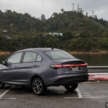

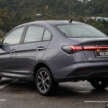


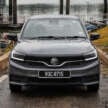


















GALLERY: 2026 Proton Saga MC3 official media drive photos

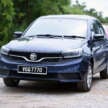






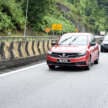








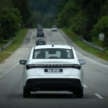


GALLERY: 2026 Proton Saga 1.5 Premium CVT MC3


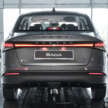



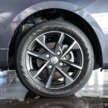









































GALLERY: 2026 Proton Saga 1.5 Executive A/T MC3



















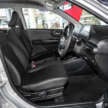
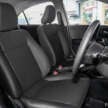


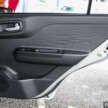
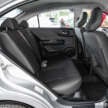



GALLERY: 2026 Proton Saga 1.5 Standard A/T MC3



























AD: Drive the Proton model of your dreams. Submit your details and Proton PJ will get in touch with you.
Looking to sell your car? Sell it with Carro.










My question would be how does it compare to the Persona. Has all the engineering work delivered a product on par or better than the Persona for less money?
Good review. After reading macam buy 4at variant better, but later can add trunk release button or not?
Great writeup, thanks Jonathan!
This is probably the best Saga after the first model rolled out 4 decades ago.
Price wise,together with a 1.5 engine…the Bezza will be given a very stiff fight.
Good job,Proton…dont rest on your laurels.Strive for excellence.
we prefer the feather-light bezza, front driver’s door could be folded down opening from outside during emergencies
You mean paper doors?
It has been a long time since I read a detailed car review like this and I must say this article is a work of art. The command of english and vocabulary paired with the reviewers / writers intend is making the whole thing enjoyable to read.
Please keep writing Jon (Hafriz and Danny too). Hope to have more of this coming!
13 seconds…. hahahhaha….by the time it reaches 100, the boy at the road side has already reach adulthood.
The Alphard 2.5 SC takes around 12 seconds to reach 100kph and a Bezza 1.3 around 16 seconds, so the Saga not going to struggle in everyday traffic or too slow for school runs. And remember, that 1.3 seconds was set in wet road condition so in the dry you can look at around 12 seconds from the Saga.
Nissan Serena 2.0 S-H CVT can take you 14+ seconds.
in reality, those below 10 sec also siput at stop go situation..too many lousy and lack awareness driver
its still fast enough to smoke the mazda3 1.5 which costs three times the price
saga will still smoke the mazda3 1.5 which costs three times the price
How to be a grab car or taxi when the boot is so small. Gonna argue with customer about luggage size everyday
Finally a review worth reading. Thanks for taking the time to write this. People generally prefer to watch videos these days, but this review deserves a praise. Well done. On the car, as the saying goes “there’s no single perfect car”, but this time Proton seems to have got things right. Like the other comment, don’t rest on your laurels, strive for eacellence and be better. There’s so much of potential.
Local reviewers are 90% writing good 10% not so nice to give impression they honest. Free paid trip to Yellow River Massage 1 month if sales going up.
Dude, you are projecting your addiction to happy ending massage.
Paultan should review standard version. Majoriti rakyat berpendapatan rendah dan sederhana mampu standard version.
One of the best written car review articles i’ve read in a while. Of course Paultan always delivers excellent reviews but this particular review kept me reading passionately.