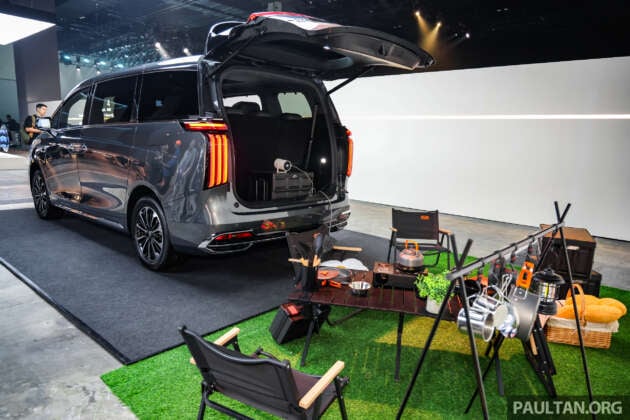
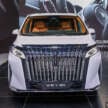
GWM Wey G9

  • GWM Wey G9 MPV launched in Malaysia – 7-seater 1.5T Hi4 PHEV with 442 PS/642 Nm, CKD, RM269,800

    GWM Wey G9 MPV launched in Malaysia – 7-seater 1.5T Hi4 PHEV with 442 PS/642 Nm, CKD, RM269,800

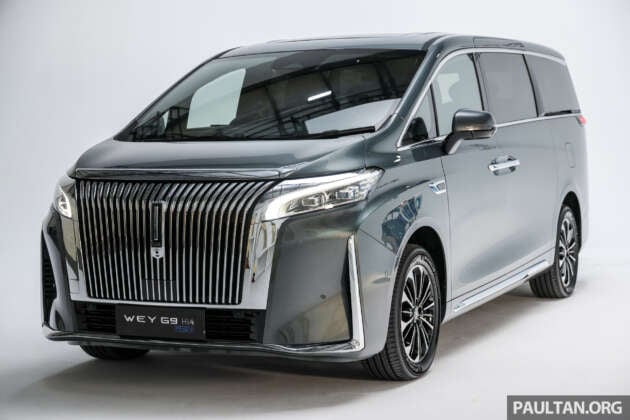
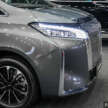
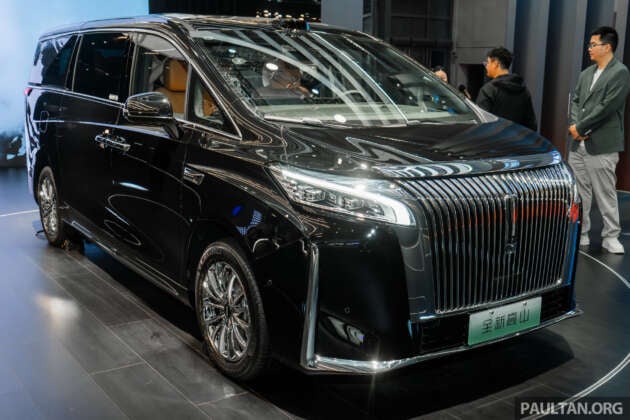
    Great Wall Motor (GWM) Malaysia has launched the GWM Wey G9, taking the wraps off its first MPV offering earlier today. The PHEV makes its local debut after having initially been shown back in December 2024 at the 2024 Kuala Lumpur International Mobility Show (KLIMS), and then subsequently at PACE in July last year, before being previewed yet again last September.

    First up, the price. As anticipated, the Wey G9 goes on sale here in a solitary variant form, priced at RM269,800, on-the-road without insurance. This is well below the under-RM300k pricing suggestion made during the September preview and when the order books opened for the car in December.

    The MPV is locally assembled (CKD) at EP Manufacturing’s (EPMB) Pegoh, Melaka plant, with the first units having rolled off the line last month. It isn’t the first CKD Chinese PHEV MPV in the country, of course, because the GAC M8 launched earlier.

    A quick recap of the model’s name. Originally known as the Wey 80, the switch to the Wey G9 places it right up against a host of competitors with a similar numerical naming convention (Denza D9, Maxus MIFA 9, Xpeng X9 and Zeekr 009). As mentioned previously, GWM says the G9 name has been copyrighted by it for Malaysia, so should the Xpeng G9 SUV ever get here, it’ll have to be renamed for this market.

    GWM Wey G9 MPV launched in Malaysia – 7-seater 1.5T Hi4 PHEV with 442 PS/642 Nm, CKD, RM269,800

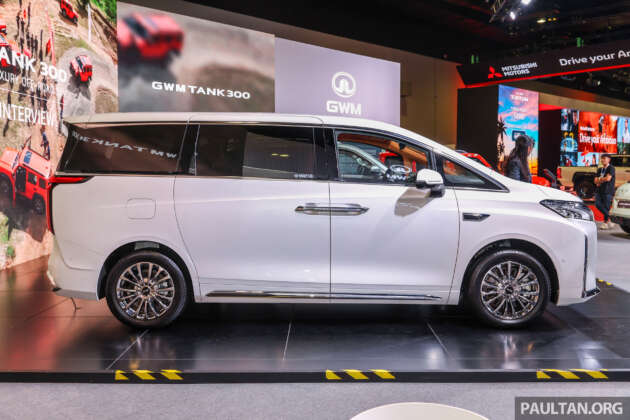
    While the Wey is available in three body-length forms in China (the Gaoshan 7, 8 and 9), Malaysia gets the Gaoshan 7 equivalent, which is a seven-seat (2-2-3 layout) standard-wheelbase model measuring in at 5,050 mm, 1,985 mm wide and 1,900 mm tall, with a 3,085 mm-long wheelbase and 155 mm ground clearance.

    These dimensions make it longer in both body and wheelbase length than the Toyota Alphard/Vellfire, but shorter than its Chinese compatriots such as the Zeekr 009, Xpeng X9 and Denza D9, all of which are over 5.2 metres long and have wheelbases between 3.1 and 3.2 metres.

    The company does have the middle-wheelbase seven-seater (the Gaoshan 8; 5,280 mm-long, 3,145 mm wheelbase) option available in right-hand drive guise, as shown by its appearance at PACE and also for the September preview.

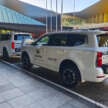
    GWM Wey G9 standard-wheelbase (Gaoshan 7, left) and middle-wheelbase (Gaoshan 8, right).

    It could be that the variant may arrive here at some point, given that GWM Malaysia is set to export the MPV to other markets in the region – it has already begun doing so, to Thailand, but in similar SWB guise, and Indonesia is on the cards. As for the long-wheelbase six-seater Gaoshan 9, which measures in at 5,405 mm (with a 3,205 mm wheelbase), it has been confirmed that we won’t be getting it.

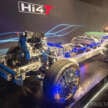
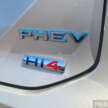
    The Wey G9 is powered by the latest iteration of the automaker’s Hi4 Intelligent Hybrid 4WD system, in this case a variation of the base Hi4 called the Hi4 Performance, which is a dual-motor, four-speed dedicated hybrid transmission series/parallel set-up meant for mid to larger-sized platforms.

    The system is made up of a 1.5 litre turbocharged four-cylinder offering 150 PS (148 hp, or 110 kW) at 5,500 to 6,000 rpm and 240 Nm from 1,800 to 4,000 rpm (slightly lower than the 170 PS and 245 Nm in China), mated to a four-speed dedicated hybrid transmission (DHT). This integrates a 109 PS (107 hp, or 80 kW) and 170 Nm electric motor to drive the front wheels, with another 184 PS (181 hp, or 135 kW) and 232 Nm motor at the rear.

    The combined system output for the G9 is 442 PS (436 hp, or 325 kW) and 642 Nm, slightly lower than the 458 PS and 644 Nm found in China. Performance figures for the MPV, which tips the scales at 2,803 kg, include a 0-100 km/h sprint time of 5.7 seconds and a 190 km/h top speed.

    The battery for the Malaysian Wey G9 is a 44.2 kWh nickel manganese cobalt (NMC) unit, which is smaller in capacity to the 51.55 kWh unit for the Chinese market. Despite the smaller capacity, it provides the MPV with 170 km of NEDC-rated travel on pure electric power alone, which translates to about 145 km of WLTP-rated range. With a 58 litre fuel tank, total range is quoted at up to 1,000 km (NEDC), which equates to around 850 km WLTP.

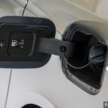
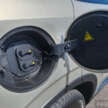
    As for charging, the pack can be juiced up from a 30% to 80% state of charge via DC charging at a maximum rate of 60 kW in 26 minutes, while AC charging at 6.6 kW gets the pack filled up from 15% to 100% in 6.5 hours.

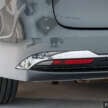
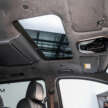
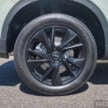
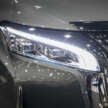
    Standard kit includes intelligent LED headlamps with auto high beam, LED daytime running lights and fog lamp, LED tail lights/rear fog lamps as well as dual sunroofs and 18-inch 10-double spoke two-tone alloys, wrapped with 245/50 Michelin Primacy 5 energy tyres. Suspension consists of McPherson fronts and multi-link rears, with frequency response dampers. It was previously highlighted that local tuning on the suspension had been carried out to improve the ride to local tastes.

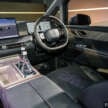
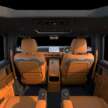
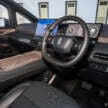
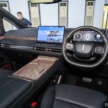
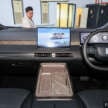
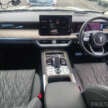
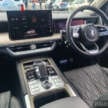
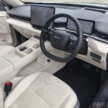
    Inside, the Wey G9 features the updated interior brought along with the introduction of the expanded line-up in China last year, making Malaysia the first country outside of China to get the update as well as the car in RHD guise.

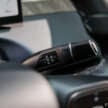
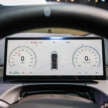
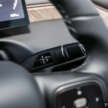
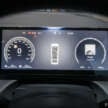
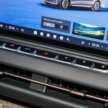
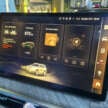
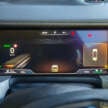
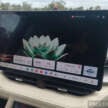
    The update brings along a new two-spoke steering wheel, a 12.3-inch digital instrument display and a 14.6-inch infotainment touchscreen (but without the dual screen layout as seen in China, omitting the passenger display), with the latter running on GWM’s latest Coffee OS 3.

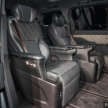
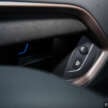
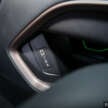
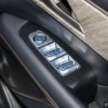
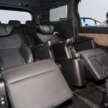
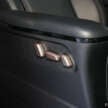
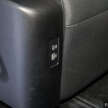
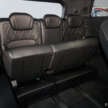
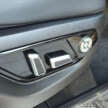
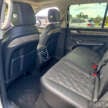
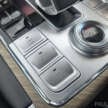
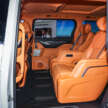
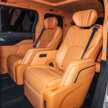
    The centre row zero-gravity captain chairs are also new, redesigned to now include physical seat adjustment controls located on the forward edge of the inner armrests on both seats. The six-way adjustable units are ventilated and come with a 10-point massage function and built-in ottomans.

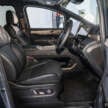
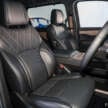
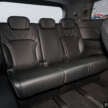
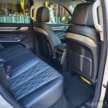
    Elsewhere, the front seats are power-adjustable with memory function/ventilation, with the driver’s side also getting a 10-point massage feature. Upholstery is in Nappa leather across the first two rows, with leatherette for the third row units.

    Novelties include a shared rail design for the second and third row seats, which provides an extra-long slide rail of 1,845 mm for second-row seating adjustment, allowing for up to 1,166 mm of legroom to be gained for second-row occupants.

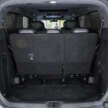
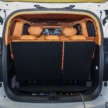
    Luggage compartment capacity is 233 litres with the rear seats up, but expandable to 1,725 litres. Incidentally, the third-row seats have not been designed to fold completely flat because thicker cushions have been utilised for better comfort, with the design focused more on passenger comfort than utility.

    The automaker says the use of double-glazed acoustic glass for the windscreen and front/second-row windows as well as the implementation of an HALOSonic active noise cancellation system translates to a quiet cabin, with the interior noise level measuring just 63.4 dB at 120 km/h.

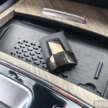
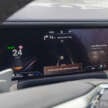
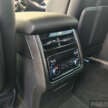
    The comprehensive equipment list includes 64-colour ambient lighting, a head-up display, wireless Apple CarPlay and Android Auto, a 50-watt Qi wireless charger, a 2,440 watt/21-speaker audio system, a hands-free powered tailgate, 11 USB ports across the cabin and a three-zone automatic air-conditioning system. At the preview last September, the company mentioned that the AC performance has been improved for the local car, with the AC compressor being tuned to manage the warmer weather here.

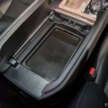
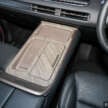
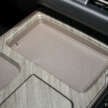
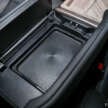
    Other bits of interest include a 12.5 litre large fridge with an independent compressor and adjustable temperature from 0-50°C. The two-tier, dual-opening unit – with front armrest access for the driver and front passenger and a rear drawer for convenient reach for rear occupants – can hold up to six bottles on the upper level and 10 cans below. Additionally, the fridge can continue operating for up to 24 hours with the engine off.

    Safety-wise, the G9 comes equipped with six airbags (including full-length curtain units – measuring more than three metres long – across all three rows), a 360-degree camera and a full complement of driver assistance kit, including autonomous emergency braking, adaptive cruise control with stop and go, lane centring assist, blind spot monitoring with collision prevention, rear cross traffic alert with auto brake and a door opening warning.

    In terms of exterior colours, buyers can pick from three options, and these are Wisdom Grey, Nebula Black and Aurora White. As for the interior colour schemes, there will be two, these being brown and black.

    GWM Wey G9 MPV launched in Malaysia – 7-seater 1.5T Hi4 PHEV with 442 PS/642 Nm, CKD, RM269,800

    The GWM Wey G9 comes with a six-year unlimited mileage vehicle warranty and an eight-year or 180,000 km hybrid system warranty, covering the battery pack, power motor and control unit. Standard ownership benefits include five years of free connected services data, five years of free maintenance and a complimentary home wallbox charger.

    To mark the introduction of the Wey G9, the company announced that the first 1,000 customers will receive a complimentary LED screen integrated into the cabin for rear passengers.

    As for expected volume, GWM said that the projected yearly sales volume for the Wey G9 is 5,000 units for the domestic market and 5,000 units for export. The current localisation rate for the car is at 40.05%, which meets the necessary Regional Value Content (RVC) percentage to satisfy AFTA content requirements.

    GALLERY: GWM Wey G9 standard-wheelbase studio shots


  • GWM Wey G9 Malaysian launch tomorrow, watch it live

    GWM Wey G9 Malaysian launch tomorrow, watch it live

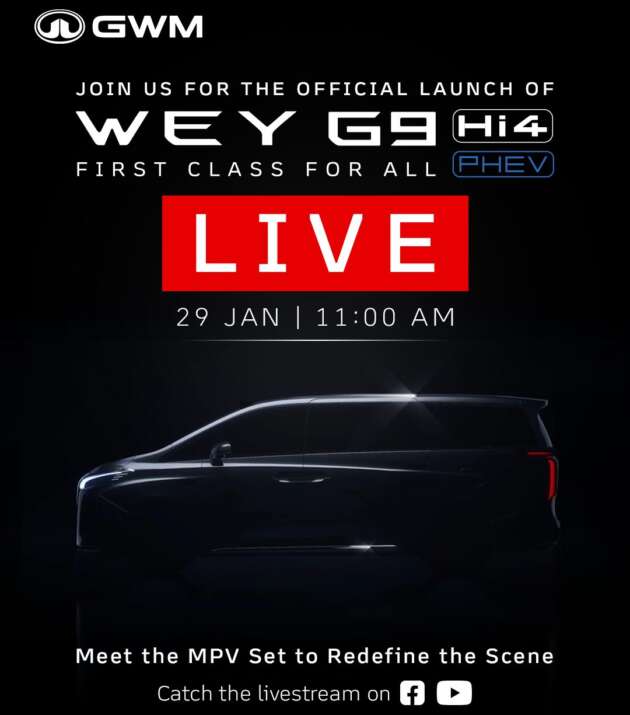
    Great Wall Motor (GWM) Malaysia‘s first MPV and PHEV is launching 11am tomorrow (Thursday, January 29). Click here to watch the launch of the GWM Wey G9 live.

    Open for booking since December at a sub-RM300k estimated price, the Wey G9 is locally assembled (CKD) at EP Manufacturing’s (EPMB) Pegoh, Melaka plant. Our car is expected to be the seven-seat (2-2-3 layout) short-wheelbase version (Gaoshan 7 in China; there are longer 8 and 9 versions). Length, width, height and wheelbase are respectively 5,050, 1,960, 1,900 and 3,085 mm.

    That makes it longer in both body and wheelbase than the Toyota Alphard/Vellfire, but shorter than its compatriots (Zeekr 009, Xpeng X9, Denza D9), all of which are over 5.2 metres long and have wheelbases between 3.1 and 3.2 metres. By the way, the first Malaysian CKD units are already on their way to Thailand.

    Power comes from a Hi4 plug-in hybrid powertrain, with a 1.5 litre turbo four-cylinder engine making 150 PS from 5,500 to 6,000 rpm and 240 Nm of torque between 1,800 and 4,000 rpm, mated to a four-speed dedicated hybrid transmission (DHT). This integrates a 109 PS/170 Nm electric motor to drive the front wheels, with another 184 PS/232 Nm motor on the rear axle.

    A combined output of 442 PS and 642 Nm of torque sprints the all-wheel-drive G9 from zero to 100 km/h in 5.7 seconds and onwards to a 200 km/h top speed. A 44.2-kWh NMC battery delivers a pure electric range of 170 km on the NEDC cycle, and thanks to a 58-litre tank, the total range is a quoted 1,000 km.

    Thailand gives us an idea of what we could get – for 2.4 million baht (RM309k), the car has 18-inch two-tone multi-spoke alloys, two sunroofs, 64-colour ambient lighting, powered/ventilated front seats, driver’s seat memory and massage, plus one-touch reclining second-row seats with built-in ottomans.

    Furthermore, there’s a rear fridge, a 12.3-inch instrument panel, a head-up display, a 14.6-inch touch-screen, a 17.3-inch rear monitor, wireless Apple CarPlay/Android Auto, 50W wireless charging, 21 speakers and a hands-free tailgate.

    Safety-wise, the Thai G9 comes with six airbags, a 360-degree camera and a full complement of driver assists, including autonomous emergency braking, adaptive cruise control with stop and go, lane centring assist, parking AEB, blind spot monitoring with collision prevention, rear cross traffic alert with auto brake, a door opening warning and even hill descent control. All will be revealed tomorrow.

    GWM Wey G9 as previewed in Malaysia in September (middle-wheelbase version)


  • GWM Malaysia ships first CKD units of Wey G9 to Thailand – PHEV MPV to be launched here this month

    GWM Malaysia ships first CKD units of Wey G9 to Thailand – PHEV MPV to be launched here this month

    Ahead of the GWM Wey G9’s launch in Malaysia this month, GWM Malaysia has announced that the first units of the locally-assembled (CKD) MPV have been shipped out to Thailand. This comes over a month after the successful rollout of the first CKD Wey G9 in December last year at the EP Manufacturing (EPMB) plant in Pegoh, Melaka.

    “Today’s CKD shipment of the GWM Wey G9 to Thailand is a testament to the strong regional foundation we are building in ASEAN,” said Roslan Abdullah, COO of GWM Malaysia. “Malaysia’s role as a strategic assembly hub allows us to support neighbouring markets with advanced new energy products while deepening regional supply chain integration. This shipment marks an important step forward as we accelerate our presence across the region,” he added.

    GWM Malaysia ships first CKD units of Wey G9 to Thailand – PHEV MPV to be launched here this month

    As with the Malaysian-spec Wey G9, Thailand is getting the MPV with the brand’s Hi4 plug-in hybrid powertrain based around a 1.5 litre turbocharged inline-four petrol engine making 150 PS and 240 Nm of torque. This is paired with a four-speed dedicated hybrid transmission (DHT) that integrates a 109 PS/170 Nm electric motor to drive the front wheels, with another 184 PS/232 Nm motor acting on the rear axle for a total system output of 442 PS and 642 Nm of torque.

    “The GWM Wey G9 represents the convergence of world-class engineering and local craftsmanship. This shipment to Thailand demonstrates our growing capability to support GWM’s regional expansion. This is more than a logistical milestone. It is the beginning of a long-term roadmap that reinforces Malaysia’s position in GWM’s new energy future,” commented Cui Anqi, managing director of GWM Malaysia.


  • GWM Wey G9 to launch in Malaysia end-January – 1.5T Hi4 PHEV MPV, 442 PS/642 Nm, CKD, sub-RM300k est

    GWM Wey G9 to launch in Malaysia end-January – 1.5T Hi4 PHEV MPV, 442 PS/642 Nm, CKD, sub-RM300k est

    We knew GWM Malaysia’s first MPV and PHEV would be launched in early-2026, but we didn’t think it’d be this early. COO Roslan Abdullah revealed in a recent release on the company’s 2025 sales performance that the GWM Wey G9‘s launch is “scheduled for the end of January 2026”, which is just around the corner.

    Open for booking since December at a sub-RM300k estimated price, the Wey G9 is locally assembled (CKD) at EP Manufacturing’s (EPMB) Pegoh, Melaka plant. Our car is expected to be the seven-seat (2-2-3 layout) short-wheelbase version (Gaoshan 7 in China; there are longer 8 and 9 versions). Length, width, height and wheelbase are respectively 5,050, 1,960, 1,900 and 3,085 mm.

    That makes it longer in both body and wheelbase than the Toyota Alphard/Vellfire, but shorter than its compatriots (Zeekr 009, Xpeng X9, Denza D9), all of which are over 5.2 metres long and have wheelbases between 3.1 and 3.2 metres. Could the middle-wheelbase version (3,145 mm Gaoshan 8) arrive at some point, since GWM Malaysia plans to export the MPV to other markets in the region?

    Power comes from a Hi4 plug-in hybrid powertrain, with a 1.5 litre turbo four-cylinder engine making 150 PS from 5,500 to 6,000 rpm and 240 Nm of torque between 1,800 and 4,000 rpm, mated to a four-speed dedicated hybrid transmission (DHT). This integrates a 109 PS/170 Nm electric motor to drive the front wheels, with another 184 PS/232 Nm motor on the rear axle.

    A combined output of 442 PS and 642 Nm of torque sprints the all-wheel-drive G9 from zero to 100 km/h in 5.7 seconds and onwards to a 200 km/h top speed. A 44.2-kWh NMC battery delivers a pure electric range of 170 km on the NEDC cycle, and thanks to a 58-litre tank, the total range is a quoted 1,000 km.

    Thailand gives us an idea of what we could get – for 2.4 million baht (RM309k), the car has 18-inch two-tone multi-spoke alloys, two sunroofs, 64-colour ambient lighting, powered/ventilated front seats, driver’s seat memory and massage, plus one-touch reclining second-row seats with built-in ottomans.

    Furthermore, there’s a rear fridge, a 12.3-inch instrument panel, a head-up display, a 14.6-inch touch-screen, a 17.3-inch rear monitor, wireless Apple CarPlay/Android Auto, 50W wireless charging, 21 speakers and a hands-free tailgate.

    Safety-wise, the Thai G9 comes with six airbags, a 360-degree camera and a full complement of driver assists, including autonomous emergency braking, adaptive cruise control with stop and go, lane centring assist, parking AEB, blind spot monitoring with collision prevention, rear cross traffic alert with auto brake, a door opening warning and even hill descent control.

    GWM Wey G9 as previewed in Malaysia in September (middle-wheelbase version)


  • Exploring GWM’s Hi4 hybrid all-wheel drive – Tank 500 Hi4-T and Haval H6 PHEV AWD sampled in Australia

    Exploring GWM’s Hi4 hybrid all-wheel drive – Tank 500 Hi4-T and Haval H6 PHEV AWD sampled in Australia

    Given the fervour about electrification, you’d expect that every Chinese carmaker would be heading down that path with great intent, but it would seem that not everyone believes that a fully-electric agenda is the only way forward. With good reason, because there’s still a place in the world for the traditional internal combustion mill, and there’s certainly a place for the middle ground, straddling both electrification and fossil fuel.

    Hybrids aren’t the end-all point, of course, but the format’s recent renaissance among automakers (Chinese included) means that there’s a belief that there’s still plenty to play for in the game with this one, across the globe. If anything, it provides players with alternative solutions to carry business forward in the short to medium term, until electrification truly comes of age.

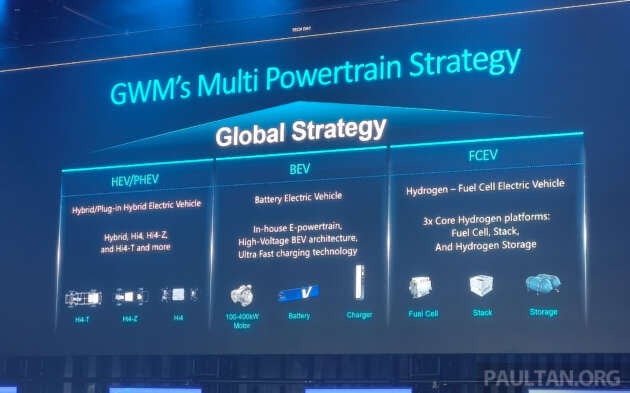
    One of those standing resolute in the hybrid camp is Great Wall Motor. While the carmaker has electric-only solutions (and a very significant presence in the EV battery market, through its Svolt entity), its portfolio is still largely made up of products that utilise electrification in supplementary fashion rather than as the primary one.

    Exploring GWM’s Hi4 hybrid all-wheel drive – Tank 500 Hi4-T and Haval H6 PHEV AWD sampled in Australia

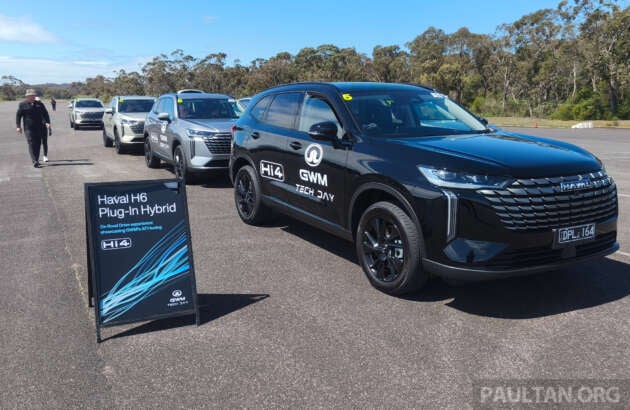
    The belief in hybrids and a multi-powertrain approach – with EV somewhat in the background and FCEV on the periphery of things – was highlighted during its Tech Day 2025 presentation, held in Melbourne, Australia a while back, with the event very much a showcase of its Hi4 (Hybrid Intelligent 4WD) technology.

    While primarily Australian-centric in its presentation, the pitch of the tech at the event suggests that the automaker is looking at a significant push along this front in the coming future, and not just for that market.

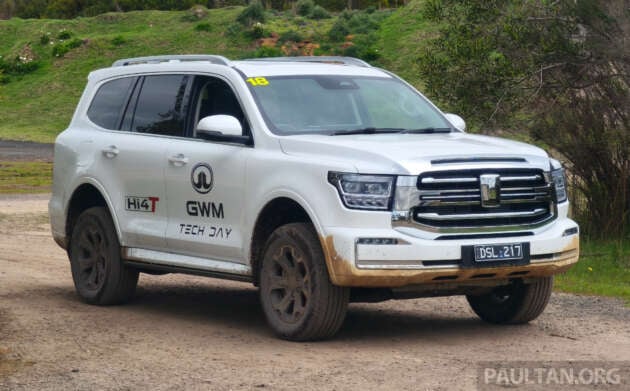
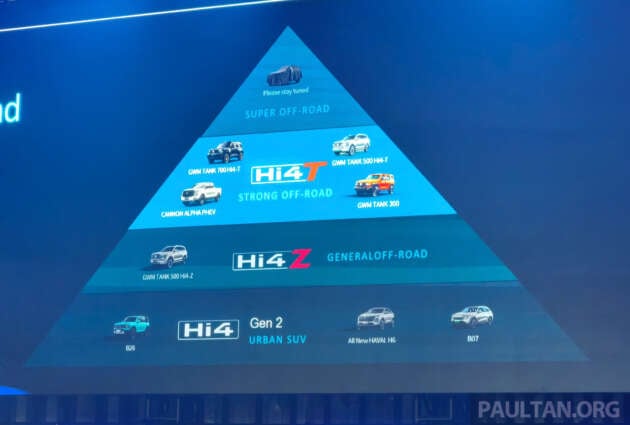
    At present, its Hi4 architecture stack consists of the Hi4 (now in Gen 2 form) dual-motor, two-speed dedicated hybrid transmission series/parallel system for family SUVs such as the Haval H6 and B07, the Hi4-Z dual-motor, three-speed series/parallel system for general off-road models such as the Tank 500, and the Hi4-T, a non-decoupled 4WD, nine-speed hydraulic AT parallel system for hardcore off-road use on ladder-frame models such as the Tank 700, 500 and 300 as well as the Cannon pick-up,

    Exploring GWM’s Hi4 hybrid all-wheel drive – Tank 500 Hi4-T and Haval H6 PHEV AWD sampled in Australia

    In the near future, another Hi4 pillar is set to emerge, classified under an extreme off-road category and occupying the top end of the shelf. Alphabet suffix aside, the goal of the line-up is uniform, which is to provide a wide variety of AWD solutions to meet diverse operating scenarios and driver needs.

    While not specifically mentioned, the automaker also has a variation of the base Hi4 called the Hi4 Performance, which is a dual-motor, four-speed dedicated hybrid transmission series/parallel set-up meant for mid to larger-sized platforms. The latter will be seen on the upcoming Wey G9 MPV, which was originally set to be introduced here before the end of the year, but is now expected to debut early next year, with CKD production already having begun at EPMB’s plant in Melaka.

    For markets such as Australia, which is the leading RHD market for the brand, the push will come with the Hi4 and Hi4-T, and it was with the Tank 500 that the latter was sampled on the former GM proving ground at Lang Lang, which GWM is renting from the facility’s present owner, Vinfast, for its field R&D work.

    The chosen flavour to highlight the vehicle was naturally an off-road one, intermediate in its challenge, and with a mechanical four-wheel drive system with a propeller shaft and three differential locks, you’d expect the 500 and its Hi4-T system to ace it, which it obviously did. Should it get here, it’s unlikely that many would go about bashing it about in this manner, but those that do can rest assured the car will be more than up for it.

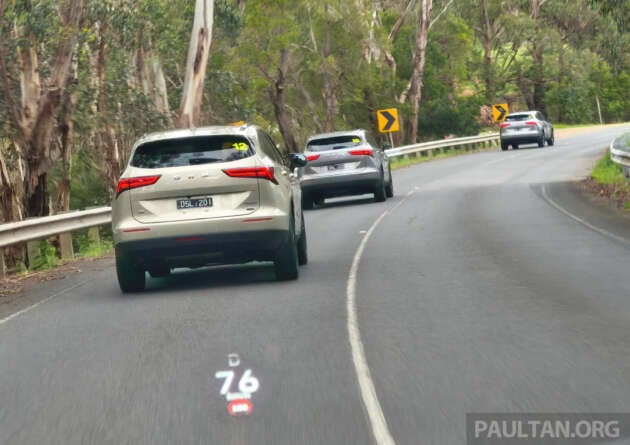
    A long road drive out from Melbourne on a bunch of Hi4-T 500s – arranged for us following the event – allowed a more familiar canvas to gauge the SUV. The takeaway from the urban escapade largely mirrors the findings with the 500 here (cosseting ride, if a bit devoid of feel and soft around the edges), with the exception being that there was a bit more go when the pedal was pushed. No surprise, as there’s 408 PS (402 hp or 300 kW) and 750 Nm of torque, which is ahead of the 346 PS and 648 Nm on the Tank 500 here.

    It’s a neat enough package, pleasant for long urban jaunts, but capable of brawling with terrain should you see fit. Should GWM want to pitch Hi4-T here, it could well make its way over as a small-scale product, but it won’t be cheap, given that the 500 we have is already close to the RM330k mark.

    The event also highlighted an aspect usually not prioritised by Chinese manufacturers, which is paying attention to ride and handling beyond the scope of the domestic market and adopting the usual one-size-fits-all approach, this being accomplished through dedicated, market-specific steering and suspension tuning.

    For Australia (and New Zealand), it comes in the form of a project called AT1 (Australian Tune 1), which localises the ride and handling of models to optimise them for those markets The work is led by Rob Trubiani, former lead vehicle dynamics expert at Holden, who is now leading GWM Australia’s tuning efforts in adapting models for Australian road conditions.

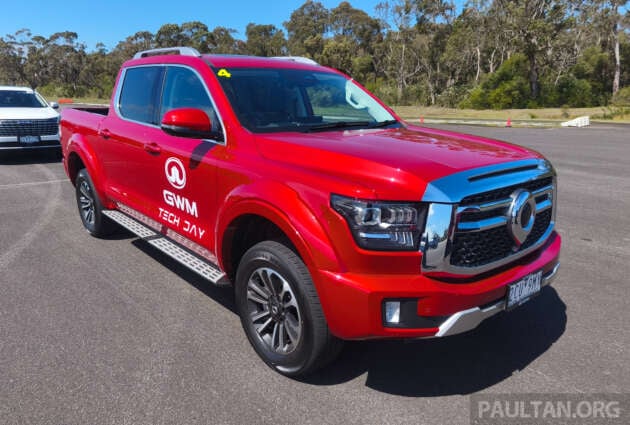
    With a deep understanding of local road feel and tuning vehicles for Australian tastes, Trubiani and his team have been working on steering calibration and damper tunes on a number of models, namely the Cannon Alpha diesel and HEV/PHEV variants as well as the Haval H6, both in its petrol and HEV/PHEV 2WD and AWD guises.

    The work involved countless steering calibration changes – through runs on public and proving ground roads – and significant damper changes on the models (40 for the Cannon Alpha, and 60 for the H6), with the specifications of the final tune now being incorporated as factory standard settings for units bound for Australia and New Zealand.

    No better way than to note improvements or changes than through a direct back-to-back comparison, and this is precisely what was served up, with each driver having a go around the interior course at Lang Lang in the baseline version of a model before switching over to the one with an AT1 tune.

    While there was improvement in the tuned version of the Cannon Alpha diesel, notably in the speed of the steering’s response, the gains were not as marked as that on the H6, with both the HEV and PHEV showing a distinct lift in steering feel and ride aspects as well as the vehicle’s reaction to larger steering input.

    Exploring GWM’s Hi4 hybrid all-wheel drive – Tank 500 Hi4-T and Haval H6 PHEV AWD sampled in Australia

    On the untouched baseline mules, the steering had a vague, soft response and needed more small corrective adjustments into turns, and the ride had that wallowy feel common to Chinese-tuned cars over patchy surfaces, elements that were all tightened up on the AT1 demonstrators, with that of the steering linearity in particular being especially notable.

    I asked Trubiani how open the automaker was to all the effort needed and time taken to accomplish the task, and he said that the brand had been very receptive to all the feedback and supportive of the undertaking, with there being plenty of collaboration between the R&D team in China and the Australian team.

    Not that the tune would work wonders here, given that our road surfaces differ quite a bit from Australian blacktop, but it shows what can be done if a manufacturer bothers about such things, and it looks like GWM is, because closer to home, local tuning has also been carried out on the Wey G9’s suspension.

    Exploring GWM’s Hi4 hybrid all-wheel drive – Tank 500 Hi4-T and Haval H6 PHEV AWD sampled in Australia

    This is to improve the ride for local conditions as well as on the powertrain to cater for the performance expected by Malaysian buyers, including putting the G9 through its paces up Genting to suitably tailor the powertrain response. Hopefully, we’ll see more of this in future products.

    Finally, the event also finally allowed a better gauge of the facelifted Haval H6, which was trialled very briefly in China back in 2024 over a few hundred metres at the automaker’s R&D test course in Baoding. The sampling this round was far more extensive, involving the differences brought about by the AT1 suspension tuning at Lang Lang and through a nearly 40 km-long road drive.

    As can be seen in the photos, the H6 facelift for Australia features both front and rear visual revisions as per China, as opposed to the Thai-market version, which has the new front but retains the rear end of the current vehicle. Indication is that the facelift is some time away from getting here, so it’s anyone’s guess as to which derriere will appear when it does make its way over.

    Exploring GWM’s Hi4 hybrid all-wheel drive – Tank 500 Hi4-T and Haval H6 PHEV AWD sampled in Australia

    What is almost certain is that it will not arrive in the powertrain guise as seen during the event, be it the PHEV 2WD or PHEV Hi4. Although the PHEV is available in Thailand, word is that the SUV will continue to be fronted by the HEV system here. While we can expect to see plug-in hybrids from the brand coming our way, with the Wey G9 getting the ball rolling, the scope will be more inherently focused, away from the bread and butter.

    Cost has much to do with it, of course. On a mainstream offering, where sizeable volume is needed and a cheaper solution is present, it’s doubtful buyers would pay more for something that they’re not going to benefit from, unless they’re willing to wring the most out of it. Additionally, PHEVs really work best from an equational point of view if you’re fastidious about charging them, and discipline when there is a constant fallback in the form of a petrol mill is, with the rare exception, not going to be there.

    The H6 HEV has worked well from a commercial viewpoint because of its price, so to expect buyers to fork out more – especially in the fluid price environment we’re in now – for what are incremental gains in performance (in 2WD form) would be a stretch. While combined power output from the PHEV 2WD system is higher (326 PS to the HEV’s 243 PS), the system torque gains just 10 Nm from the 530 Nm of the HEV, and in low-speed city driving there really is no fundamental difference in performance or feel.

    There is with the Hi4 though, with its additional 204 PS (201 hp, or 150 kW) rear motor and the combined 364 PS and 760 Nm from its system elevating the presentation perceptibly. The road course, which was around a very large loop running down from Lang Lang, showed not just improvements in tractability, but also cohesion. The AT1 suspension tuning probably played its part, but the AWD system provides this one with quite the trick.

    The question is, would local buyers pay even more for the Hi4, even in its HEV form? The answer is likely no. Away from that, the refreshed H6 feels familiar for the most, even with the revised interior (new steering and gearshift lever, larger central touchscreen, Coffee OS 3.0), down to the front seats, which continue to fall a bit short in terms of length and support.

    It may be a shame that we won’t see the Hi4 in the Haval H6, but as mentioned earlier, the system is set to make its way here in products besides the Wey G9. One of these is the Haval Raptor, which we are told has been earmarked for Malaysia next year. So, expect to hear more about the Hi4 in the following 12 months.

    GALLERY: GWM Tank 500 Hi4-T

    GALLERY: GWM Haval H6 PHEV 2WD/4WD

    GALLERY: GWM Tech Day 2025


  • GWM Wey G9 rolls off CKD line – PHEV MPV open for booking, SWB, under RM300k, launch now early 2026

    GWM Wey G9 rolls off CKD line – PHEV MPV open for booking, SWB, under RM300k, launch now early 2026

    It’s been a long time coming, but the GWM Wey G9 looks to be finally on track for its launch, a full year after being shown at the Kuala Lumpur International Mobility Show (KLIMS) in 2024. The first CKD locally-assembled units have rolled off the production line at the EP Manufacturing (EPMB) plant in Pegoh, Melaka, making this the first Chinese new energy MPV to be assembled in Malaysia, GWM Malaysia says.

    Accompanying the news is confirmation that the launch has slipped from the previous window of the fourth quarter of the year, with the Toyota Alphard-rivalling people mover now only expected to be launched in early 2026. The company has at least opened bookings for the G9, with its estimated price continuing to be under RM300,000.

    While the car is still mostly under wraps, we can see that at least the initial units will be short wheelbase versions (sold in China as the Gaoshan 7), judging by what appears to be a shorter rear bumper and a shorter distance between the rear sliding door opening and the rear wheel arches – just visible underneath the covers. This is what was originally displayed at KLIMS.

    This means the seven-seater (2-2-3 configuration) Malaysian G9 will measure a still considerable 5,050 mm long, 1,960 mm wide and 1,900 mm long, with a wheelbase of 3,085 mm. Contrast this with the middle length version (the Gaoshan 8) that was last at the local preview in September, which is 230 mm longer and has a 60 mm longer wheelbase. There’s even a long wheelbase six-seater model (Gaoshan 9) that is a whopping 5,410 mm long with a 3,275 mm wheelbase, but that won’t be coming here as we understand it.

    GWM Wey G9 rolls off CKD line – PHEV MPV open for booking, SWB, under RM300k, launch now early 2026

    We could see the middle wheelbase option being offered here at some point, given that Malaysia will export the G9 to other markets in the region with differing requirements, such as Thailand and Indonesia. In fact, the car has recently been launched in Thailand, again in SWB form priced at 2,399,000 baht (RM310,900).

    Power comes from a Hi4 plug-in hybrid powertrain, with a 1.5 litre turbo four-cylinder engine at the front making 150 PS from 5,500 to 6,000 rpm and 240 Nm of torque between 1,800 and 4,000 rpm, mated to a four-speed dedicated hybrid transmission (DHT). This integrates a 109 PS/170 Nm electric motor to drive the front wheels, with another 184 PS/232 Nm motor on the rear axle.

    Combined, they produce 442 PS and 642 Nm, allowing the all-wheel-drive G9 to get from zero to 100 km/h in 5.7 seconds on its, ahem, wey (I won’t make that joke again, I promise) to a top speed of 200 km/h. A 44.2 kWh NMC battery delivers a pure electric range of 170 km on the NEDC cycle, and thanks to a 58 litre tank, the total range is quoted at 1,000 km.

    Standard kit in Thailand includes LED lighting, 18-inch two-tone multi-spoke alloy wheels, dual sunroofs, 64-colour ambient lighting, power-adjustable front seats with ventilation and driver’s side memory and massage, one-touch reclining second-row seats with built-in ottomans, a rear fridge, a 12.3-inch digital instrument display, a head-up display, a 14.6-inch infotainment touchscreen, a 17.3-inch rear monitor, wireless Apple CarPlay and Android Auto, a 50-watt Qi wireless charging, 21 speakers and a hands-free powered tailgate.

    GWM Wey G9 rolls off CKD line – PHEV MPV open for booking, SWB, under RM300k, launch now early 2026

    Safety-wise, the Thai G9 comes with six airbags, a 360-degree camera and a full complement of driver assists, including autonomous emergency braking, adaptive cruise control with stop and go, lane centring assist, parking AEB, blind spot monitoring with collision prevention, rear cross traffic alert with auto brake, a door opening warning and even hill descent control. Expect the Malaysian version to feature the same specs.

    “The roll out of the GWM Wey G9 from Melaka represents the meeting point of global engineering excellence and local craftsmanship,” said GWM Malaysia COO Roslan Abdullah. It reinforces our commitment to Malaysia, from creating high value jobs to developing local suppliers and ensuring Malaysian customers enjoy premium New Energy vehicles assembled with pride here in Melaka. This milestone lays the foundation for a stronger and more competitive GWM Malaysia in the years ahead.”

    Managing director Cui Anqi added, “Seeing the first GWM WEY G9 roll out from the Malaysian assembly line…reflects our global ambition to deepen our new energy presence in ASEAN and our confidence in Malaysia as a strategic manufacturing base. The partnership with EPMB is an important milestone in our regional expansion journey. This is more than local assembly, it is the beginning of a broader roadmap that will support future export opportunities.”


    GALLERY: GWM Wey G9 previewed in Malaysia


  • GWM Wey G9 MPV – 442 PS/642 Nm PHEV to get latest Hi4 system, Q4 Malaysian debut, est. below RM300k

    GWM Wey G9 MPV – 442 PS/642 Nm PHEV to get latest Hi4 system, Q4 Malaysian debut, est. below RM300k

    Great Wall Motor (GWM) Malaysia has once again previewed the GWM Wey 80, revealing some new updates and technical information about the plug-in hybrid MPV, which is set to be launched sometime in Q4. This is essentially the third showing of the vehicle, after its first appearance at the 2024 Kuala Lumpur International Mobility Show (KLIMS) last December, and then at PACE in July.

    The first change is with the name, in which a Facebook post made last week announced that it was set to be renamed to the Wey G9 for Malaysia. The preview confirmed the switch, with the company explaining the choice as such, that “the ‘G’ symbolises the bond of love that connects generations, while the ‘9’ reflects wholeness and the dream of family unity.”

    Explanation aside, the new name pitches the model right into the heady mix of similar offerings with a ‘9’ moniker here, namely the Denza D9, Maxus MIFA 9, Xpeng X9 and Zeekr 009. Rather interestingly, GWM says the G9 name has been copyrighted by it for Malaysia, so should the Xpeng G9 get here, it’ll have to be renamed for this market. Naturally, the Wey is also set to compete against the Toyota Alphard and Vellfire.

    The other new information of note concerns its pricing, with GWM indicating that the MPV, which is set to become the first Chinese new energy premium MPV produced in Malaysia, will go on sale at an estimated selling price of below RM300,000.

    GWM Wey G9 MPV – 442 PS/642 Nm PHEV to get latest Hi4 system, Q4 Malaysian debut, est. below RM300k

    The unit seen in these photos is the same one shown at PACE, in its middle-wheelbase 5.28 metre-long seven-seater specification (sold in China as the Wey Gaoshan 8), as can be seen when compared to the 5,050 mm standard-wheelbase form (the Gaoshan 7) that was the KLIMS example, in its pre-updated form. In the domestic market, there is also a long-wheelbase six-seater Gaoshan 9, which measures in at 5,405 mm, but it has been confirmed that we won’t be getting this.

    Of course, beyond that, it’s really anyone’s guess as to what we’re going to get. At PACE, we were made to understand that the show car, which is the updated version of the MPV, would be the one coming our way. However, the briefing notes for the latest preview states the length of the Wey G9 to be 5,050 mm, which would make it the standard-wheelbase form. Other relevant numbers are a width of 1,960 mm, a 1,900 mm height and a 3.085 mm-long wheelbase, with a ground clearance of 155 mm.

    With the company not stating anything beyond the point that final specs may change and there would be different variants with different wheel sizes, it could very well be that the G9 could be available in two wheelbase forms. As indicated by GWM, the locally-assembled G9 is set to be exported to Thailand, Indonesia and other regional markets, so there is a possibility of there being more than one length version.

    GWM Wey G9 MPV – 442 PS/642 Nm PHEV to get latest Hi4 system, Q4 Malaysian debut, est. below RM300k

    Whatever the case may be, the G9 that will be sold here will definitely feature the updated interior brought along with the introduction of the expanded line-up in China, making Malaysia the first country outside of China to get the update as well as the car in RHD guise.

    The update brings along a new two-spoke steering wheel, a 12.3-inch digital instrument display and a 14.6-inch infotainment touchscreen (but without the dual screen layout, omitting the passenger display), with the latter running on GWM’s latest Coffee OS 3.

    Additionally, the centre row zero-gravity captain chairs have been redesigned, and now have physical seat adjustment controls located on the forward edge of the inner armrests on both seats. The units are also ventilated and come with a 10-point massage function. Upholstery is in Nappa leather across the cabin.

    As with the pre-update version, the G9 features a shared rail design for the second and third row seats, which provides an extra-long slide rail of 1,845 mm for second-row seating adjustment, allowing for up to 1,166 mm of legroom to be gained for second row occupants. Luggage compartment capacity is 233 litres with the rear seats up, but can be expanded to 1,725 litres.

    Novelties include a 12.5 litre large fridge with an independent compressor and adjustable temperature from 0-50°C. The two-tier, dual-opening unit – with front armrest access for the driver and front passenger and a rear drawer for convenient reach for rear occupants – can hold up to six bottles on the upper level and 10 cans below.

    As indicated during the preview, Malaysia will also get the latest iteration of the Hi4 system that came along with the line-up expansion in China, although there are again some differences compared to the domestic model, specifically in terms of output figures from the petrol engine and battery capacity.

    According to the specification sheet, the 1.5 litre turbocharged four-pot will offer a maximum of 150 PS (148 hp, or 110 kW) at 5,500 to 6,000 rpm and 240 Nm from 1,800 to 4,000 rpm (170 PS/245 Nm in China). As for the electric motors, they mirror that of the domestic model, with the front unit offering 109 PS (107 hp, or 80 kW) and 170 Nm, while the rear motor puts out 184 PS (181 hp, or 135 kW) and 232 Nm.

    Because of the variation in the engine output, the combined system output for the G9 here will be 442 PS (436 hp, or 325 kW) and 642 Nm, slightly lower than the 458 PS and 644 Nm found in China. Working in combination with a four-speed Dedicated Hybrid Transmission, performance figures for the MPV include a 0-100 km/h sprint time of 5.7 seconds and a 200 km/h top speed.

    The battery for the Malaysian car is a 44.2 kWh unit, which is smaller in capacity to the 51.55 kWh nickel manganese cobalt (NMC) unit for the Chinese market. It is however higher than the 37.96 kWh unit on the pre-update example shown at KLIMS.

    Based on the chosen battery, GWM says the G9 can get up to 170 km of NEDC-rated travel on pure electric power alone, which translates to about 145 km of WLTP-rated range. Total operating range on a single tank of fuel is claimed to be up to 1,000 km (NEDC), which equates to around 850 km WLTP.

    As for charging, the pack can be juiced up from a 30% to 80% state of charge via DC charging at a maximum rate of 60 kW in 26 minutes, while AC charging at 6.6 kW gets the pack filled up from 15% to 100% in 6.5 hours.

    Speaking of the battery, the company says that the unit features quadruple battery safety protection and has aced no less than 89 tests, including 55 performance tests (BMS, power output, fast charging), 19 reliability tests (vibration, mechanical shock, crush, underbody impact), and 15 safety tests (thermal runaway, over-temperature, over-current, overcharge, short-circuit), with no failures recorded.

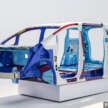
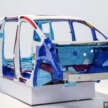
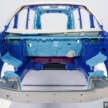
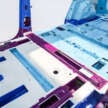
    At the preview, the automaker also took the opportunity to highlight other safety aspects of the G9 through a body-in-white frame showing the materials and effort put into its construction. These include 81.96% use of high-strength steel for the structure and the use of 2000 MPa ultra-high-strength steel in A- and B-pillars to ensure a high structural integrity of the passenger cabin.

    Other highlights include a 1,500 MPa hot-blow-formed tube integrated into the A-pillar. Said to be three times stronger than standard beams, the tubes improve frontal and side crash safety while maintaining visibility. The G9’s roof is also claimed to have a 12-ton crush resistance, which is achieved through load-bearing body design, a four longitudinal and seven cross-member frame structure, closed door-ring design and hot-stamped front cross beam.

    Some localisation aspects were also highlighted, with GWM saying that the air-conditioning performance has been improved for the local car, with the AC compressor being tuned to manage the warmer weather here.

    Local tuning was also carried out on the suspension to improve the ride for local conditions as well as on the powertrain to cater for the performance expected by Malaysian buyers, with the latter including putting the G9 through its paces up Genting to suitably tailor the powertrain response. Also, in case anyone’s wondering why the MPV runs on normal dampers and springs instead of an air suspension, the answer is that it is cheaper to maintain.

    It was also pointed out that the second row sunroof is relatively small on the middle-wheelbase version on show because it was designed to fit the shorter Gaoshan 7. Elsewhere, the third-row seats have not been designed to fold completely flat because of thicker cushions have been utilised for better comfort, with the design focus more on passenger comfort than utility

    Finally, the choice of exterior colours for the G9, which on the display unit rides on 18-inch 10-double spoke two-tone alloys wrapped with 245/50 Michelin Primacy 5 energy tyres, was also revealed. Three choices will be available to Malaysian buyers, and these are grey, black or white. As for the interior colour schemes, there will be two, these being brown and black.

    Final and full specifications will of course be revealed when the GWM Wey G9 makes its local debut before the year is out, following the start of local production by EP Manufacturing (EPMB) at its facility in the Hicom Pegoh Industrial Park in Melaka. More when the time comes.

    GALLERY: GWM Wey G9 middle-wheelbase version (Wey Gaoshan 8 equivalent)

    GALLERY: GWM Wey G9 body-in-white display frame


  • GWM Wey 80 renamed to Wey G9 for Malaysia – CKD PHEV Toyota Alphard-rivalling MPV coming soon

    GWM Wey 80 renamed to Wey G9 for Malaysia – CKD PHEV Toyota Alphard-rivalling MPV coming soon

    The MPV previously called the GWM Wey 80 has been given a new name ahead of its Malaysian launch, with the GWM Wey G9 moniker having been announced on Facebook. The Chinese carmaker added that the Toyota Alphard and Vellfire rival, last previewed at the paultan.org Premium Auto Car Expo (PACE) in July, is coming soon – about time, too, as the previously-announced Q3 2025 launch window ends this month.

    No other details were announced, but we should get the car as per what was shown at PACE, in the new middle-wheelbase seven-seater specification (sold in China as the Wey Gaoshan 8). That car measures a generous 5,280 mm long, slotting between the 5,050 mm of the standard-wheelbase Gaoshan 7 and the whopping 5,410 mm of the long-wheelbase six-seater Gaoshan 9.

    The Malaysian market G9 will also receive an updated interior, featuring a two-spoke steering wheel, a 12.3-inch digital instrument display and a 15.6-inch infotainment touchscreen (no passenger display for our market, unfortunately), the latter running on GWM’s latest Coffee OS 3. There are also new seat controls on the second-row armrests, including a rotary massage mode dial.

    Under the bonnet will sit the Hi4 all-wheel-drive plug-in hybrid system consisting of a 156 PS 1.5 litre turbo four-cylinder engine, a 177 PS electric front motor and a 183 PS rear motor for a total system output of 487 PS, plus 140 km of CLTC-rated electric range from a 37.96 kWh battery. The updated powertrain in China gets a slightly lower total output of 458 PS but a larger 51.55 kWh battery delivering a WLTP-rated EV range of 201 km, although it’s unclear if export markets like ours will get this.

    When it arrives, the G9 will be locally assembled alongside the Haval H6 HEV at the EP Manufacturing (EPMB) plant in Pegoh, Melaka, with exports to ASEAN markets such as Thailand under consideration.

    GALLERY: GWM Wey G9 Hi4 at PACE 2025


  • PACE 2025: Get a RM8k Thule adventure kit with the GWM Tank 300 – first showing of updated Wey 80 MPV

    PACE 2025: Get a RM8k Thule adventure kit with the GWM Tank 300 – first showing of updated Wey 80 MPV

    The paultan.org Premium Auto Car Expo (PACE), which is co-sponsored by Carro and RHB Bank is going at full swing at the Setia City Convention Centre (SCCC). As usual, visitors can expect plenty of great deals on new and pre-owned premium vehicles at the event, which runs from 9am to 7pm today and tomorrow, July 19-20.

    Among the participating brands this year is Great Wall Motor (GWM), which has its two off-road SUVs, the Tank 300 and Tank 500, and the upcoming Wey 80 luxury MPV on show at its booth.

    Equipped with a 2.0 litre turbocharged inline-four petrol engine offering 220 PS (217 hp or 162 kW) at 5,500 rpm and 380 Nm of torque from 1,800 to 3,600 rpm, the Tank 300 is a solid off-road machine, but as the example on display at the event shows, there are plenty of customisation options to give it a more playful outlook.

    Its robustness is aided by a lifetime warranty for its engine and transmission, so you’re well covered on that front. On top of that, you’ll get to enjoy five years of free service, ensuring further peace of mind ownership. At PACE 2025, Tank 300 buyers will receive a Thule adventure kit voucher worth RM8,000, so it’s a perfect place to bag the SUV and get extras while at it.

    As for the Tank 500, the seven-seater takes a more luxe approach to things, but remains a thoroughly capable off-road machine, with electronically locking differentials and a mechanically locking centre differential, among other things, in its kitbag. The hybrid 4×4 pairs a 2.0 litre turbocharged petrol engine with an electric motor with switchable four-wheel-drive to deliver a total of 346 PS and 648 Nm.

    Very neatly, the drive components in its hybrid system are covered by a lifetime warranty, while the hybrid battery is covered by an eight-year or 200,000 km (whichever comes first) warranty, and the vehicle, by a six-year, unlimited-mileage warranty. Just like the Tank 300, a five-year free service package is also included.

    The highlight at the GWM booth is the Wey 80 plug-in hybrid MPV, which has yet to be launched in Malaysia, but is now being previewed in updated form for the first time in the country. The show example, a seven-seat long-wheelbase unit, highlights the refreshed interior we can expect to get when the CKD version arrives on the scene later this year.

    PACE 2025: Get a RM8k Thule adventure kit with the GWM Tank 300 – first showing of updated Wey 80 MPV

    Indicators are that the Hi-4 plug-in powertrain that will equip the Malaysian-spec model will be similar to that seen at KLIMS, which is a 154 hp (156 PS) 1.5 litre turbocharged petrol mill paired with two electric motors, a 174 hp (177 PS, or 130 kW) unit at the front and an 181 hp (183 PS, or 135 kW) unit at the rear.

    In addition to the attractive deals being offered by each of the brands, purchasing at PACE comes with added benefits. That’s because the first 200 new vehicle bookings will come with RM3,000 worth of vouchers from our supporting partners, which include Solar Gard, Dodomat, The Carage, Kuzig Glanz, Gintell and DK Schweizer.

    Similarly, the first 40 new bike bookings will also receive RM3,000 worth of vouchers from the above-mentioned supporting partners.As has always been the case with our shows, the goodies don’t end there. Confirmed new car bookings will enter you into a lucky draw that can win you prizes, including ten smartphones worth RM3,500 each and a grand prize, consisting of a holiday package for two worth RM25,000.


  • GWM Wey 80 MPV previewed at PACE 2025 – updated seven-seater PHEV shown, coming to Malaysia in Q3

    GWM Wey 80 MPV previewed at PACE 2025 – updated seven-seater PHEV shown, coming to Malaysia in Q3

    First previewed at the 2024 Kuala Lumpur International Mobility Show (KLIMS) last December, the GWM Wey 80 MPV has gone on show again at the ongoing paultan.org Premium Auto Car Expo (PACE), which runs today and tomorrow at the Setia City Convention Centre (SCCC).

    However, unlike the KLIMS display unit, the example on show this weekend is the updated version of the MPV that will be coming our way. The display example is also a long-wheelbase version, which is the 5.2 metre-long Wey Gaoshan 8, as the Wey 80 is known in China.

    It was previously said that Malaysia will be getting the standard 5.0 metre-long variant (aka Wey Gaoshan 7) similar to the KLIMS show car, but this is apparently not set in stone, so we could see either the SWB or the LWB coming our way.

    That the unit at PACE is the Gaoshan 8 version is because the show car’s interior has a seven-seat configuration. There’s an even longer 5.4 metre version, the Wey Gaoshan 9, which also made its debut at Auto Shanghai 2025, but that is strictly a six-seater.

    Whatever the case may be, the Wey 80 that will be sold here will, as suggested by the spyshot set from last month, feature the updated interior brought along with the Gaoshan 8 and 9 siblings, This will make Malaysia the first country outside of China to get the update as well as the car in RHD guise.

    Key changes to the cabin is the new two-spoke steering wheel and the different 12.3-inch instrument/15.6-inch infotainment separate screen layout as seen on the Gaoshan 9 in Shanghai, although the Malaysian spec will only come with a single central display instead of the dual central screen configuration of the domestic model.

    Additionally, the centre row zero-gravity captain chairs have been redesigned, and now have physical seat adjustment controls located on the forward edge of the inner armrests on both units.

    If there are no changes to the Hi-4 plug-in powertrain from that seen on the Wey 80 at KLIMS, then we can expect it to be powered by a 154 hp (156 PS) 1.5 litre turbocharged petrol mill, paired with two electric motors, a 174 hp (177 PS, or 130 kW) unit at the front and an 181 hp (183 PS, or 135 kW) unit at the rear.

    This makes for a combined system output of 480 hp (487 PS or 358 kW) and 762 Nm, with a 37.96 kWh ternary lithium battery providing the vehicle with up to 140 km (CLTC) of electric-only travel.

    However, the refresh to the MPV in China has also brought about an update to the Hi-4 system for the domestic market, with the headlining numbers being 170 PS/245 Nm for the 1.5 litre turbocharged four-pot and 109 PS/170 Nm for the front and 184 PS/232 Nm for the rear electric motors.

    Total system output is 458 PS and 644 Nm, which is lower on the whole, but the inclusion of a 51.55 kWh nickel manganese cobalt (NMC) battery means that the Gaoshan 9 has a WLTP-rated electric range of 201 km, with a total operating range of 963 km on a single tank of fuel. The question is, will we be getting this?

    One thing that has been confirmed is that the Wey 80 will be locally assembled by EP Manufacturing (EPMB) at its facility in the Hicom Pegoh Industrial Park in Melaka from the end of this year. As to when it will make its official debut in Malaysia, it’s expected to be soon, in this quarter. In the meantime, if you want a first look at it, head on to PACE 2025.


  • GWM Wey 80 PHEV to be on full display at PACE 2025

    GWM Wey 80 PHEV to be on full display at PACE 2025

    It has just been revealed that the GWM Wey 80 will be on full display at the paultan.org Premium Auto Car Expo (PACE) 2025, happening this weekend July 19 and 20 at the Setia City Convention Centre (SCCC). The plug-in hybrid (PHEV) MPV on show will be a right-hand drive (RHD) unit too – shown for the first time ever – so what you see will be what you’ll eventually get when it’s launched later this year.

    The Wey 80 was previously previewed at the 2024 Kuala Lumpur International Mobility Show (KLIMS) last December, but in LHD form and in an older pre-updated guise inside and out. The new display car on show this weekend is expected to be the latest version of the MPV, which just debuted in April at Auto Shanghai 2025.

    In China, the new Wey 80 is powered by an updated Hi4 (Hybrid intelligent 4WD) system, with a 170 PS/245 Nm 1.5 litre turbo four-cylinder engine, a 109 PS/170 Nm electric motor and a four-speed dedicated hybrid transmission (DHT), plus another 184 PS/232 Nm motor driving the rear wheels. Total system output is 458 PS and 644 Nm of torque, with a 51.55 kWh NMC battery giving a WLTP-rated electric range of 201 km, leading to a total range of 963 km.

    If you are still unsure that the all-electric Denza D9, Zeekr 009 and Xpeng X9 would be an ideal alternative to a Toyota Alphard or Vellfire, perhaps the PHEV GWM Wey 80 would make for an appealing best-of-both-worlds choice. It will be locally-assembled in Melaka too, so it should be priced competitively. Check it out at PACE 2025 this weekend.

    GALLERY: GWM Wey 80 Gaoshan 9 at Auto Shanghai 2025.


  • GWM Wey 80 MPV spied again, now clad – RHD unit shows revised interior from recent China update

    GWM Wey 80 MPV spied again, now clad – RHD unit shows revised interior from recent China update

    The GWM Wey 80 MPV has been sighted yet again, but unlike last week, where it was spotted undisguised, the luxury people mover now wears a wrap in a bid to mask its identity in the latest set of spy shots. Interestingly, the new photo set reveals that right-hand drive is now present, and it also shows changes we can expect to see in the seven-seater MPV when it makes its debut here later this year, likely sometime in the third quarter.

    Unlike the unit previewed at the 2024 Kuala Lumpur International Mobility Show (KLIMS) last December, the interior of the sighted Wey contains minor differences in its cabin that suggest that Malaysia will be getting the updated version of the MPV, which debuted in April at Auto Shanghai 2025, which would make us the first country outside of China to get the update as well as RHD.

    As evidenced by the shots of the interior, the spied mule has the new two-spoke steering wheel and the different 12.3-inch instrument/15.6-inch infotainment screen layout as seen on the Wey Gaoshan 9 in Shanghai, although the Malaysian trial unit bears only a single central display instead of the dual screen configuration shown in China.

    Additionally, while we are still getting the seven-seat version, the centre row zero-gravity captain chairs have been redesigned, and now have physical seat adjustment controls located on the forward edge of the inner armrests on both units.

    Despite our earlier guess that the long-wheelbase form would be the one coming, word is that the local car will remain a standard wheelbase version. The pre-update example shown at KLIMS measured 5,045 mm long, 1,960 mm wide and 1,900 mm tall with a 3,085 mm wheelbase.

    It’s not known if there are any powertrain-related revisions, but the Hi-4 plug-in hybrid system on the Wey 80 at KLIMS consisted of a 154 hp (156 PS) 1.5 litre turbocharged petrol mill paired with two electric motors, a 174 hp (177 PS, or 130 kW) unit at the front and an 181 hp (183 PS, or 135 kW) unit at the rear to offer a combined system output of 480 hp (487 PS or 358 kW) and 762 Nm. On that one, a 37.96 kWh ternary lithium battery provides the vehicle with up to 140 km (CLTC) of electric-only travel.

    Last December, EP Manufacturing (EPMB) revealed that the Wey 80 will be locally assembled (CKD) at the Hicom Pegoh Industrial Park in Melaka from the end of this year. It was also highlighted that the MPV will be “catered to the ASEAN market,” implying that it will be sold in neigbouring markets.

    ]


  • GWM Wey 80 in Malaysia – PHEV MPV to debut soon?

    GWM Wey 80 in Malaysia – PHEV MPV to debut soon?

    The arrival of another entrant in the luxury MPV segment in Malaysia appears to be coming soon, as the GWM Wey 80 has been sighted on local roads around Kuala Lumpur, as seen in this image by paultan.org reader, Radzmund.

    The seven-seater MPV from the Chinese automaker’s luxury sub-brand was previewed at the 2024 Kuala Lumpur International Mobility Show (KLIMS) last December, where it was revealed to pack a plug-in hybrid powertrain comprised of a 156 PS 1.5 litre turbocharged petrol engine and two electric motors.

    The electric driveline consists of a 177 PS motor in front and a 184 PS motor at the rear. Together with the internal combustion engine, the PHEV powertrain offers a combined output of 487 PS and 762 Nm of torque. With electric drive supplied by a 37.96 kWh ternary lithium battery, this offers up to 140 km of EV range on the CLTC Chinese domestic testing cycle.

    Among its compatriots in the Malaysian market, the battery-electric Denza D9 has gone on sale in February this year from RM259k, while the order books for the PHEV GAC M8 opened last month, with pricing estimated to start from RM333,000.

    GWM Wey 80 previewed in Malaysia

    In terms of exterior dimensions, the short-wheelbase version shown at KLIMS measured 5,045 mm long, 1,960 mm wide and 1,900 mm tall with a 3,085 mm wheelbase. For comparison, the Denza D9 measures 5,250 mm long, 1,960 mm wide and 1,920 mm tall, with a 3,110 mm wheelbase, while the GAC M8 is 5,212 mm long, 1,893 mm wide and 1,823 mm tall with a 3,070 mm wheelbase.

    The example of the Wey 80 previewed in Malaysia last December featured zero-gravity seats, second-row captain chairs with folding tables behind the front seats, and the shared seat rails for second- and third-row seats brings a 1,845 mm slide rail, offering up to 1,166 mm of legroom for the second-row occupants.

    Elsewhere within the preview unit, also included were a 1,600 watt, 16-speaker Harman Kardon surround sound system (the LWB Thai-market version gets 20 speakers), a 12.5 litre fridge with an independent compressor and adjustable temperature, said to be able to house 14 standard-sized cans at once.

    The version seen here, however, is the long-wheelbase variant, as evidenced by the lengthened rear end and a different rear bumper design. Known in China as the Gaoshan 9, it boost wheelbase by 190 mm to 3,275 mm and overall length by a whopping 365 mm to 5,410 mm.

    GWM Wey 80 previewed in Malaysia

    The extra length allows the car to trade the seven-seater layout for six seats, where the third row is a second pair of full-sized captain’s chairs. This, too, is being considered for RHD production, which opens the door for the extra-luxurious model to enter ASEAN markets.

    EP Manufacturing (EPMB) revealed last December that the Wey 80 will be locally assembled (CKD) at the Hicom Pegoh Industrial Park in Melaka from the end of this year. Local production of the Wey 80 won’t just be for Malaysian-market consumption, as the MPV will be “catered to the ASEAN market” as well, with exports to Thailand and other Southeast Asian markets confirmed, according to GWM chairman Jack Wey.

    We should point out that in China, the SWB variant has been ditched in favour of a slightly longer model called the Gaoshan 8, introduced at Auto Shanghai 2025. This retains the seven-seat layout but sports a length of 5,280 mm and a wheelbase of 3,145 mm, providing increased third-row and boot space.

    GALLERY: Wey 80 SWB previewed at KLIMS 2024


    GALLERY: Wey 80 LWB (Gaoshan 9) at Auto Shanghai 2025


  • GWM Wey 80 MPV to be assembled in Malaysia – CKD programme for seven-seat hybrid to begin by end 2025

    GWM Wey 80 MPV to be assembled in Malaysia – CKD programme for seven-seat hybrid to begin by end 2025

    EP Manufacturing (EPMB), which recently reached the 1,000 unit production milestone for the GWM Haval H6 HEV at its assembly plant in Hicom Pegoh Industrial Park in Melaka, is set to build an additional two GWM models from next year, one of which is the Haval Jolion HEV, with production of the SUV due to kick off in April.

    The other is the Wey 80, which was previewed in its left-hand drive form at the recent 2024 Kuala Lumpur International Mobility Show (KLIMS). Specific mention of the MPV being slated for production at the Pegoh plant was made by EPMB in its fact sheet accompanying its press statement on achieving its production milestone.

    It was also highlighted in the communication that the MPV will be “catered to the ASEAN market,” implying that it is set to find its way to neighbouring countries. At present, the Wey 80 isn’t available in RHD form, but that should be addressed soon enough, as its assembly in Melaka is slated to begin by the end of 2025.
    The seven-seater measures in at 5,045 mm long, 1,960 mm wide and 1,900 mm tall, with a 3,085 mm-long wheelbase, in its standard wheelbase form, as showcased at KLIMS. There’s also a long-wheelbase version, but no indication as to whether we’ll be getting that.

    The Wey 80 destined for Malaysia will likely feature the Hi4 plug-in hybrid system as highlighted during the preview. This consists of a 154 hp (156 PS) 1.5 litre turbocharged petrol mill paired with two electric motors, a 174 hp (177 PS, or 130 kW) unit at the front and an 181 hp (183 PS, or 135 kW) unit at the rear to offer a combined system output of 480 hp (487 PS or 358 kW) and 762 Nm. A 37.96 kWh ternary lithium battery provides the vehicle with up to 140 km (CLTC) of electric-only travel.

    Interior highlights include quilted leather, zero-gravity seats, with the second-row captain chairs equipped with foldable tables placed behind the front seats. A shared rail design for the second and third row seats provides an extra-long slide rail of 1845 mm for second-row seating adjustment, allowing for up to 1,166 mm of legroom to be gained for second row occupants.
    Novelties include a 1,600 watt, 16-speaker Harman Kardon surround sound system (the LWB version has 20 speakers) and a 12.5 litre large fridge with an independent compressor and adjustable temperature from 0-50°C, capable of accommodating no less than 14 standard-sized cans at one go.

    GALLERY: GWM Wey 80 LHD standard wheelbase preview, KLIMS 2024


  • GWM Wey 80 MPV previewed at KLIMS 2024 – 1.5T dual-motor plug-in hybrid, 487 PS and 762 Nm

    GWM Wey 80 MPV previewed at KLIMS 2024 – 1.5T dual-motor plug-in hybrid, 487 PS and 762 Nm

    Aside from the Tank 500, Great Wall Motor (GWM) Malaysia also has the Wey 80 MPV on display at the 2024 Kuala Lumpur International Mobility Show (KLIMS), which opens to the public from tomorrow until December 11.

    The seven-seater people carrier from the automaker’s luxury sub-brand is very much a preview, given that it’s a left-hand drive example. The show vehicle is also slightly different than the long-wheelbase LHD form shown at the Thai International Motor Expo recently, as the KLIMS show car is a standard wheelbase unit.

    With no RHD yet, it’s not in the pipeline yet, but given how quickly things move these days, the MPV could be a market possibility in the region in the next 12 months. Should it come about, the three-row people mover, which measures in at 5,045 mm long, 1,960 mm wide and 1,900 mm tall, with a 3,085 mm-long wheelbase, will enter a fast swelling MPV arena that will soon include the Denza D9 and GAC M8, the latter also being shown at KLIMS.

    GWM Wey 80 MPV previewed at KLIMS 2024 – 1.5T dual-motor plug-in hybrid, 487 PS and 762 Nm

    The Wey 80 features a Hi4 plug-in hybrid system, which is made up of a 154 hp (156 PS) 1.5 litre turbocharged petrol mill paired with two electric motors, a 174 hp (177 PS, or 130 kW) unit at the front and an 181 hp (183 PS, or 135 kW) unit at the rear to offer a combined system output of 480 hp (487 PS or 358 kW) and 762 Nm. A 37.96 kWh ternary lithium battery provides the vehicle with up to 140 km (CLTC) of electric-only travel.

    Inside, there’s a luxuriously appointed interior, complete with quilted leather, zero-gravity seats, with the second-row captain chairs equipped with foldable tables placed behind the front seats. A shared rail design for the second and third row seats provides an extra-long slide rail of 1845 mm for second-row seating adjustment, allowing for up to 1,166 mm of legroom to be gained for second row occupants.
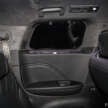
    Meanwhile, the third row incorporates a split butterfly seat design, allowing for 4/6 split tip-up seat folding to provide flexible seating configurations and easier luggage arrangement.
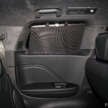
    Novelties include a 1,600 watt, 16-speaker Harman Kardon surround sound system (the LWB Thai version has 20 speakers) and a 12.5 litre large fridge with an independent compressor and adjustable temperature from 0-50°C, capable of accommodating no less than 14 standard-sized cans at one go.
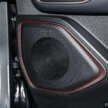
    There’s also a dedicated air fragrance system, with three themed choices to pick from. Incidentally, the KLIMS display vehicle features a sunroof, while the Thai show unit does not.


Latest Fuel Prices

PETROL
BUDI 95 RM1.99
RON 95 RM2.54 (0.00)
RON 97 RM3.10 (-0.01)
RON 100 RM5.50
VPR RM6.45
DIESEL
EURO 5 B10 RM2.92 (+0.03)
EURO 5 B7 RM3.12 (+0.03)
Last Updated Jan 29, 2026

Latest Videos


Related PaulTan.org Content: Reviews: Reviews | Featured: Featured | Electric: Electric | Malaysia: Malaysia | News: News | 2025