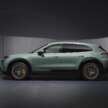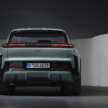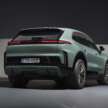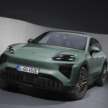
Porsche Cayenne Electric E4 2026

  • Porsche Cayenne Electric – 4th-gen SUV with up to 1,156 PS; 113 kWh battery, up to 642 km range WLTP

    Porsche Cayenne Electric – 4th-gen SUV with up to 1,156 PS; 113 kWh battery, up to 642 km range WLTP

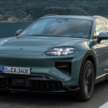
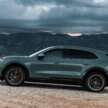
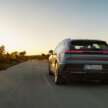
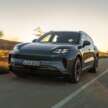
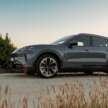
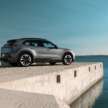
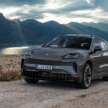
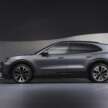
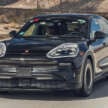
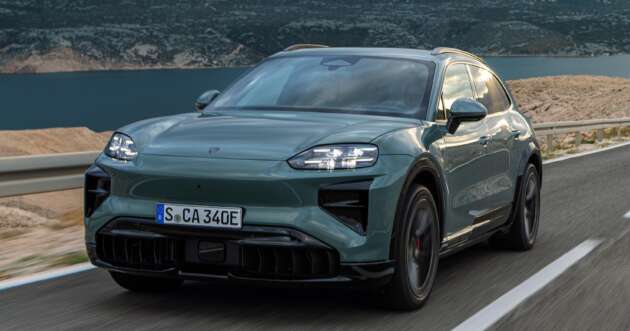
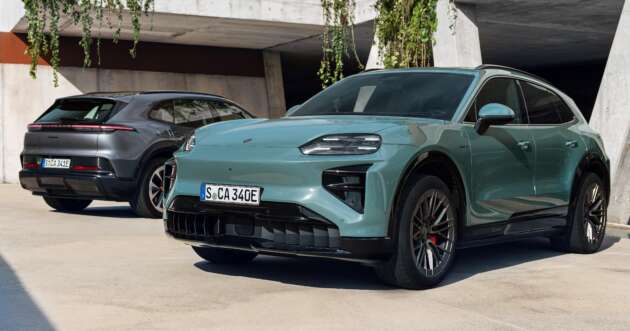
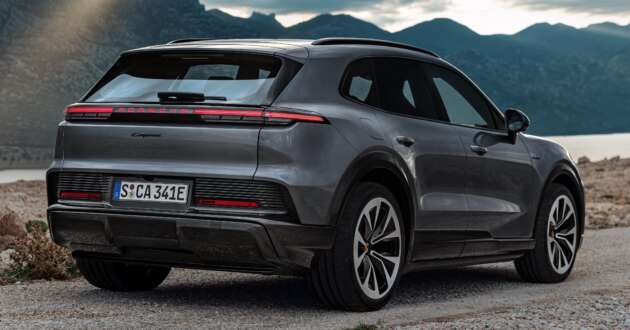
    The fourth-generation Porsche Cayenne has made its debut, officially named the Porsche Cayenne Electric, thus denoting that the latest model emerges from the outset as a battery-electric model.

    Built upon an updated version of the Premium Platform Electric (PPE) architecture that also underpins the second-generation Macan, the latest generation of the Cayenne will be sold alongside the existing, internal combustion-engined Cayenne.

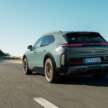
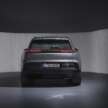
    Measuring 4,985 mm long, 1,980 mm wide and 1,674 mm tall with a wheelbase of 3,023 mm, the latest, E4-generation Cayenne is 55 mm longer than its ICE-powered predecessor (E3 Cayenne: 4,930 mm long, 2,194 mm wide (incl. mirrors), 1,685 mm tall), and the growth in its wheelbase brings gains of 130 mm more rear seat legroom. Luggage capacity ranges from 781 to 1,588 litres, with a 90 litre front luggage compartment. Depending on equipment, the Cayenne Electric can tow up to 3.5 tonnes.
    Porsche Cayenne Electric – 4th-gen SUV with up to 1,156 PS; 113 kWh battery, up to 642 km range WLTP

    Two variants of the fourth-generation Cayenne are available from debut; the base Cayenne Electric, and the Cayenne Turbo Electric, both featuring dual-motor, all-wheel-drive powertrains.

    The base Cayenne Electric offers 408 PS in normal operation, and up to 442 PS and 835 Nm with launch control activated, making it capable of 0-100 km/h in 4.8 seconds and a top speed of 230 km/h.

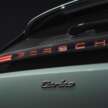
    The Turbo also packs a dual-motor powertrain, albeit a setup with 857 PS in normal running, and up to 1,156 PS and 1,500 Nm with launch control activated. This enables the Cayenne Turbo Electric to attain 0-100 km/h in 2.5 seconds, 0-200 km/h in 7.4 seconds and a top speed of 260 km/h.
    Porsche Cayenne Electric – 4th-gen SUV with up to 1,156 PS; 113 kWh battery, up to 642 km range WLTP

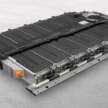
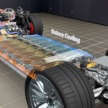
    Both variants of the Cayenne Electric get a newly-developed, 113 kWh battery with double-sided cooling, and this offers up to 642 km of range (WLTP) in the Cayenne Electric and up to 623 km (WLTP) in the Cayenne Turbo Electric. The fourth-generation model’s 800-volt electrical architecture enables DC charging at up to 390 kW, or up to 400 kW under specific conditions.

    With DC charging, a 10-80% state of charge can be attained in under 16 minutes, while a 10-minute charge yields an additional 325 km of range in the Cayenne Electric, or 315 km in the Cayenne Turbo Electric. The latest generation of the Cayenne is also the first Porsche to support inductive charging, at up to 11 kW.

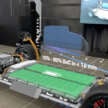
    Officially called the Porsche Wireless Charging floor plate, the 50 kg device doesn’t require an accompanying wallbox or control unit to function. It also occupies a small footprint, measuring 117 cm long, 78 cm wide and six cm tall. To charge, the driver just needs to park the Cayenne over the floor plate, and engage the parking brake for inductive charging to begin.

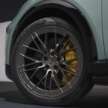
    The Cayenne Electric boasts of Formula E levels of energy recuperation, up to 600 kW, and about 97% of all braking operations can be handled purely by the motors’ regenerative braking, says Porsche. In terms of friction braking equipment, the Cayenne Turbo Electric can be optioned with the Porsche Ceramic Composite Brake (PCCB) brake specification.

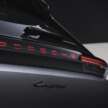
    Porsche claims that the Cayenne Electric is among the most aerodynamic SUVs in its class, with a drag coefficient of 0.25. This is aided by an active aerodynamics system that uses movable cooling flaps in the nose, an adaptive roof spoiler, and in the case of the Cayenne Turbo Electric, active aeroblades at the rear of the vehicle.

    In terms of chassis, the Cayenne Electric gets adaptive air suspension as standard; both variants can be optioned with rear wheel steering, while the Cayenne Turbo Electric gets the PTV Plus limited-slip differential as standard, and may be optioned with the Porsche Active Ride active suspension system.

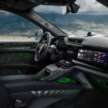
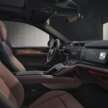
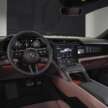
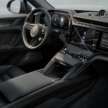
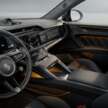
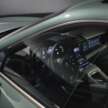
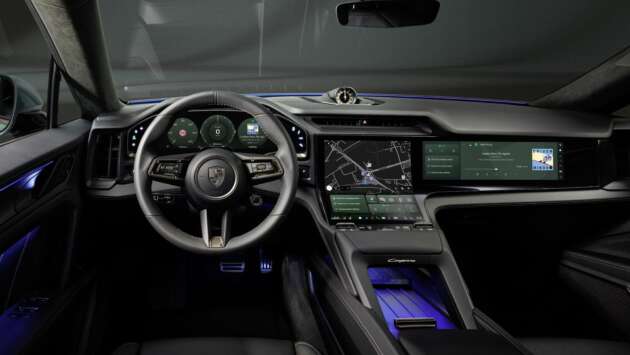
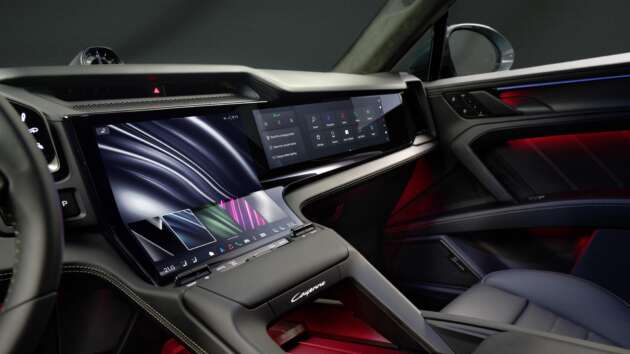
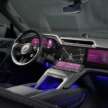
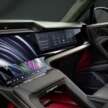
    The cabin of the Cayenne Electric is also where a marked departure from its predecessor is demonstrated, with a dashboard layout that now features the Flow Display, a curved OLED unit that blends from the dashboard into the centre console.

    This is joined by a 14.25-inch OLED driver’s instrument display, and an optional 14.9-inch passenger display. Also optional is a head-up display with AR technology, offering a view representing an 87-inch display area at a distance of 10 m ahead of the vehicle.

    While the interface is touchscreen-intensive, buttons and controls for frequently-used functions such as air-conditioning and audio volume are analogue. A hand rest on the centre console has been developed for the driver to be able to operate both digital and analogue elements ergonomically, even in “particularly dynamic driving situations,” says Porsche.

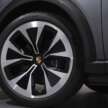
    The fourth-generation Cayenne brings a new level of personalisation to the nameplate, according to the manufacturer; the customer may choose from 13 standard colours, nine wheel designs ranging from 20 to 22 inches in diameter, 12 interior combinations, and five interior packages. The Porsche Exclusive Manufaktur division offers even more scope for personalisation.
     
     
  • 2026 Porsche Cayenne Electric – PPE-based EV; 800V tech, 400 kW DC, 113 kWh battery, over 600 km WLTP

    2026 Porsche Cayenne Electric – PPE-based EV; 800V tech, 400 kW DC, 113 kWh battery, over 600 km WLTP

    Porsche has released more details of the upcoming Cayenne Electric, which it says will be revealed in a few weeks. After giving us a look at the all-electric SUV’s interior previously, the German carmaker is now focusing on the high-voltage technology found in the powertrain.

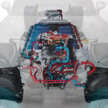
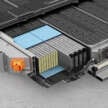
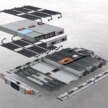
    According to the company, the Cayenne Electric is built on an updated version of the Premium Platform Electric (PPE) with an 800-volt electrical architecture, similar to the Macan Electric. The lithium-ion battery is integrated into the vehicle structure in the floor and is made up of six interchangeable modules and 192 large-format pouch cells.

    Compared to the second-generation Taycan battery, the ratio between the cells and battery housing has improved by 12%, resulting in weight and packaging advantages. A specially developed aluminium structure protects the cells by absorbing energy in a targeted manner in the event of an impact.

    The cells feature a graphite-silicon anode and a nickel-manganese-cobalt-aluminium (NMCA) cathode. Porsche says the high nickel content of 86% ensures maximum energy density, while silicon in the anode enhances fast charging, and aluminium increases the rigidity of the cell structure. The result of all this chemistry work is 7% higher energy density compared to the current Taycan battery, with the Cayenne Electric’s battery having a gross energy content of 113 kWh.

    That figure sounds encouraging, especially when Porsche quotes a combined WLTP range of “more than 600 km.” Prior to this announcement, journalists in the United States drove prototypes over 563 km on a single battery charge at a maximum permitted speed of 113 km/h.

    With an 800-volt system, the Cayenne Electric is capable of DC fast charging at up to 400 kW. This is said to get the battery from a 10-80% state of charge in less than 16 minutes, with 300 km of range being added with just 10 minutes of being plugged in.

    Porsche notes that the charging rate consistently remains between 350 and 400 kW at up to about 50% state of charge. Put simply, the Cayenne Electric can sustain a high level of charging power for a considerable period, which isn’t always the case with electric vehicles (EVs).

    2026 Porsche Cayenne Electric – PPE-based EV; 800V tech, 400 kW DC, 113 kWh battery, over 600 km WLTP

    More impressively, this optimal fast charging curve is achievable from a battery temperature of just 15 degrees Celsius, which is apparently lower than before and more robust under real-world conditions where the climate changes throughout the year. In markets where only 400-volt charging stations are present, the SUV can charge at up to 200 kW without requiring an additional booster

    Managing the battery’s thermals and ensuring it operates within an optimal range is a cooling system that regulates the battery’s temperature from both above and below. Porsche says the cooling capacity corresponds to about 100 large household refrigerators and it is using energy-efficient pressures fans for the first time that consume 15% less energy than conventional suction fans.

    Another thermal-related system is the new Predictive Thermal Management, which links the vehicle’s cooling and heating circuits and continuously manages both in relation to the environment and driving profile. Its mission is to keep the battery at an optimum temperature at all times, while also working closely with the enhanced Charging Planner. Porsche also recaps that the Cayenne Electric will be offered with a wireless charging system for the first time.


  • Porsche Cayenne Electric – radical all-screen interior with curved Flow Display, physical air-con controls

    Porsche Cayenne Electric – radical all-screen interior with curved Flow Display, physical air-con controls

    As Porsche continues its drip feed of information on its new Cayenne Electric, the company has now seen fit to reveal the interior of its full-sized electric SUV. The car, set to debut at the end of the year, will feature a radical rearchitecting that places the fully-digital interface front and centre.

    The big news here is the Flow Display, an OLED centre touchscreen that curves into the raised centre console. While the exact size hasn’t been made known, Zuffenhausen claims it is the largest display ever fitted to a Porsche, and when combined with the optional 14.9-inch passenger screen – which, as per the Taycan and Macan, features a polariser to prevent drivers from being distracted by what’s playing – it also forms the company’s largest continuous “digital surface”.

    Underpinning the display is a new interface that places controls on the lower half the Flow Display, placing them within reach of the hand when placed on the wide palm rest. Porsche has also put the Taycan’s touch-based air-con controls firmly in the past, retaining physical switches for temperature, fan speed and the like – although the air vents still appear to be controlled via the touchscreen, for better or worse. A more powerful AI-powered voice assistant and a smartphone- and smartwatch-based Digital Key have also been added.

    Porsche Cayenne Electric – radical all-screen interior with curved Flow Display, physical air-con controls

    Ahead of the driver sits another curved 14.25-inch OLED instrument display, plus an optional augmented reality head-up display with an effective display size of 87 inches. True to Porsche form, the also-optional Sport Chrono analogue stopwatch still sits on top.

    The Cayenne Electric’s screen-heavy layout has forced the dashboard to be more angular, giving the car a tough, almost off-roader vibe. To soften it, Porsche has widened the customisation options to include 13 colour combinations, including the new Magnesium Grey, Lavender and Sage Grey hues. Buyers can also opt for a leather-free interior with Race-Tex microfibre upholstery and classic Pepita houndstooth fabric, the latter usually reserved for Porsche’s two-door sports cars.

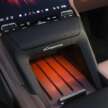
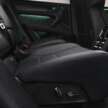
    Other new features include standard power-reclining rear seats, expanded ambient lighting, the largest panoramic sunroof ever fitted to a Porsche (replete with an electrochromic “frosting” function) and surface heating on the armrests and door panels. There’s also a Mood Modes function that adjusts the lighting, air con, sound system and seat functions to create different “atmospheres”.

    The new Cayenne Electric is set to offer a slew of Porsche’s latest technologies, including Porsche Active Ride – first seen on the third-generation Panamera – and what looks set to be the world’s first production EV wireless charger. Due to slowing EV demand, however, the company will continue to sell the existing combustion-powered third-generation Cayenne alongside it, with a comprehensive facelift planned.


    GALLERY: Porsche Cayenne Electric prototype at Munich Motor Show 2025


  • Porsche reveals 11-kW wireless AC charging tech – one-box solution to be offered for Cayenne Electric

    Porsche reveals 11-kW wireless AC charging tech – one-box solution to be offered for Cayenne Electric

    Porsche has claimed to be the first automaker to make wireless electric vehicle (EV) charging available to customers, revealing an 11-kW charging system with a one-box base plate at this year’s IAA Mobility show (also known as the Munich Motor Show).

    According to the German company, the next-generation, all-electric Cayenne (codenamed E4), which is set to premiere at the end of 2025, will be the first model that can be ordered with the one-box base plate. Officially called the Porsche Wireless Charging floor plate, the 50-kg device doesn’t require an accompanying wallbox or control unit to function. It also occupies a small footprint, measuring 117 cm long, 78 cm wide and six cm tall.
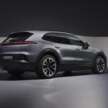
    On the vehicle side, the receiver unit is located in the underbody between the front wheels to protect it from stone chips and the effects of the weather. This is part of an optional package that the company calls the ‘Porsche Wireless Charging pre-installation and Porsche Wireless vehicle plate’.

    Porsche reveals 11-kW wireless AC charging tech – one-box solution to be offered for Cayenne Electric

    For the charging process to begin, drivers only need to park the Cayenne Electric above the floor plate. At this point, the contactless transfer of energy between the two charging units takes place over a distance of a few cm, with the vehicle lowering itself automatically. A special view in the surround view parking function makes it easy to get the positioning right and customers only need to engage the parking brake after the vehicle is in position to begin the charging process.

    Convenience functions from wired AC charging such as timer charging with pre-conditioning are also available with wireless charging. With power delivery at up to 11 kW, this solution matches wired AC charging of the same level – the efficiency of energy transferred wirelessly is said to be up to 90%.

    If you happen to have pets that find the floor plate to be a very cozy, albeit expensive, bed, the charging process is automatically interrupted if a living creature gets between the vehicle and floor plate, or if a metallic object lies on the latter and heats up.

    The floor plate integrates a LTE and WLAN (Wi-Fi) module as standard, ensuring it receives remote software updates and is able to provide telematics for the My Porsche app. Porsche Wireless Charging will initially launch in Europe in 2026, with other markets worldwide to follow.

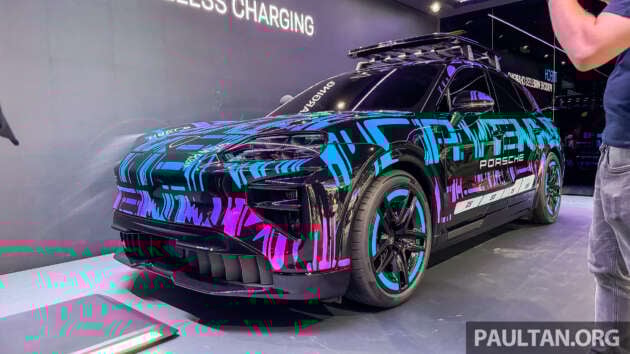
    The Cayenne Electric that Porsche is using to demo the tech at IAA Mobility is deemed a prototype for now, but the company did go through the effort to dress it up. It sports a dynamic camouflage pattern where individual sections are deliberately left out and remain dark, with five colour tones (from blue to violet) controlled in a targeted manner.

    To boast further, the coating is made up of over 25 extremely thin layers. These include conductive primers, electrode and insulating layers as well as the actual electroluminescent material with colour pigments that emit light under alternating voltage. In addition, there are more than 15 layers of clear coats, a total of 100 litres of clear varnish were applied, more than 30 sanding cycles and over 500 meters of cable that make up the show car’s look.


  • Porsche Cayenne Electric to come with active chassis, 3.5-tonne towing; sets Shelsley Walsh hill climb record

    Porsche Cayenne Electric to come with active chassis, 3.5-tonne towing; sets Shelsley Walsh hill climb record

    Porsche has revealed further details of the upcoming Cayenne Electric, the all-electric version of its popular SUV. According to the carmaker, a camouflaged prototype will be on display at this weekend’s Goodwood Festival of Speed from July 10-13.

    Worldwide testing of the new Cayenne Electric, which is set to become the brand’s second electric SUV after the Macan Electric, has already begun, with one of the sites used for demonstrations being the Shelsley Walsh hill climb. The competition has been running since 1905 and sees vehicles drive up the the asphalt hill, which is only 3.5 metres wide in places, has a steep gradient of up to 16.7% and a total length of 1,000 yards (914 metres).

    Gabriela Jílkove, simulator and development driver for the TAG Heuer Porsche Formula E Team, took the Cayenne Electric up the hill to beat the previous record for an SUV by more than four seconds with a time of 31.28 seconds. Another record set is the first measuring point, 60 yards (18.3 metres) beyond the starting line, which was passed after just 1.94 seconds – typically set by purpose-built, single-seat race cars with slick tyres.

    Said vehicle was equipped with Porsche Active Ride, an active chassis system that keeps the body level at all times which will be offered for the forthcoming model. Additionally, it ran on conventional summer tyres to match what will be fitted on the production version.
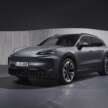
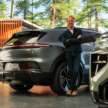
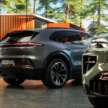
    Porsche even roped in Richard Hammond to showcase the Cayenne Electric’s performance, with the former Top Gear and The Grand Tour host using a prototype to tow a classic car more than 100 years old and weighing more than two tonnes from his workshop in Hereford to his garage – the Cayenne Electric will have a towing capacity of up to 3.5 tonnes.

    As a recap, the Cayenne Electric will be built on the Premium Platform Electric (PPE) with an 800V electrical architecture. While it may mark the fourth generation of the nameplate, the third-generation model will continue to be sold alongside its newer EV stablemate.


  • 2026 Porsche Cayenne teased – fourth-gen to go fully electric; new EV to be sold alongside ICE third-gen

    2026 Porsche Cayenne teased – fourth-gen to go fully electric; new EV to be sold alongside ICE third-gen

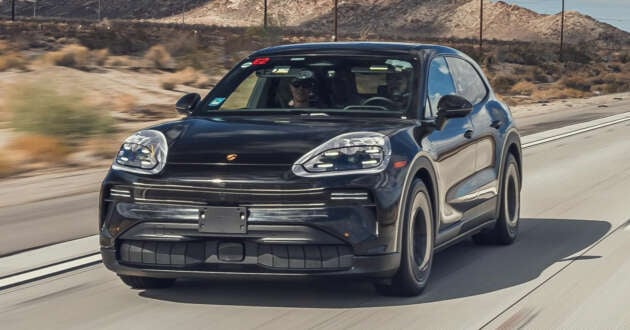
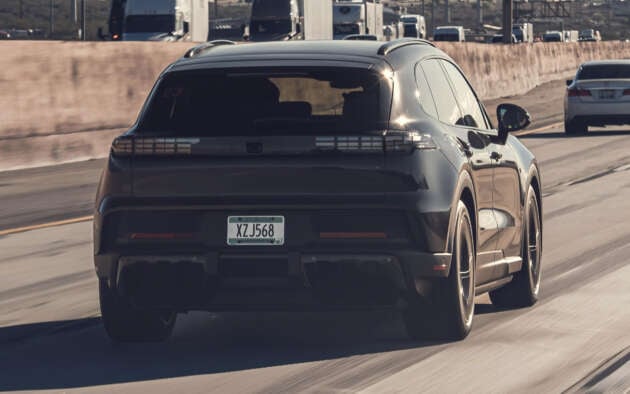
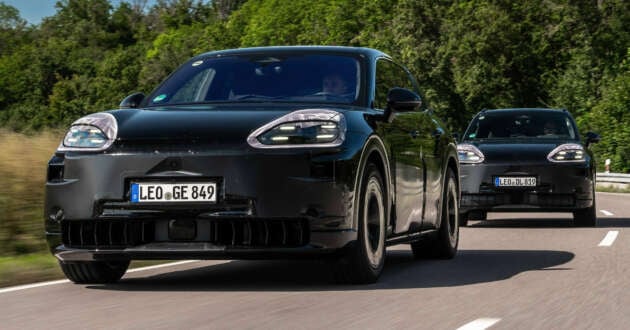
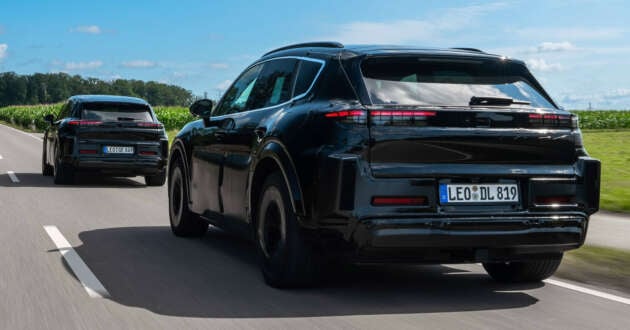
    The upcoming fourth-generation Porsche Cayenne will be an electric vehicle (EV), the German carmaker confirmed in a new press release that also included photos of the SUV undergoing the many millions of km of testing ahead of its official debut.

    According to Porsche, the all-new Cayenne will be built on the Premium Platform Electric (PPE) with an 800V electrical architecture, which is also used for the second-generation Macan. Powertrain details weren’t provided but we should expect high levels of performance as evident when the Macan made its fully electric transition.
    “The Cayenne has always defined the sports car in its segment. In the middle of the decade, the fourth generation will set standards in the segment as an electric SUV,” said Oliver Blume, CEO of Porsche AG.

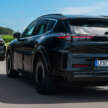
    While the fourth-generation Cayenne will go fully electric, Porsche isn’t abandoning the third-generation model, which will continue to be sold alongside its newer EV stablemate. In fact, the company said it will continue to develop hybrid and combustion engine variants, and customers will be able to choose from three powertrain types up to and beyond 2030.

    2026 Porsche Cayenne teased – fourth-gen to go fully electric; new EV to be sold alongside ICE third-gen

    The third-generation Cayenne got a major refresh last year and is currently offered with a number of different powertrains. These include a 3.0 litre turbocharged V6 and a 4.0 litre turbocharged V8, both of which are also available with a plug-in hybrid system.

    “Our product strategy could enable us to deliver more than 80% of our new cars fully electrified in 2030 – depending on the demand of our customers and the development of electromobility in the regions of the world,” added Blume.

    The Cayenne is an important offering in Porsche’s line-up and was the company’s best-selling model last year with 87,553 deliveries Offering the Cayenne exclusively as an EV will have an impact on sales of the model because not all customers are willing to make the switch, which is something the carmaker is well aware of and is making adjustments for.

    Just a few days ago, Reuters reported that Porsche is watering down its EV ambitions as it expects the transition to electric vehicles to take longer than it thought. Previously, the company said it was aiming for EVs to make up 80% of its total sales by 2030.


Latest Fuel Prices

PETROL
BUDI 95 RM1.99
RON 95 RM2.59 (+0.05)
RON 97 RM3.15 (+0.05)
RON 100 RM5.60
VPR RM6.48
DIESEL
EURO 5 B10 RM3.04 (+0.05)
EURO 5 B7 RM3.24 (+0.05)
Last Updated Feb 26, 2026

Latest Videos


Related PaulTan.org Content: Malaysia: Malaysia | 2025 | News: News | Reviews: Reviews | Motorsports | Tech