
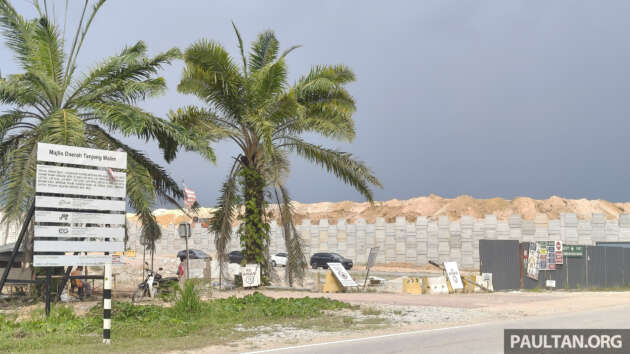
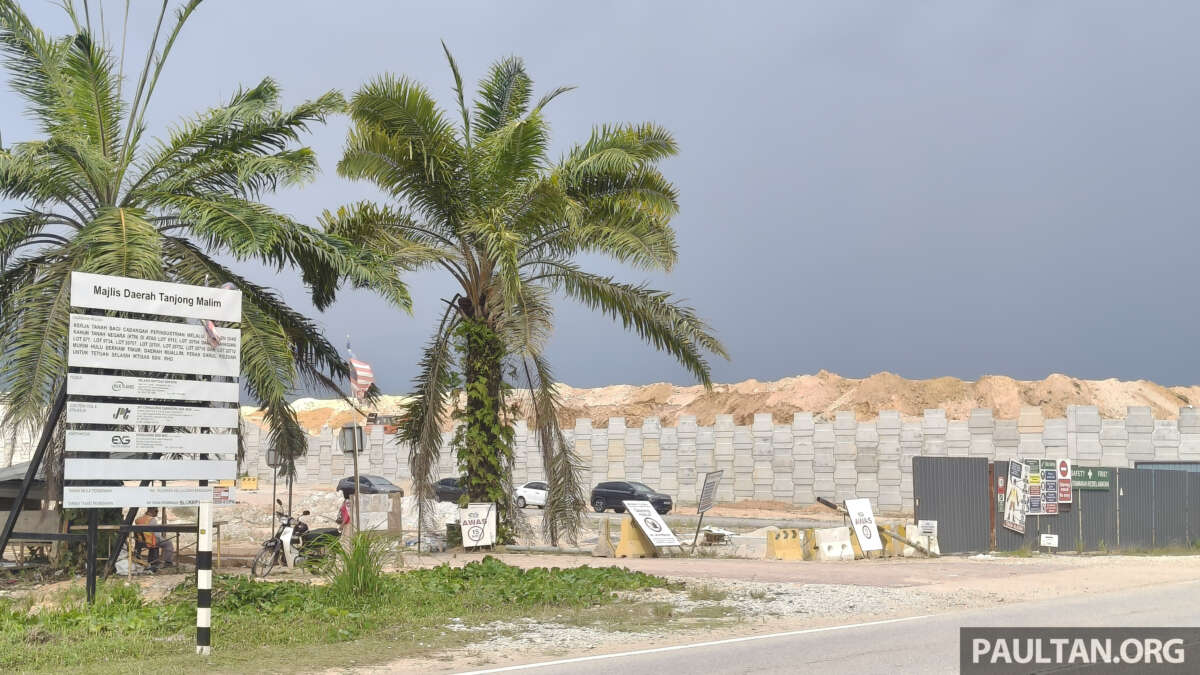
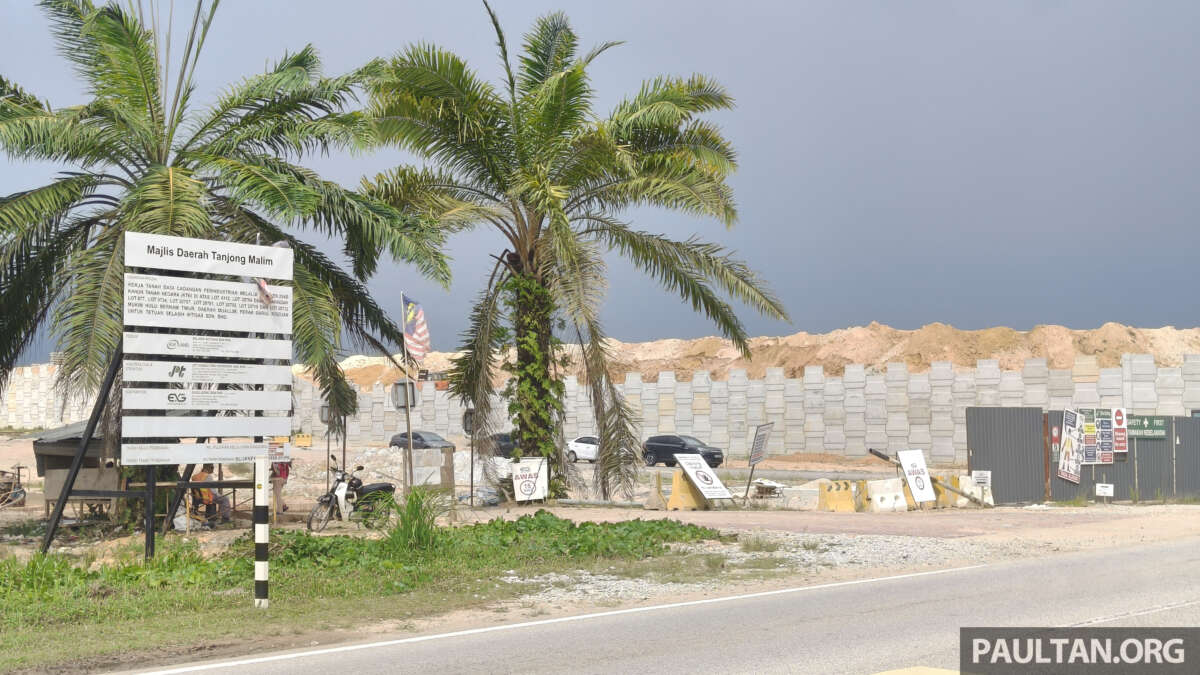
Remember the big news from last August, when BYD Malaysia confirmed plans to set up a local assembly plant in Tanjong Malim, Perak? If you’ve wondered why there has been no update on the progress of the facility, which was expected to begin production in the second half of this year, the reason for that silence has been revealed.
As The Edge reports, the fate of the plant, which was supposed to have been 100% funded by BYD, is up in the air, as the Chinese automaker is said to be relooking at its plans to set up production here, because it reportedly can’t agree with the terms set by the ministry of investment, trade and industry (MITI) with regards to related requirements.
According to the news report, it is understood that the contention is with the terms set by MITI, which would involve BYD exporting as much as 80% of the cars produced in Tanjung Malim, with the remaining 20% of production to be vehicles priced at above RM200,000 per unit.
“These [the 80% export figure and 20% production of EVs at above RM200,000 for the local market] were the terms they couldn’t agree on,” MITI minister Datuk Seri Johari Abdul Ghani told the publication in a brief phone conversation.
He added that there was a need to protect the local auto industry, which provides employment to some 700,000 people. “You must also remember that both Proton and Perodua have 50% local content in their cars, and Proton sells about 150,000 cars a year [while] Perodua sells about 350,000, which is a lot, and these two companies built much of the existing ecosystem for the auto industry in Malaysia. So, we have to protect them,” he said.
Asked if Chery Malaysia’s plans for a RM2.2 billion investment on its Smart Auto Industrial Park assembly plant in Hulu Selangor would proceed, Johari said that the deal has already been concluded, so it stands. The report adds that it is not known how this will impact several other Chinese carmakers such as Zeekr and Xpeng, which are understood to have plans to commence local assembly activities for EVs in 2026 following the end of the tax exemption on CBU EVs at the end of 2025.
The government has also introduced a new minimum price of RM250,000 for CBU fully-imported EVs, which not only covers new brands but also new models from existing brands, hence the growing push by carmakers on the CKD front. This implies a RM50k difference between the reportedly stipulated RM200k minimum for CKD EVs, and the minimum for CBU electric vehicles.
 BYD Atto 3
from RM125,800
BYD Atto 3
from RM125,800  BYD Seal 6
from RM100,000
BYD Seal 6
from RM100,000  BYD Seal
from RM171,800
BYD Seal
from RM171,800  BYD Atto 2
from RM100,000
BYD Atto 2
from RM100,000  BYD Sealion 7
from RM163,800
BYD Sealion 7
from RM163,800  BYD M6
from RM109,800
BYD M6
from RM109,800 
 kenny_lim
on
kenny_lim
on 

 Trump Tariff
on
Trump Tariff
on  Dah Menang Semua
on
Dah Menang Semua
on  KM
on
KM
on  lee cheng san
on
lee cheng san
on  Dong Gor
on
Dong Gor
on  Faris
on
Faris
on  PH janji kereta murah mana?
on
PH janji kereta murah mana?
on  crab
on
crab
on  Thed
on
Thed
on  Akemi
on
Akemi
on  ioma
on
ioma
on  pls check the facts 1st
on
pls check the facts 1st
on  SK
on
SK
on  Akemi
on
Akemi
on  Eeyerr
on
Eeyerr
on  Markus
on
Markus
on  Gotech
on
Gotech
on  opmanmy
on
opmanmy
on  Veneno
on
Veneno
on  Gary
on
Gary
on  tricycle
on
tricycle
on  Pissed Citizen
on
Pissed Citizen
on  KW
on
KW
on  Peter
on
Peter
on  alibaba
on
alibaba
on  Tak masuk akal
on
Tak masuk akal
on  agogo
on
agogo
on  COD
on
COD
on  TehPeng
on
TehPeng
on  Dino
on
Dino
on  Nightingale
on
Nightingale
on  Perlisian
on
Perlisian
on  XYZ
on
XYZ
on  Mr Fakta
on
Mr Fakta
on  EV User
on
EV User
on  Robinhood
on
Robinhood
on  Lou
on
Lou
on  Sohai
on
Sohai
on  ThePolygon
on
ThePolygon
on  david
on
david
on  Haji Karim
on
Haji Karim
on  kljp
on
kljp
on  John
on
John
on  PetrolHead
on
PetrolHead
on  Jack
on
Jack
on  Boy Racer
on
Boy Racer
on  mika
on
mika
on  PiggaPeppa
on
PiggaPeppa
on  Hisham
on
Hisham
on  Adui
on
Adui
on  Tan Chin Sown
on
Tan Chin Sown
on  Yoyo
on
Yoyo
on  Paul Chan
on
Paul Chan
on  Najib
on
Najib
on  JustGuess
on
JustGuess
on  Perodua dan Proton celaka.
on
Perodua dan Proton celaka.
on  DUH
on
DUH
on  Kilamp
on
Kilamp
on  WOW
on
WOW
on  JPB
on
JPB
on  4GR-FSE
on
4GR-FSE
on  lchan
on
lchan
on  TK
on
TK
on  Dean_Tech
on
Dean_Tech
on  Rakyat
on
Rakyat
on  me no understand
on
me no understand
on  macampondan
on
macampondan
on  Hmmmmm
on
Hmmmmm
on  syd
on
syd
on  macc officer mana
on
macc officer mana
on  Mike
on
Mike
on  Kenny Lee
on
Kenny Lee
on 
AI-generated Summary ✨
Comments express frustration over Malaysia's protectionist policies, like RM200k minimum pricing and export requirements, which hinder foreign EV and auto brand investments, including BYD. Many believe these policies favor local brands like Proton and Perodua but stifle competition, innovation, and affordable choices for consumers. Several critics also point out potential corruption, outdated regulations, and the negative impact on economic growth and employment, advocating for open markets and healthier competition instead.