

In line with the industry’s move towards greater autonomy, ASEAN NCAP has introduced the Intelligent Vehicle Advanced Safety Assessment (IVASA), a dedicated evaluation platform for advanced driving assistance systems (ADAS). The programme is aimed at assessing the real-world performance, safety and reliability of these technologies for Southeast Asia.
The creation of the test, the agency explained, is to evaluate whether Level 2 semi-autonomous driving functions in cars today – which tend to be calibrated for their home markets, not ours – are capable of handling uniquely ASEAN road conditions. These include complex traffic situations, diverse vehicle types, high densities of motorcycles and pedestrians, and our, ahem, “localised driving behaviours” (their words, not mine).
“To ensure passenger vehicles are truly equipped for Southeast Asia, we must evaluate intelligent technologies within the context of our local road realities,” said ASEAN NCAP technical leader Yahaya Ahmad. “IVASA was established to bridge this gap, creating specialised assessment protocols that safeguard drivers while supporting the safe deployment of next-generation mobility.”
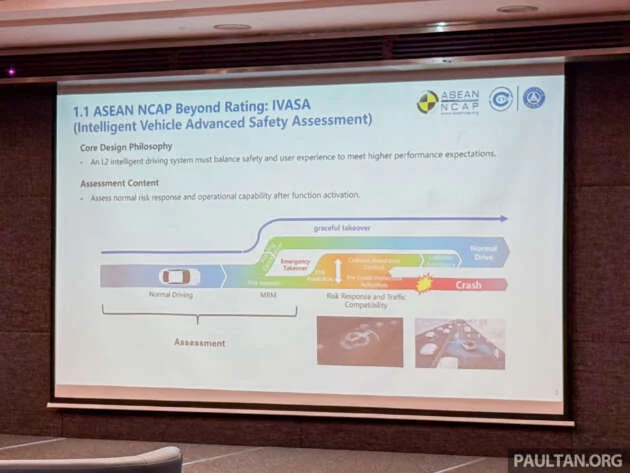
Created in collaboration with ASEAN NCAP’s testing partner, the China Automotive Engineering Research Institute (CAERI), IVASA consists of three assessment categories. Basic Driving Assistance evaluates a vehicles ability to avoid obstacles such as other cars, lorries, motorcycles and “localised road features” including crashed cars, cows and even wild boars. This will be held on a closed course.
Yahaya admitted there will be some overlap with the current ASEAN NCAP protocol, which tests autonomous emergency braking effectiveness under the Safety Assist Technologies (SAT) banner. The key part of the IVASA, however, is that Level 2 features such as adaptive cruise control and lane centring assist are enabled throughout, in order to evaluate the car’s smarts when it is driving itself.
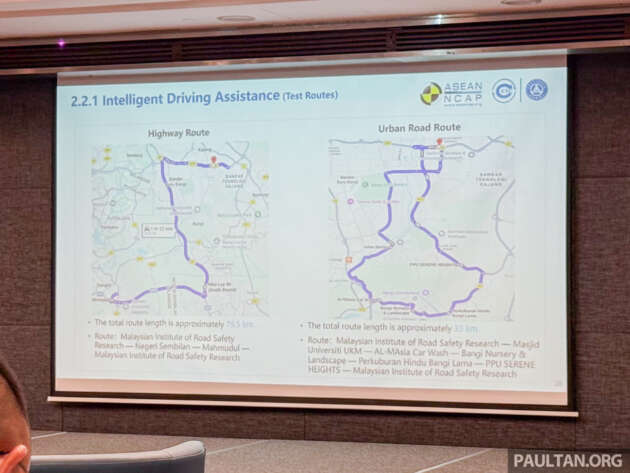
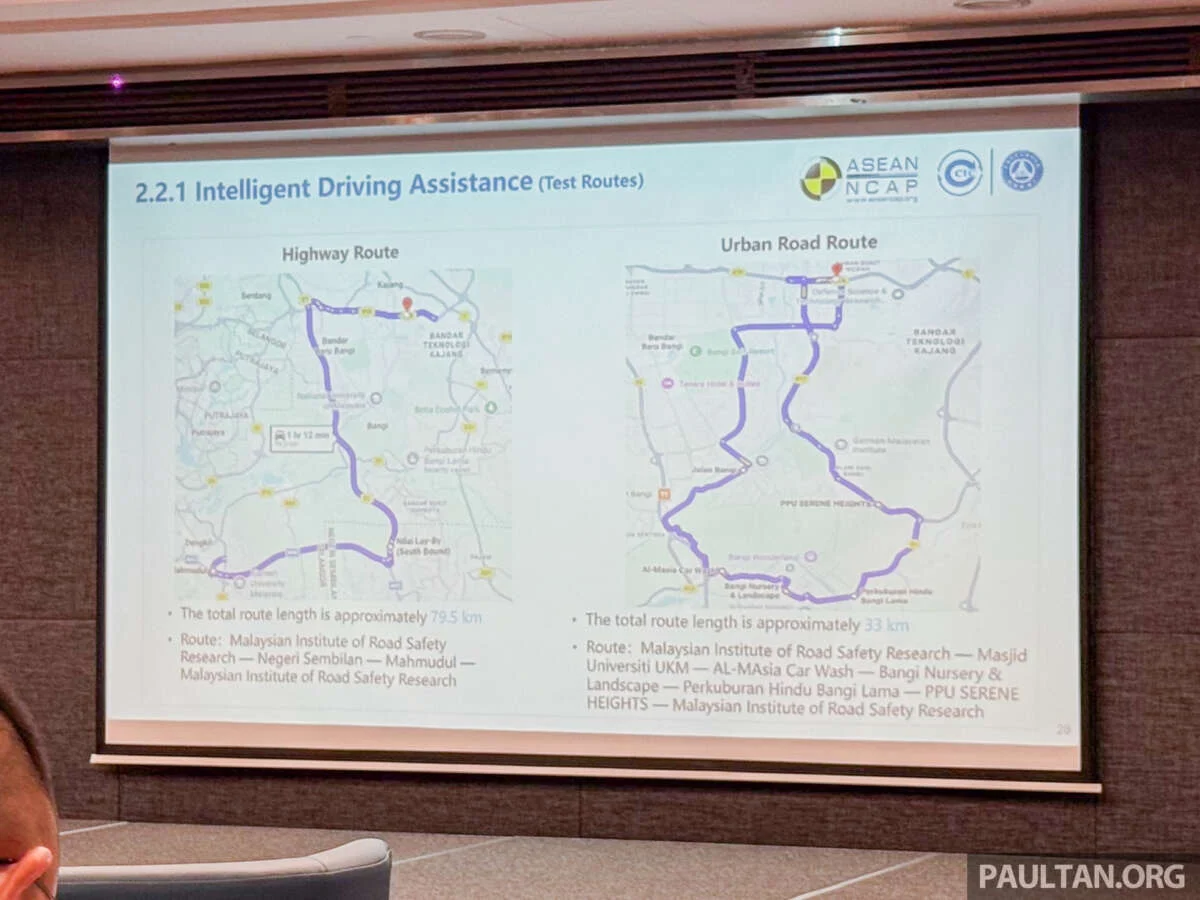
The second category is Intelligent Driving Assistance, which tests a car’s ability to navigate highways and urban roads, roundabouts and intersections. This assessment will be held on public roads and highways around the Malaysian Institute of Road Safety Research (MIROS) headquarters in Kajang.
Lastly, Intelligent Cabin Interaction evaluates a car’s driver attention monitor to see if it can prevent distracted driving. Oddly, it will also test voice control systems, with Yahaya explaining that ASEAN NCAP wants to discourage touchscreen use while driving. No word on whether the agency will require cars to offer physical controls, like with Europe and even China.
The IVASA test procedure has been taken from CAERI’s own ADAS test procedure, although ASEAN NCAP has removed portions pertaining to China’s prevalent highly-autonomous city and highway driving systems, often known there as Navigate on Autopilot (NOA).
However, the assessment will make cars negotiate road features such as roundabouts and traffic lights that are too advanced for Level 2 systems currently offered for sale in Malaysia. We should point out that some Chinese brands such as Xpeng have pledged to introduce their own NOA systems in Malaysia in the coming years.

Pilot testing for IVASA has already begun, with assessments set to begin later this year on a voluntary basis. Cars do not need to carry an ASEAN NCAP safety rating to be submitted for testing, and IVASA results will not affect ASEAN NCAP scores.
To make the latter abundantly clear, IVASA will not award point scores in the same way ASEAN NCAP does. Instead, it will give grades (Good, Adequate, Marginal, Weak, Poor) in a similar fashion to Insurance Institute for Highway Safety (IIHS) crash tests in the US. Good indicates a percentage score of over 80%, while Poor marks a performance below 50%.
The agency is soliciting public and industry feedback on the proposed IVASA programme over the next month, with the protocol set to be uploaded on its official website soon.




due to our ahem localized driving behavior, i firmly believe our ivasa is going to be the ultimate benchmark of all adas tests in the future
ADAS is for lousy drivers i dont even trust my adaptive cruise control!
see the name? “firdaus”. every 10 mat rempit there are more than 5 named firdaus. they piss on safety even before getting driving license :)