

Wonder why there is a lack of electric vehicle (EV) charging stations at petrol stations, especially in rural areas? Well, much of it is due to infrastructure limitations as well as cost and space considerations, but there is also a lack of say in the matter, according to the Petroleum Dealers Association of Malaysia (PDAM).
Its president Datuk Khairul Annuar Abdul Aziz said that while individual dealers could push for EV charging facilities to be installed at their stations, nearly 70% of petrol stations in Malaysia were owned by the brands themselves, and so operators’ ability to make such decisions was limited by oil companies’ broader plans and practical considerations.
“The dealer doesn’t have much of a say in this. They can push for it, but the oil company has its own nationwide plan,” he said. He added that the installation of EV chargers was also driven by location, with charging operators reluctant to invest in areas where the EV presence is low.
“EV operators don’t want to invest in places where they know there’s not much EV use and so it’s not economical for them,” he said, adding that this created a cycle in which charging infrastructure was concentrated in densely populated areas, while rural locations remained under-served.
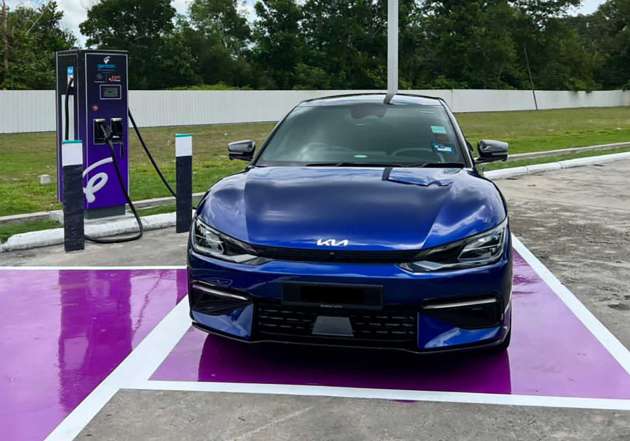
“But what we need is to have infrastructure in places where there aren’t enough people having EVs. If the infrastructure is there, people will start to adopt EVs. So, it’s a chicken and egg situation,” he said.
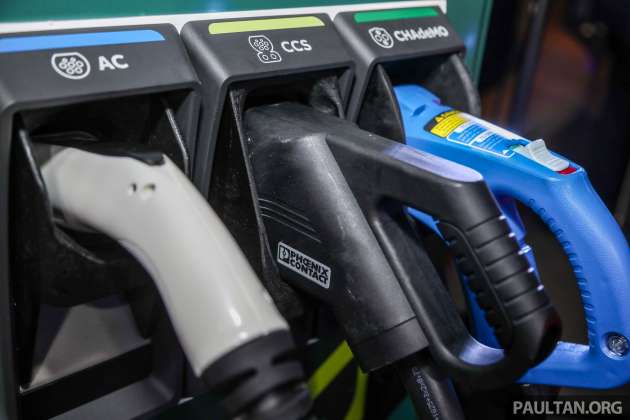
He added that the set-up cost was another major consideration, particularly for fast-charging facilities, as the New Straits Times reports. While AC chargers are cheaper, the time needed for them to charge an EV makes them less attractive to motorists seeking faster charging in a location such as a petrol station.
“People want fast charging, half an hour. Unfortunately, fast chargers require substantially higher investment,” he said. He added that the cost could increase significantly, depending on how much was needed to get the electricity infrastructure up to requirements at a petrol station.
Khairul Annuar said that besides location, the physical size of a petrol station also played an important role. The challenge is particularly acute at smaller stations, where space is limited. “In other words, it’s not that it cannot be done, but it’s difficult. Some cannot do it because they are simply too small,” he said.
Apart from the physical space required for EV charging bays, operators also had to comply with safety requirements governing the distance between charging facilities and existing petrol pumps and underground fuel tanks. He said safety considerations were particularly important because petrol stations handled highly flammable fuel, and petrol vapour released during refuelling had to be taken into consideration.
“Our underground tank and our pump should be okay because they’re underground. But there will be vapour when users are filling up, and there is always a fear that under certain circumstances, a spark could ignite it. That’s why there is a certain distance that the fire department will impose. It’s a requirement,” he said.


The Europe already investing for BYD 1500kW flash charger with power station packed.
It won Germany’s prestigious International Paul Pietsch Award in August 2026.
Any BYD and non BYD EV charged with this could get thier best charging time.
it’s about time that they integrate electric and petrol based energy in a station and call it as ‘Energy Station’, that’s more encompassing than just ‘petrol station’ or ‘EV charging station’.
the white elephant is; why isn’t there any facility for air-filling for tyres at EV station? have you seen any? weird that EV cars need to go to petrol station just to fill up air in the tyres…hahahaha
because you can just buy battery powered air pump from shopee?
because MITI ban cheap EV
Tesla and BYD have both come up with Superchargers that charge from the bottom of the car – something like conduction. I believe those can be installed along roads, not necessarily at petrol stations. But yes, it is a huge outlay for whoever is doing this and yes, it is a chicken-and-egg situation.
My other suggestion is these chargers actually come in the size of a small car – so just park at the side of the road and let whoever wants to charge just charge it. Maybe pay slightly higher but it can be easily recouped: I have seen these kinds of chargers every 100m in Nepal. So if they can do it, then we certainly can too!
Alasan byk byk
Benda boleh bagi alasan buat apa nak bagi charger.