

The road transport department (JPJ) has announced a request for proposal (RFP) for a special licence plate (RPK, or rekaan plat khas), similar to the RFP exercise it carried out in 2023 ahead of the eventual introduction of the JPJePlate for electric vehicles (EV) nearly a year later.
What this means is that adoption of the JPJePlate will now be expanded in the near future to cover registrations of new petrol/diesel (ICE) and hybrid vehicles, as well as new vehicles utilised for trade and by OKU, with zero-emission vehicles (ZEVs) also under that ambit – given that BEVs already have their own plate to identify them, this should cover hydrogen fuel cell (FCEV) types.
The move towards standardising plates for all new cars of all powertrain types is not new. Two years ago, during a briefing prior to the launch of the JPJePlate, the transport ministry said the initiative to introduce the new plate was meant to pave the way for the eventual standardisation of licence plates for all new vehicles registered in Malaysia.


Doing so, transport minister Anthony Loke said, would effectively eliminate fancy/non-regulation plates and reduce vehicle cloning opportunities, among other things. He added that Malaysia is among 5% of the countries left using traditional plates globally, and was looking to gradually move away from that.
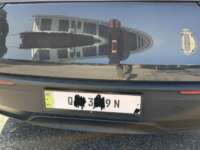
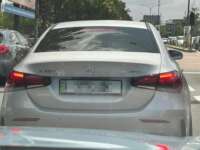
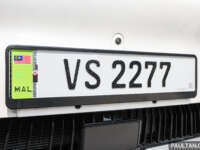
There are no details yet on the new plate format, but as indicated by the Teksi Madani plate, the overall design will follow the current JPJePlate, which is constructed of aluminium and features embossed black lettering on a white background (full technical details of it in our JPJePlate story), with different font size options. A coloured bar on the left side of the plate (neon green in the case of EVs) serves as an identifier, based on vehicle type and its usage classification.
Rumours suggest that passenger ICE vehicles will have a silver bar (previewed by the Teksi Madani plate, it would seem), diesel a black one, with that for hybrids in yellow, with lettering in black on a white background, like now.


Taxis, rental cars and limousines will follow the same colour format, except with their lettering in red (again, as shown by the Teksi Madani plate). It has been suggested that commercial vehicles will also follow the coloured bar format for powertrains, but have black lettering on a yellow background. Of course, details should emerge in the near future.
You may be wondering if the new licence plate will be mandatory for every registered motor vehicle and is presently running on the road, but unlike EVs, where its use is compulsory, existing non-EVs can continue using the familiar black plates, with the expanded JPJePlate only set to apply for new car registrations when it is introduced.
This was indicated two years ago, when Loke said that legacy – as in existing – vehicles will be able to continue using the current plate format, so there would be no additional cost to owners. Also, as before, these plates will not be introduced for motorcycles.




As usual, motorcycle anyhow only…
motorcycles all use bacteria plate because can read or cannot read also no difference, they are not at fault for any accidents under any circumstances
why waste time on “lost causes” ?
its the same logic as dont argue with idiots. Will be a waste of time.
no square plates are reported previously, but do they know some older japanese cars can only fit square?
adik tak baca habis ni , semua nak komen.
Huh? So, the EV plate is not finalized? Still need RFP?
Did you actually understand the article?
I’ve already seen many of these “standardised” JPJePlate with fancy characters…who’s to say that they cannot be customised?
But next year new Transport Minister, then how? Loke isn’t going to be in the govt for much longer, kan…
Lu sapa Tuhan??? Boleh predict
Lu tak baca berita ke? Lu duduk dalam gua di Filipina / Thailand? kan dia kalah PRN baru2 ni
Finally, and end to the fancy plate pests. Small things like that are a reflection of human nature.
Using standard spec number plate – zero effort to comply. Instead you have to put in effort to consciously break the law. Same as abusing emergency lanes. Zero effort to comply. But, those that abuse it are consciously putting in effort to break the law.
When rakyat love putting in effort to break the law, why should we complain when our voted politicians likewise put in effort to break laws or enrich themselves? Our leaders are a reflection of the people, not an exception above the people.
its the common people who follow hte leaders and not the other way around. hence the meaning of the word “leader” .
Phew, luckily older cars not affected.
Motorbikes with fancy no plate how? Some even without no plate.
Motorcycle user and old Japanese cars just wait only