
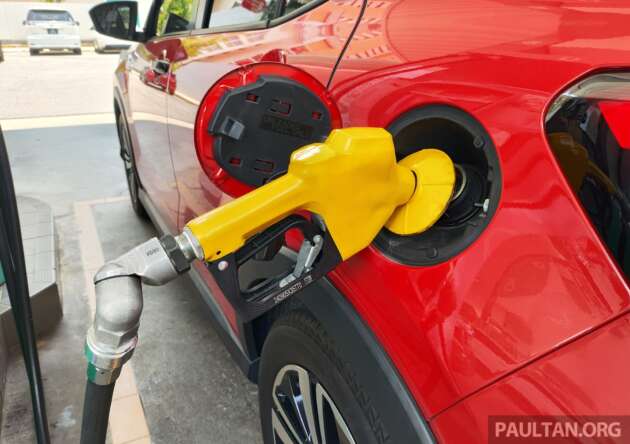
According to Nurhisham Hussein, economic adviser to the prime minister, Malaysia’s fuel supply remains stable for now despite tighter global supplies. He added that the government is confident of securing sufficient supplies through to the end of the year, reports NST.
Nurhisham noted out that the global fuel situation remained fluid, with risks skewed towards higher prices due to geopolitical tensions as well as disruptions to key shipping routes. As alluded before, Malaysia is a net crude oil importer but a net exporter of liquefied natural gas (LNG).
Countries are likely to rebuild their oil reserves when prices return to more reasonable levels of about USD80 a barrel. “So, we will have a very slow rebuilding of reserves by these countries, but that implies as well that over the next two to three years oil prices will continue to be elevated. It might not shoot up, but it will continue to be elevated. It’s still a very fluid situation as far as fuels are concerned,” explained Nurhisham.
Despite the West Asia conflict, the Suez Canal and Bab-el-Mandeb Strait remained open, but there are other factors that affect global oil supply like damage to Russian facilities and the United States blockade of Iranian exports. The depletion of oil reserves also affects supply and contributes to uncertainty in the global energy market.
Nurhisham pointed out that said China’s rapid adoption of electric vehicles (EVs) has helped to moderate global oil demand. “At the same time, Chinese refineries were operating at 80-90% capacity originally because of external demand, so they’re actually doing a lot of exports as well,” he said.

