
Volvo Cars has revealed its plans to launch 13 new cars between now and 2030, which the carmaker calls the “largest and most ambitious” product expansion plan in its history.
This product plan is comprised of seven new cars for Western markets and six new cars for China, with which Volvo plans to increase its market share in the BEV market, as well as with its third-generation hybrid models for customers who prefer not to go fully electric.
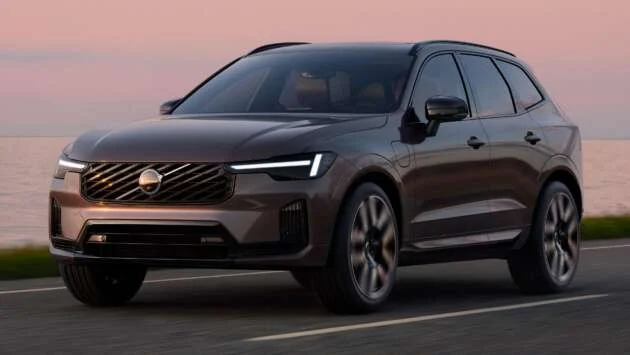
Most recently emerged from Volvo are the 2027 XC60 facelift and XC90 facelift, which saw their respective plug-in hybrid variants get upgraded with larger batteries that offer up to 200 km of EV range in the case of the XC60, and up to 160 km for the XC90.


According to Autocar, the seven new models for Western markets will use the firm’s existing SPA2 and SPA3 architectures – the former used in the EX90 and ES90, and the latter in the EX60 – and will be split between models for the United States and for Europe.
For the latter, Volvo will offer a full BEV line-up by 2030, with the range to be comprised of new low- and high-body types”, which is taken to mean sedans and station wagons for the low-body type, and SUVs for the high-body type.
Volvo chief technology officer Alexander Petrofski told the publication that different countries in Europe are adopting electrification at different rates, and as a result “an individual car will be offered with a BEV propulsion, a PHEV propulsion and a HEV (hybrid) propulsion”.


While Volvo’s future models destined for European and American markets will use the SPA2 and SPA3 platforms with the HuginCore computing platform, investments toward the technology stack and manufacturing of these models “will decrease from today’s levels.”
By contrast for China, Volvo Cars and Geely will collaborate to develop shared platforms, a dedicated tech stack for China and a shared parts and supply chain for cost-efficient development of cars for this region.
Development of the upcoming models will require less investment than was needed previously because they will be based on existing architecture, which will help towards its goal of strong growth and drive EBIT beyond 8%.
 Volvo ES90
from RM339,888
Volvo ES90
from RM339,888  Volvo XC60
from RM328,888
Volvo XC60
from RM328,888  Volvo XC90
from RM418,888
Volvo XC90
from RM418,888  Volvo EX90
from RM428,888
Volvo EX90
from RM428,888  Volvo EX30
from RM198,888
Volvo EX30
from RM198,888  Volvo EC40
from RM248,888
Volvo EC40
from RM248,888  Volvo XC40
from RM268,888
Volvo XC40
from RM268,888 
