

Honda Malaysia now offers an e:HEV hybrid on six of its nine model lines, from the City sedan and hatchback through the HR-V, Civic and CR-V to the Prelude coupe launched in June. The system also has a Malaysian connection: the fifth-generation City RS e:HEV made its world debut here in October 2020, before going on sale in March 2021. The easiest way to think of e:HEV is as an EV that makes its own electricity.
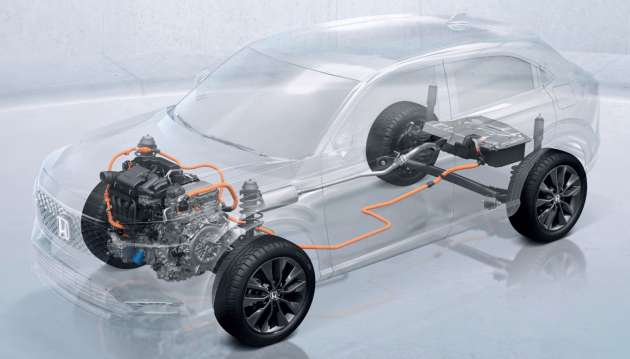
The hardware
e:HEV is the badge; the system underneath is what Honda calls i-MMD, or Intelligent Multi-Mode Drive. It’s made up of five main parts:
- An Atkinson-cycle petrol engine: a 1.5 litre DOHC i-VTEC unit in the City, City Hatchback and HR-V, or a 2.0 litre direct-injection unit in the Civic, CR-V and Prelude. An Atkinson-cycle engine closes its intake valves late, so the expansion stroke is effectively longer than the compression stroke and more work is extracted from each combustion event. The trade-off is weaker low-end torque, which doesn’t matter much here because driving the wheels isn’t the engine’s main job.
- A generator motor, spun by the engine to produce electricity.
- A traction motor, which drives the front wheels. This is the motor behind the output figures Honda quotes: 109 PS and 253 Nm in the City, 131 PS and 253 Nm in the HR-V, 184 PS and 315 Nm in the Civic and Prelude, and 184 PS and 335 Nm in the CR-V.
- A small lithium-ion battery of around 1 kWh (1.05 kWh in the Civic and Prelude), which soaks up surplus energy and allows short bursts of electric running.
- A lock-up clutch and a single fixed gear ratio, although Honda’s latest 2.0 litre version adds a second, lower ratio for engine drive at town speeds. There’s no conventional gearbox at all.
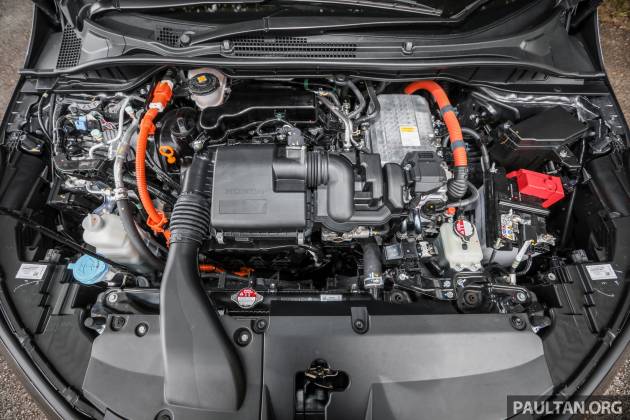
The two motors share a compact housing where a normal transmission would be, with a power control unit (the box with the orange high-voltage cables in the City’s engine bay, above) directing the flow of electricity between engine, motors and battery.

The three drive modes
The car switches between three modes by itself, with no input from the driver:
- EV Drive: the battery powers the traction motor directly with the engine off. Used when pulling away, in slow traffic and for light cruising, which is why an e:HEV creeps around a car park in near silence.
- Hybrid Drive: the mode that does the heavy lifting when you ask for power. The engine spins the generator, the generator feeds the traction motor, and the traction motor drives the wheels. The wheels are not mechanically connected to the engine, so the engine runs purely as a generator and can hold whatever speed and load is most efficient for the power needed, regardless of road speed. Surplus energy tops up the battery, and under hard acceleration the battery adds its power to what the generator makes.
- Engine Drive: at steady highway cruising speeds, converting engine power to electricity and back becomes less efficient than simply turning the wheels with the engine. The lock-up clutch engages and the engine drives the wheels directly through the single fixed gear, roughly equivalent to a conventional car’s top overdrive gear. The traction motor assists briefly for overtaking, and the system returns to Hybrid Drive when more power is needed.
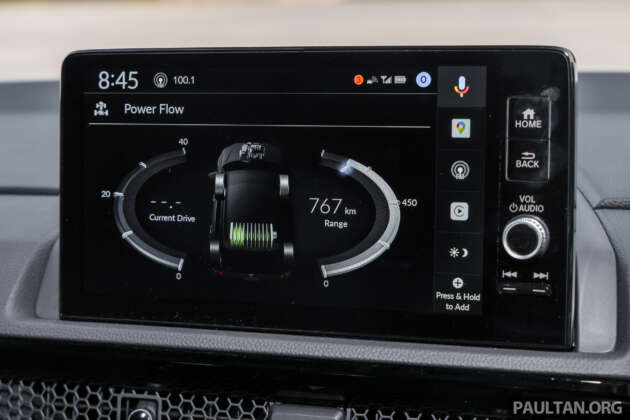
The power flow screen in the CR-V, above, shows which of these is happening at any given moment. Whenever the motor is doing the driving, on battery power or on electricity from the engine, an e:HEV is a series hybrid; it only becomes a parallel hybrid at a cruise.
How e:HEV compares with other hybrids
That is what sets it apart from the other petrol-electric systems sold here:

| System | How it drives | Engine's job | Examples here |
|---|---|---|---|
| Honda e:HEV (series-parallel) | Motor drives the wheels; engine clutches in mainly at highway cruise | Mostly a generator | City, City Hatchback, HR-V, Civic, CR-V, Prelude |
| Toyota Hybrid System (power-split) | Planetary gearset splits engine power between the wheels and a generator; runs on the motor alone at low speed and light load | Drives the wheels and charges the battery, shutting off when not needed | Corolla Cross Hybrid, Camry 2.5 HEV |
| Nissan e-Power (series) | Motor drives the wheels; engine never connects to them | Generator only | Kicks e-Power |
| Mild hybrid, 12V | Engine drives the wheels; a small starter-generator helps it along and restarts it | Always drives | Suzuki Fronx |
| Mild hybrid, 48V | Engine drives the wheels; a bigger starter-generator adds a short boost, recovers more braking energy, lets the engine shut off when coasting and in some cars creeps on electricity when parking | Drives almost all the time | Volvo XC60 B5, BMW X3 20 xDrive, Mercedes-Benz GLC200 |
| Plug-in hybrid (PHEV) | Large battery charged from a socket gives a rated 80-150 km of electric running in the examples here, then runs as a hybrid | Both, depending on charge | Proton eMas 7 PHEV, Jaecoo J7 PHEV |

Efficiency and the way it drives
With the engine freed from the wheels most of the time, it can sit in the narrow band of revs and load where it burns the least fuel for the work it does. Honda’s own mode tracking on a real-driving emissions test route, shown above, had an e:HEV in EV Drive 86% of the time in town below 40 km/h, and in Engine Drive 73% of the time between 80 and 120 km/h.
Honda quotes a maximum thermal efficiency of 41% for the 2.0 litre direct-injection engine, which it says equals the best in the industry. The official Malaysian fuel consumption figures are 3.7 l/100 km for the City RS e:HEV against 5.6 l/100 km for the petrol City, 4.0 l/100 km for the Civic RS e:HEV against 6.3 l/100 km for the Civic RS Turbo, and 4.2 l/100 km for the Prelude.
The other half of the appeal is the way it drives. Because an electric motor with a single fixed gear does the driving, an e:HEV steps off the line like an EV: no gearchanges, no waiting for a downshift. The 253 to 335 Nm of motor torque is there from a standstill, which is why a City e:HEV feels a lot punchier in traffic than its 98 PS engine rating suggests.
The simulated gearshifts
Accelerate hard and the engine note rises and falls in steps, as if a gearbox were changing up. There is no gearbox; what you hear is Linear Shift Control, software that raises the engine speed in steps to match road speed. Without it a series hybrid would drone at a constant high rpm while the car gathers speed, the rubber-band effect people dislike in CVTs. The steps are entirely artificial, there because drivers prefer them.
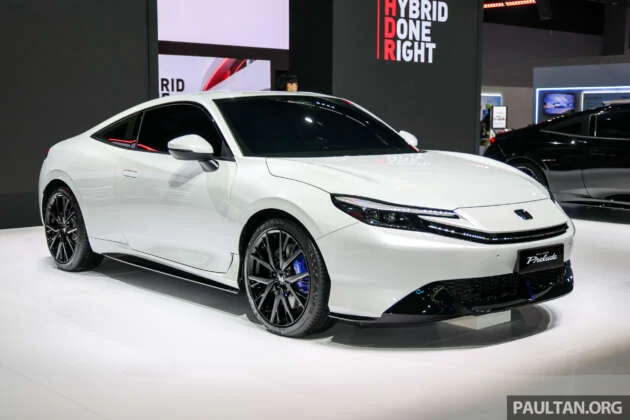
Honda has taken this to its conclusion in the Prelude, launched in Malaysia in June at RM278,000. S+ Shift simulates a full eight-speed gearbox, paddles, rev-matched downshifts and all, on the same gearless two-motor hardware as the Civic and CR-V. We tried it at Sepang in our Prelude first drive.
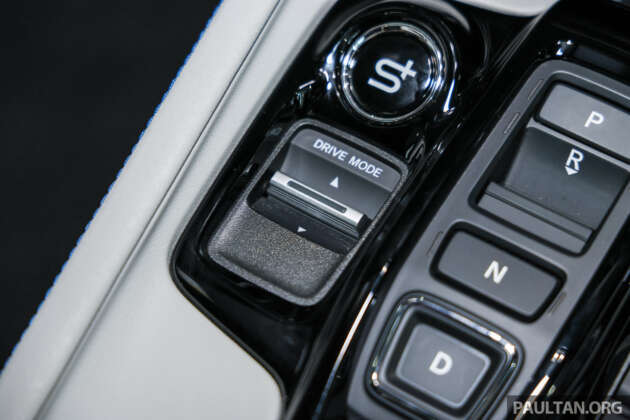
The S+ button sits on the centre console next to the push-button gear selector. The Prelude is the first Honda here with the feature, but not the last: the 2026 update of the Civic e:HEV RS has it too, and has already launched in Thailand and been previewed in Indonesia, and is expected here later this year.
Living with an e:HEV in Malaysia

No plugging in, ever. The engine and regenerative braking keep the battery charged; you fill up with RON 95 as usual, Budi95 included. The paddles behind the steering wheel (above, on the CR-V) aren’t for gears but for regen strength, handy on a long downhill run.
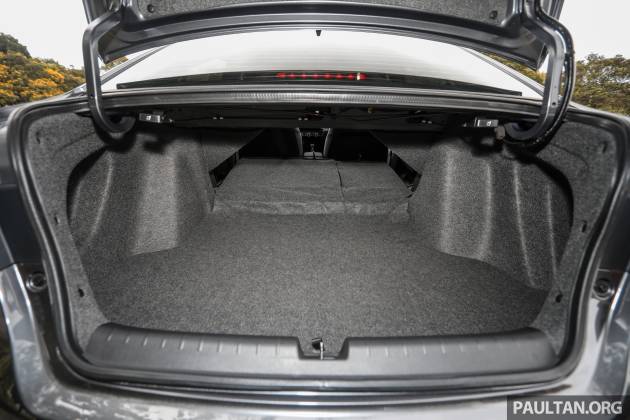
The battery is small on purpose. At around 1 kWh, a fraction of a plug-in hybrid’s, it is light and cheap, but it does eat into the boot: the City sedan e:HEV has 410 litres to the petrol car’s 519.
Eight years on the car, 10 on the hybrid battery. In May, Honda Malaysia extended its hybrid battery warranty to 10 years with unlimited mileage, with selected hybrid components covered for up to 10 years, and from September 1 every petrol and hybrid Honda sold here gets an eight-year, unlimited-mileage vehicle warranty. The five free labour services stay.
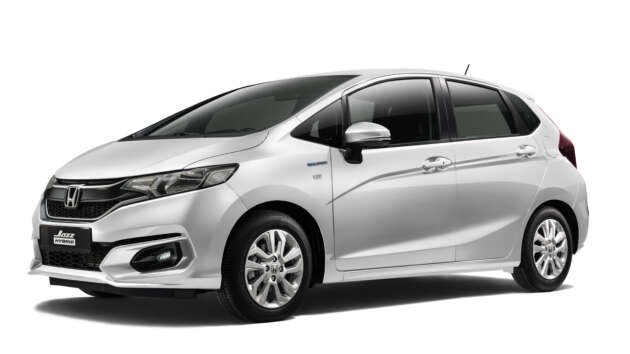
Don’t confuse it with Honda’s older hybrids. The 2012 Jazz Hybrid used Honda’s IMA system, a thin motor that mostly helps the engine along. The 2017 Jazz Sport Hybrid, City Sport Hybrid and 2019 HR-V Hybrid used i-DCD, one motor inside a seven-speed dual-clutch gearbox. e:HEV took over from the 2020 City onwards and shares nothing major with either.
The e:HEV models sold in Malaysia
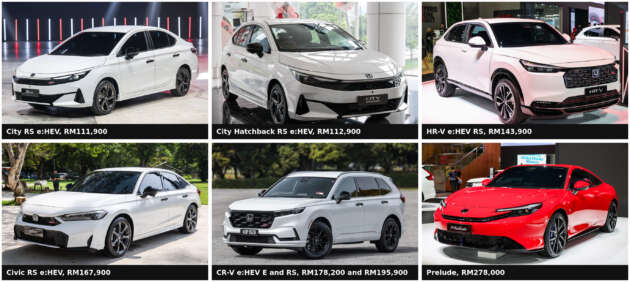
Six of Honda Malaysia’s nine model lines offer an e:HEV variant. The WR-V and Civic Type R are petrol only, and the e:N1 is a full EV. Prices are on-the-road without insurance:
| Model | Price (OTR) | Engine | Traction motor |
|---|---|---|---|
| City RS e:HEV | RM111,900 | 1.5L Atkinson, 98 PS/127 Nm | 109 PS/253 Nm |
| City Hatchback RS e:HEV | RM112,900 | 1.5L Atkinson, 98 PS/127 Nm | 109 PS/253 Nm |
| HR-V e:HEV RS | RM143,900 | 1.5L Atkinson, 107 PS/131 Nm | 131 PS/253 Nm |
| Civic RS e:HEV | RM167,900 | 2.0L Atkinson, 143 PS/189 Nm | 184 PS/315 Nm |
| CR-V e:HEV E | RM178,200 | 2.0L Atkinson, 148 PS/190 Nm | 184 PS/335 Nm |
| CR-V e:HEV RS | RM195,900 | 2.0L Atkinson, 148 PS/190 Nm | 184 PS/335 Nm |
| Prelude | RM278,000 | 2.0L Atkinson, 143 PS/189 Nm | 184 PS/315 Nm |
The City sedan and City Hatchback were both facelifted in the past two months; the hybrid’s price and outputs didn’t change, so our City RS e:HEV review from 2021 still holds for the way it drives. The HR-V e:HEV RS got a 360-degree camera in June, again at the same price; we have driven it against the turbo both before and after the facelift. The Civic RS e:HEV dates from the January 2025 facelift, and our review pits it against the 1.5 turbo. The CR-V picked up a second, cheaper e:HEV E variant in March, the first time a Honda line here has had two hybrids.
All of them are assembled at Honda Malaysia’s plant in Pegoh, Melaka, except the Prelude, which is fully imported from Japan. The City, City Hatchback and HR-V use the 1.5 litre system; the Civic, CR-V and Prelude use the larger 2.0 litre setup.
What comes next
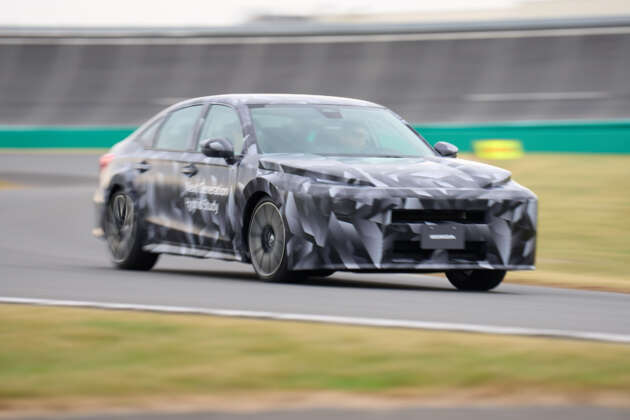
The e:HEV badge is on its last generation. Earlier this month Honda said its next two-motor system, due from 2027, will simply be called Honda Hybrid. The layout stays, but it gets a redesigned 2.0 litre engine, smaller and more powerful motors, a thinner battery, S+ Shift and a new mid-size platform for the next Civic and CR-V, which we sampled in prototype form in Japan late last year. Honda plans 15 Honda Hybrid models by 2030, mostly for North America.
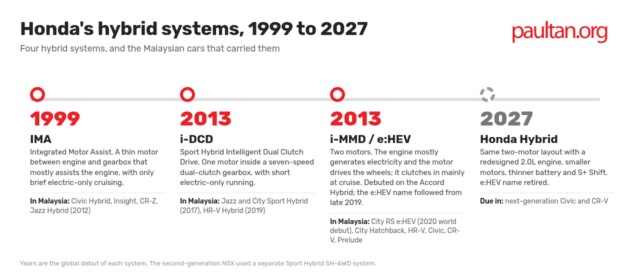
That makes e:HEV the third of four Honda hybrid systems, with the fourth due in 2027. Until the next one arrives, the simplest way to think of it is as an electric drivetrain with a petrol generator attached: the motor does the driving, the engine makes the electricity, and only at a highway cruise do the two swap roles. That’s why an e:HEV Honda pulls away like an EV and sips fuel like a hybrid without ever needing a charging cable, and with eight years of warranty on the car and 10 on the hybrid battery, the same hardware now covers everything from a RM112k City to a RM278k Prelude.
 Honda City Hatchback
from RM95,900
 Honda City
from RM89,900
 Honda WR-V
from RM94,900
 Honda Prelude
from RM278,000
 Honda HR-V
from RM115,900
 Honda e:N1
from RM149,900
 Honda Civic
from RM133,900
 Honda CR-V
from RM178,200
 Honda Civic Type R
from RM399,900


ok cun…. my 159k car still win over civic & CRV
Only Question:
Discount berapa?
Hybrid technology had comes a long way. Various implementation method employed. it seems that this eHEV (where gasoline engine generate electricity) seems to be the way forward. Be it eHEV or e-power.
So it is time Saga should have it’s hybrid powertrain in place to charge past 2027 era… cheers