
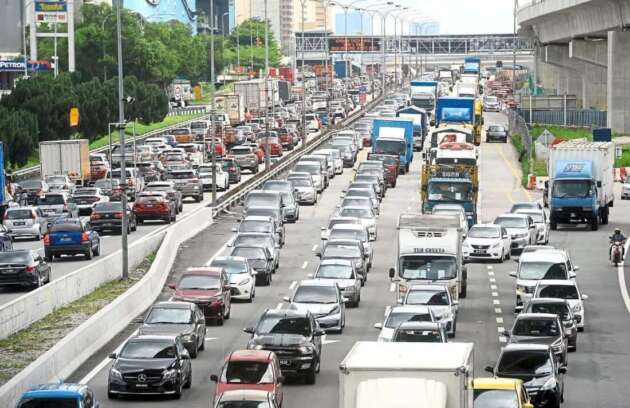
Last month, Seputeh MP Teresa Kok urged Kuala Lumpur city hall (DBKL) to study the increasing congestion in Bukit Jalil, Sri Petaling and Old Klang Road, also suggesting that authorities look into an option of building an additional double-decker road or flyover to relieve congestion in the area.
Addressing the topic. a transport policy expert says the call made by Kok is reasonable, but adds that authorities should first identify what was causing the congestion and look at solutions that would remain effective in the longer term before any decisions are made, the New Straits Times reports.
According to MY Mobility Vision founder and senior adviser Wan Agyl Wan Hassan, DBKL and the public works department (PWD) should start on tackling the issue by asking certain questions. “What is actually causing the congestion? Which parts of the corridor are failing? And more importantly, which intervention will still work five or 10 years after it is built?” he said.
He said that while a flyover could be effective if traffic modelling showed that specific junctions or conflicts between through and local traffic were causing major delays, it by itself may not solve the issue. “Every vehicle entering an elevated road has to come down somewhere. If the next junction, merge or connecting road is already congested, we have not solved the problem. We have shifted it,” he explained.
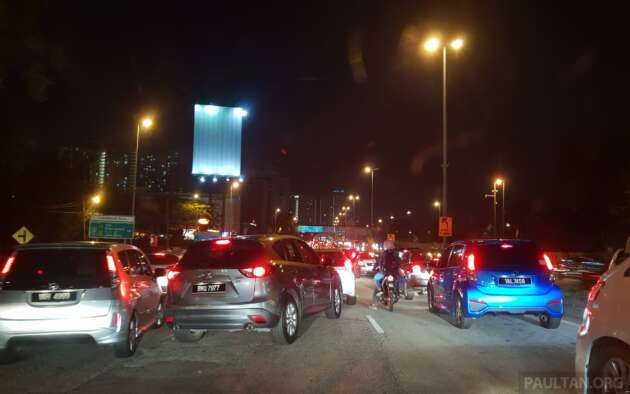
Wan Agyl said that additional road capacity did not necessarily provide lasting relief, as faster journeys could attract more motorists to the route, causing more traffic issues. He called for a comprehensive corridor mobility study covering traffic flows, major bottlenecks, local and through-traffic, public transport, parking and loading activity, as well as traffic generated by future developments.
Possible solutions should include junction improvements, traffic signal optimisation, access management, parking enforcement, improved bus services and feeder routes, with a flyover to be considered if supported by the evidence. “The important thing is to diagnose first and prescribe second. If the evidence says the flyover is the best answer, build it. If the evidence points elsewhere, we should have the discipline to choose the better option,” he said.
He added that authorities should also focus on how many people, rather than vehicles, could be moved by each intervention. “If one project allows another 2,000 cars through a corridor, while another allows several thousand more people to travel reliably by bus, which one creates more transport capacity?” he said.


Improve the public transport, Bus lane btw housing estate and MRT/LRT stations must be made….real bus lane where a road dividers are constructed so that cars, lorries, bikes can enter. make it more costly for ppl to use personal transports and opt for public transport. Reduce RON95 to only 100 liters / mth instead of u stupidly increase it to 300L….its encouraging more ppl to use own transports.
Instead of subsidizing petrol, subsidize the public transport. LRT / MRT / BUS ride etc….10 cents only. stop subsidizing petrol!….and construct dedicated bus lane and let those driving suffer from only 1 lane and traffic with non subsidize fuel…then ppl will use public transport when its so efficient and cheap. Those saving from RON95 sunsidy can be channel to lower public transport fares….
I passby almost every weekday, the reasons quite obvious:
–> to oug
– Cars parking nearby the batu 4 1/2 post office blocking ways enter to kuchai lama near the sjkc choong wen.
– Cars parking roadside nearby the pearl point bridge slow down cars entering jalan sepadu.
–> to federal highway
– People eating nearby stalls parking their car in front of the ambank bus stop after scott garden.
Just fit a clear cctv at those spots, any car blocking the road give them rm1k saman.
It’s the cars parking outside the shops at each traffic light junction (1st at turning to kuchai, 2nd at Taman desa) that’s causing the problem towards KL. Main road becomes single lane. DBKL and Police must station there and tow away those junk non stop. Then saman RM1000 only release car.
The AI-enabled system has a very wide detection scope, encompassing congestion monitoring, pedestrians on the highway, early flood signs, liquid spillage, potholes, rubbish dumping, vehicles driving or reversing against traffic, illegal lane-changing (like across a painted island) and vehicles on the hard shoulder or parked where they shouldn’t. It can even detect illegal advertising banners/posters and count the number of vehicles by class.
https://searssabrina.netlify.app/2026/09/08/ijm-smart-highway-traffic-control-centre-launched/
I would like to suggest that DBKL considers implementing a dedicated lane flow on the E37 East West Link, particularly aimed at establishing a smooth flow of traffic in the direction south to Kajang. There’s currently daily congestion caused by the dispersal of traffic at Connaught at peak hours. The chaotic traffic dispersal around Tmn Connaught causes traffic to build up all the way up to Salak junction and the vicinity of Tmn Desa. The congestion clears immediately after Tmn Connaught. In my opinion a lane dedicated to vehicles heading towards Kajang would smoothen traffic flow from E37 into Highway E7. What are your thoughts about this suggestion and will you take it up with DBKL
I pass this road once in a while. Maybe those who travel this road frequently may be aware but those of us unfamiliar with the road need to swerve to not make right turns inadvertently. So perhaps the road needs to be redesigned so people know beforehand about the upcoming right turns.
Public transport! Always using Malaysia is big when compared to Malaysia. Do it only for KL first!
Car ownership too cheap in Msia
– insurance start from RM600/annual before NCD discount
– anything below 1600cc only cost rm90 max for roadtax
– petrol just RM1.99/L after subsidy kick in
– parking fee? does we even care?
– OKR is toll free, solution is jz built a toll booth there easily traffic will less 50%
Don’t forget predatory finance options that get people into a car quickly and enslave them in debt for up to 9 years and leave them financially worse off at the end.
Toll booth on a road built by gomen and completed decades before tolls were introduced in Malaysia? Really? They tried this years ago and had to remove the tollbooths on the eastbound lanes of OKR because of the backlash.
Well, look at the condo boom along OKR- who approved it ? more condo- same road size…result traffic congestion still need studies
Itulah…all throughout KV local gomen happy to approve because they can kutip more rates but surprised pikachu face when got traffic problem, insufficient drainage and banjir everywhere, low water pressure and electrical brownouts. Developers hepi, councillors all dalam poket.