

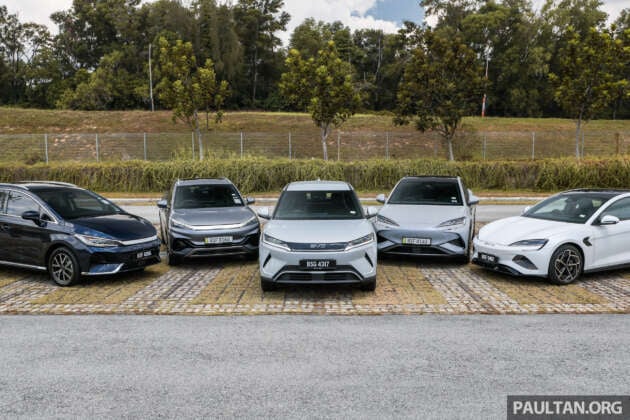
Taylor’s University adjunct professor and former deputy investment, trade and industry (MITI) minister Dr Ong Kian Ming has weighed in on how Chinese carmakers are disrupting Malaysian and Southeast Asian markets, causing governments to respond to protect local players, reports the New Straits Times.
“BYD came in with certain proposals that I think were maybe anticipated by MITI but not anticipated by other members of the government. What do I mean by this? If you look at the completely-knocked-down (CKD) proposals of all the other major Chinese players – Great Wall, Chery, of course, Geely via Proton – there was relatively good communication of those plans and the localisation plans with MITI.
“For BYD, it was a bit different, because they had their experience in Thailand, where they went in with a big investment, 150,000-unit volume, a lot of that anticipated to sell into the domestic market which the total industry volume was about 700,000 units, smaller than Malaysia,” he said at the CGS International ESG and Sustainability Conference 2026.
“That disrupted the auto sector there quite a bit, and of course Malaysia looked at that with great concern and said ‘we don’t want the same to happen to us‘,” he added.
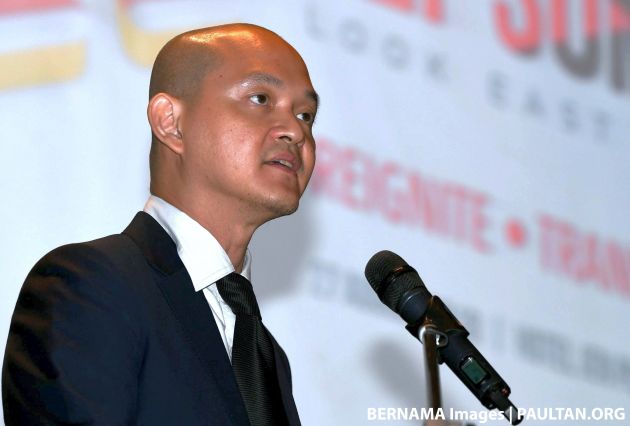
Ong also opined that the government’s communication of its policies, particularly the one mandating a cost, insurance and freight (CIF) value of at least RM200k and a power output of at least 180 kW (245 PS) for fully-imported (CBU) EVs, lacked effectiveness.
This policy caused much public confusion and anger as it was seen as aiming to protect Proton and Perodua, in a regression to the 1990s when imported cars became expensive due to the national aspirations of growing both national carmakers, NST writes.
Ong said that while it was true that the policy would protect Proton and Perodua, it would also protect Malaysia’s auto parts ecosystem, but this was not effectively communicated by MITI.
“I think this is where the communications part is actually very important. I think in the larger discussion on the auto sector in Malaysia, we often forget that Malaysia is probably second in ASEAN with regards to our automotive parts ecosystem.
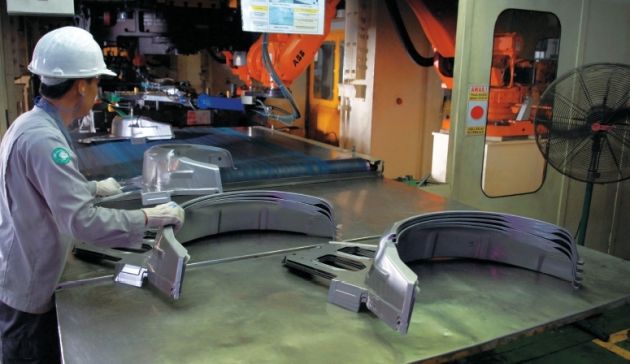
“So we actually export a lot more in terms of parts than the actual cars themselves. And because of the CKD policies that we’ve had over the years, this has actually increased the parts provision and also the manufacturing ecosystem in Malaysia,” he said.
“So much so that if you look at, for example, Vietnam, they’re trying to produce their own car industry, they’re trying to go into EVs, they can only probably produce 15-20% of their parts. Whereas for Malaysia and Thailand, we can go up to 80%,” he added.
Ong also said the National Automotive Policy needs to be updated to align with current government policies, and that if Malaysia wants to move towards an EV ecosystem, consistency between the government’s EV aspirations and its fuel subsidy programmes should be established.
“My personal preference is actually to allow CKD competition below RM200,000 and not allow EVs priced at RM100,000 and below to be monopolised by one or two players,” Ong said, adding that ideally, the government should reduce the subsidy quota or increase petrol prices slightly.
To recap, MITI’s new CBU EV regulations effectively mean that BYD Malaysia’s current all-CBU line-up will either be outlawed because they don’t make at least 245 PS, or become expensive because the CIF needs to be RM200k or more.
The way around this is local assembly, but because BYD was looking at setting up its own new factory in Tanjong Malim, new regulations mandate a RM100k floor price, 80% of production to be exported and a paint shop, which is a costly element in a car factory and a sign of ‘serious work’ being done there, so to say.
So how? Deputy MITI minister Sim Tze Tzin revealed a ‘solution’ in May to The Edge: “If (carmakers) want to price EVs between RM100,000 and RM200,000, they can work together with contract manufacturers to manufacture here” – as MG, Xpeng and GWM are doing with EPMB in Melaka, and TQ Wuling with Tan Chong.
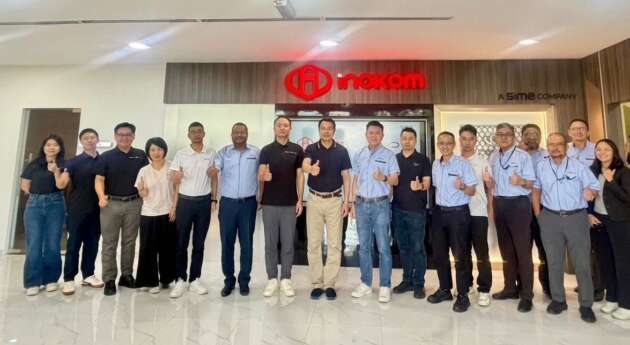
Hardly a week later, BYD VP and GM of the carmaker’s Asia Pacific Auto Sales Division Liu Xueliang visited Sime Motors’ Inokom plant in Kulim, Kedah, triggering speculation that BYD could instead partner up with its Malaysian distributor for contract assembly – but as far as two weeks ago, MITI minister Datuk Seri Johari Abdul Ghani said no decision has yet been received from the carmaker.
 BYD Atto 3
from RM125,800
BYD Atto 3
from RM125,800  BYD Seal 6
from RM100,000
BYD Seal 6
from RM100,000  BYD Seal
from RM171,800
BYD Seal
from RM171,800  BYD Atto 2
from RM100,000
BYD Atto 2
from RM100,000  BYD Sealion 7
from RM163,800
BYD Sealion 7
from RM163,800  BYD M6
from RM109,800
BYD M6
from RM109,800 

who cares about car assembly, parts manufacturing or export? we should be moving towards developing engineering skills. such as engineering right hand drive versions. there is only one company that is capable of that in malaysia. if you want a quote, roger roger.
Typical of Malaysia leaders, all flip flops, not communicated earlier and confusion.. similarly when MPs in cabinet, no see them talk.and follow through but once they out of cabinet,. they will talk.
Protect Policy.
Orang bodoh saja ingat P2 and Proton mainly melayu! P2 = Jepun Proton = China, Hak apa yang u ada dengan kedua-dua ini ya?! sebenarnya saya selalu nak tanya! ADA APA HAK untuk golongan yang MISKIN dan tak kemampuan … MELAYU ke, CINA ke, INDIA pun sama, apa hak kita dengan company company ini ya?! You bukan dapat satu sen pun dari mereka,malah u terpaksa bayar lebih untuk kereta yang semua tahu dah dijual dengan harga 1x atau 2x lebih tinggi! Mereka jer selalu mengeluarkan kata2 cantik “memelihara” brand tempatan “menjaga” hak melayu bla bla bla,…. tapi tanya diri u sendiri, apa yang u pernah dapat dari mereka, u pun salah seorang mangsa yang bayar lebih2 kat kroni kroni ini!
betul. tapi mesia ni ramai lagi puak bod0h b40. nak ketuanan lah, ni lah, tu lah. semua alasan bodoh yang ahli politik cakap, semua percaya
Buduh…complain about burden of fuel subsidy tapi tak nak allow EV jual below RM100k. …then ppl will buy ICE car lah and why u want to complain about high fuel subsidy!
stupid politicians act stupidly. in other news water is wet
We signed the ASEAN free trade agreement wrt motor vehicle but did not honour it.
To export you need mass production to be competitive. Our domestic Numbers not enough. ASEAN as a whole can create the volume needed for mass production. No more local assembly for one model separately in each and every country. Just apply the free trade between ASEAN Members and let businesses resolve itself.
Proton is 43 years old, Perodua is 33 years old… middle age already but still need protection… everything just rebatched and sell with special tax discount… since 1983
There is a country called Bolehland where “evergreen perlindungan” is still prevalent from the kleptocrat to present day.
Imagine 30 to 40 something grown ups adults still sucking milk.
Their weird flex
or Msia can open fully to free trade and become african nations, all roads, cars, tech, jobs all from tongsan, nama je zimbabwe, actualy became zimbab-tongsan. yeah everything “cheap”.
Unlike african nations, we do actually have the purchasing power, the ability to scratch a clear long-term business-roadmap that will eventually benefit us as nation. But people like miti ministers and cronies who have interest in the industry rather protect a dying business profit rather than benefiting citizens. Worse, low iq people like you who aren’t even realise the over-priced basic local products, also aren’t able to read behind their BS words.
Sorry la YB, now you’re no longer in the cabinet as MITI minister you can say anything. I’m sure if you were still the MITI minister, you would have done the same mess and protectionism policy that we have now. Because all of you are the same. You forget your roots and principles once you’re in power. Same with that YB Rafizi fella. Now talk and criticize so much but did nothing when he’s the minister
Simple je ni… Those politishits are just puppets. Thats why they only complain when they are the opposition. But when they got promoted to be a puppet, they end up doing the same shit… Similar shit happened to other ministry too. Kkm, kpm, jpj… Sama je… There are puppets
everybody wants to be sin-ka-lan.
Actually policy changed when umno warlord johari ghani became MITI boss. Before thus it was zafrul. It was more open. Tesla it seems is unaffected. Now we all must ask why?