


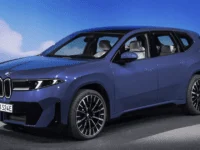
We’ve waited pretty patiently for this, but the new Neue Klasse BMW iX3 L has finally been launched in China at the ongoing Chengdu Motor Show. The long-wheelbase electric SUV’s belated arrival in the Middle Kingdom also sees the debut of a new specially-developed 30L variant to join the 40L and 50L models.
The solely rear-wheel-drive base model produces 265 PS (195 kW) and 500 Nm of torque, meaning that even it can sprint from zero to 100 km/h in just 6.8 seconds. The big change here is the fitment of a 77 kWh LFP battery in place of the less popular NMC packs of the other models, delivering 630 km of range on China’s admittedly lenient CLTC cycle. Expect over 500 km on the WLTP cycle, which is still pretty good going.
Moving up the ladder, the 40L xDrive is also slightly different from the global iX3 40 in that it offers dual-motor all-wheel drive. It makes 374 PS (275 kW) and 565 Nm, which is 49 PS (36 kW) and 65 Nm more than the 40, getting it to 100 km/h three tenths of a second quicker at 5.6 seconds. The also AWD 50L xDrive, meanwhile, churns out the full 469 PS (345 kW) and 645 Nm, enabling it to complete the century sprint in as little as 4.9 seconds.

With their bigger batteries come more range. The 40L’s 86.9 kWh unit offers 702 km of CLTC range, while the 50L with its 113.4 kWh pack is claimed to travel up to 919 km on a single charge. As a comparison, the regular iX3 40 and 50 have quoted WLTP range figures of 636 km and 805 km respectively; expect a bit less with the longer (and thus, heavier) models.
The iX3 L continues to come as standard with an 800-volt electrical architecture, with DC charging times from 10 to 80% are quoted at 22 minutes for the 30L and 21 minutes for the 40L and 50L, despite the former having a smaller battery. That suggests that the entry-level model charges quite a bit slower than the 40L’s 300 kW or the 50L’s 400 kW.
One big downside is AC charging. Both the 30L and 40L support a measly 7 kW and take 10.75 and 13 hours respectively to be fully charged. Even the 50L is capped at 11 kW and needs 11.25 hours for a recharge. That’s a world away from our recently-launched iX3 50, which comes with the optional 22 kW OBC and breezes through a full charge in 5.5 hours.
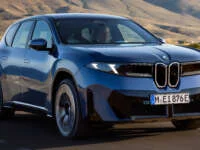
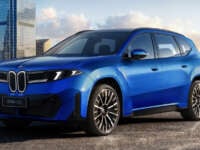
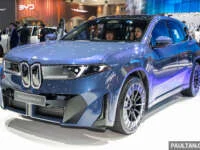
Measuring 4,885 mm long, 1,895 mm wide and 1,634 mm tall, the iX3 L is 103 mm longer than the standard iX3, with even more than that (108 mm) going into the 3,005 mm wheelbase. Beyond the longer rear doors, it also gains a concentric L pattern on the rear quarter light windows, as well as a new 22-inch wheel option and regular pull-up door handles instead of pop-out ones to conform to the country’s incoming ban on hidden handles.
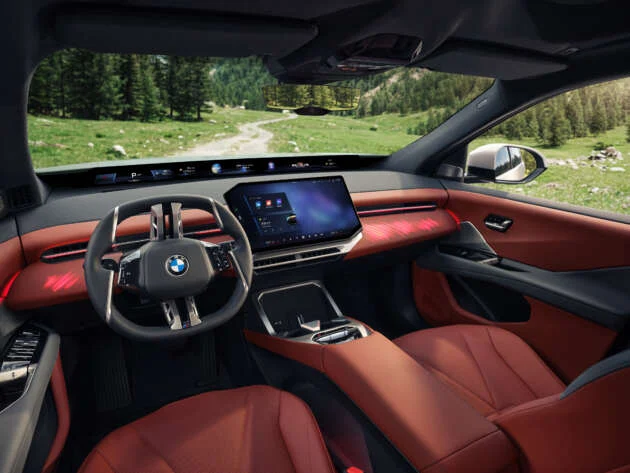
Inside, the iX3 L looks a lot like the regular iX3, incorporating the latest Panoramic iDrive display concept. This includes a 17.9-inch parallelogram infotainment display and a 43.3-inch Panoramic Vision customisable projection display that spans from pillar to pillar. The 40L and 50L also get a 3D head-up display as standard.
Here, the LWB model is set apart through thicker seats with longer bases and a built-in front passenger leg rest (50L only), as well as rear seats that can recline up to 121 degrees. Ventilated front seats come as standard and are unique to the Chinese-market car (global markets don’t get them), joining heated front and rear seats and a massaging driver’s seat. The Veganza faux leather colour options are also unique and include Crystal Blue and a full Castanea scheme that envelops even the steering wheel.
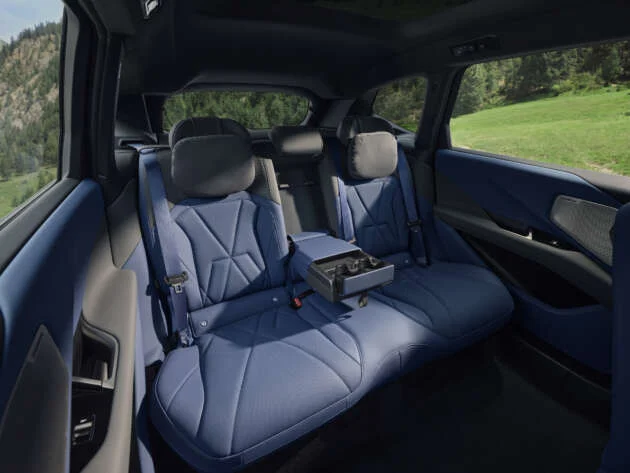
Other standard features in China include the M Sport pack, a 13-speaker Harman Kardon sound system, three-zone auto air con and a panoramic glass roof. Also included is highly-autonomous city and highway driving functionality developed in conjunction with Momenta, with a three-year (city) and eight-year (highway) subscription thrown in with the asking price.
Speaking of the price, the iX3 L retails at 269,900 yuan (RM162,300) for the 30L, 299,900 yuan (RM180,400) for the 40L and 339,900 yuan (RM204,400) for the 50L. In China, BMW is rolling out unified national pricing with few options and no haggling.
With the iX3 L finally launched in China, the next phase will surely be to tool the Shenyang plant for right-hand-drive production for exports to certain markets. Those include Malaysia, where the car has already been pencilled in, enabling BMW to take advantage of preferential tax rates on Chinese-built EVs. This should replace the Hungarian-built current model, with the first 50 units of the latter already sold out.
Thanks to lower taxes and a (slightly) lower specification, could we see the Chinese CBU iX3 L dip under the RM300,000 mark?



 BMW iX3
from RM378,800
BMW iX3
from RM378,800  BMW M3 Touring
from RM898,800
BMW M3 Touring
from RM898,800  BMW iX1 L
from RM252,800
BMW iX1 L
from RM252,800  BMW iX
from RM425,800
BMW iX
from RM425,800  BMW X3
from RM325,800
BMW X3
from RM325,800  BMW M5
from RM1,200,800
BMW M5
from RM1,200,800  BMW M4 Coupe
from RM878,800
BMW M4 Coupe
from RM878,800  BMW 2 Series Gran Coupe
from RM173,800
BMW 2 Series Gran Coupe
from RM173,800  BMW 3 Series
from RM267,800
BMW 3 Series
from RM267,800 

800km range is idiotic . no one neesd that much range its enought to drive from JB to Penang without stopping
The CLTC gives very big numbers that are detached from reality. It feels a lot like the test cycles in the early 90s for gasoline cars, whose numbers you can never achieve unless you turn off all the things that makes a car comfortable and drive so slowly that a professional cyclists can outrun you, all of that in lab conditions where the roads are smooth, no gradient, and no wind. WLTP/WLTC would give you a much closer approximation to the real world, albeit still a little idealistic. In reality, the 900+km you see in CLTC results would translate barely over half in reality, which is more like 480km; and that’s still in the hands of a gentle driver. For most lead footed Malaysians, you should expect no more than 420km out of the 919km quoted in CLTC.
did you even read before typing nonsense – “the regular iX3 40 and 50 have quoted WLTP range figures of 636 km and 805 km respectively;”
What you said doesn’t disprove the point that CLTC is inflated and the average person will never hit that efficiency number unless they will themselves to drive efficiently – very efficiently. I didn’t say it’s impossible; I’m just saying it’s not how over 90% of the people drive in the real world. And I also did say the WLTP is closer but still idealistic, didn’t I? In fact you pointed out that the regular wheelbase 40 and 50 came out to have lower efficiency numbers given that they probably have the same motor inside. Sure, one can argue the wheelbase can affect the efficiency but I wouldn’t know how shortening the wheelbase would make its energy efficiency worse off, if all else are the same. So yes, CLTC is still inflated, and that was my diatribe against it.
if you dont know , just keep your mouth shut.
people tested, this new bmw easily can drive 800km, if higher spec can reach 900-1000km.
I was merely commenting on the difference of testing conditions vs how common people actually drive *in Malaysia*. Tests on whatever social media are still “tests”. I didn’t deny that the car would never give you that range; I’m merely suggesting the average person who drives without really thinking about maximizing the efficiency (which is most of us) will never achieve that figure. I’m pretty sure your own car has some sticker energy efficiency that comes in the brochure. Have you achieved that figure consistently without being really careful about how you’re driving? If you do, good for you; if not, well, welcome to the 90% club of average people.
China ev is far far faraway from this german standard
because german uses junk unsafe NMC battery which cannot even be charged to full. if you dont believe look at the multiple mercedes EQ fires in malaysia alone
china ev suck, that’s why chinese all buying Tesla in china.
only 162k in china, i tought malaysia is more developed?
you must be joking. who told you malaysia is more developed ?
yes you are right, malaysia is more developed in racial conflict issues, so they sell cheap cars in china while we sell cheap underage brides here.
Malaysia Langkawai now also no tourists. Macam mana developed?
Welcome to new generation
From 265ps, 6.8s
Why the LFP low spec only 77kwh while the top spec is 113kwh in NMC. This make the LFP version looks super weak.
LFP had never been “stronger” than NMC to begin with. To achieve the same storage capacity, LFP is heavier and larger physically. What they are superior in is cost and durability when compared to NMC. LFPs are also less susceptible to thermal overrun. They require less expensive materials to make, and they can hold more charge after more charging cycle. If you measure “stronger” in those areas, then yes, LFP is “stronger”. But in terms of energy density, instantaneous output voltage and amperage, all which translate into more motor output, NMC is still “stronger”.
What LFPs excels at is more of the intangibles and none of the pure “performance” measures. I guess BMW ran out of space to house a bigger battery (in terms of physical, volumetric size) in the chassis, so only NMC gets more
Energy Density:
LFP lesser energy density per kg of weight, around 145Wh/Kg for most LFP packs.
NMC is used in high range models because of high density 180Wh/Kg
Lifespan:
LFP : 5000 cycles
NMC: 3000 cycles
Charging Limitations:
LFP encouraged to charge frequently to 100% due to flat voltage plateau, helps BMS keep calibration but that doesn’t mean 100% wont degrade cell life but it is much lesser than on NMC.
NMC strongly discouraged to frequently charge to 100% due to SEI cracking at cell voltages higher than 4V
LFP is better for e-haling and most users like us. NMC for high performance and heavier vehicles that need every bit of extra range they can muster. Charging habits way more restricted with NMC.
Only 162k in China? So that’s the actual value.
Hopefully there will be no high taxes impose on these ix3L from china.
RM162k is really not bad for a bmw. Even the highest “spec” also is only at RM204k.
I hope the Miti would consider that EV user no longer taking the fuel subsidy, less burden to the government.
What we are trying to do is to help government reduce the country’s debt without taking fuel subsidy. Even our TNB home bill also is no longer subsidized by the government.