2026 Proton Saga review - all the good & bad in full detail


Sell your car to Carro, get paid in 24 hours

Latest Stories

  • PM Anwar Ibrahim to launch Teksi Madani national renewed taxi programme tomorrow – new Proton taxi?

    PM Anwar Ibrahim to launch Teksi Madani national renewed taxi programme tomorrow – new Proton taxi?

    The Malaysian transport ministry has just posted this on Facebook – what exactly could prime minister Datuk Seri Anwar Ibrahim be launching tomorrow at Merdeka Square?

    Proton is listed as a strategic partner and AirAsia Ride as a collaboration partner. Could it be a new Proton taxi (Saga MC3? S70?) or is it some sort of overhaul of the Malaysian taxi system? Guess we’ll know for sure tomorrow.

    The transport ministry says the launch will be streamed live on its social media platforms, although no timing is given.

     
  • MV15 ownership transfer report now valid for 120 days

    MV15 ownership transfer report now valid for 120 days

    Puspakom has revealed on Facebook that following a transport ministry directive, the MV15 (previously known as B5) private vehicle ownership transfer inspection report is now valid for 120 days, doubled from 60 previously. This took effect yesterday (July 1).

    “Puspakom welcomes and supports the implementation of this Malaysian transport ministry directive to ease matters for customers. Customers are advised to plan and complete the ownership transfer within the specified validity period,” Puspakom said in a Facebook post.

    So if you are selling your car (or handing it down to a family member), you now have twice the time to carry out your ownership transfer after completing the inspection. Here’s a brief guide if you’re new to this.

    Carro MV15 inspection centre in Kajang

     
  • GWM Tank 300 facelift – Hi4-Z PHEV variant with 200 km CLTC EV range, longer nose for bigger engines?

    GWM Tank 300 facelift – Hi4-Z PHEV variant with 200 km CLTC EV range, longer nose for bigger engines?

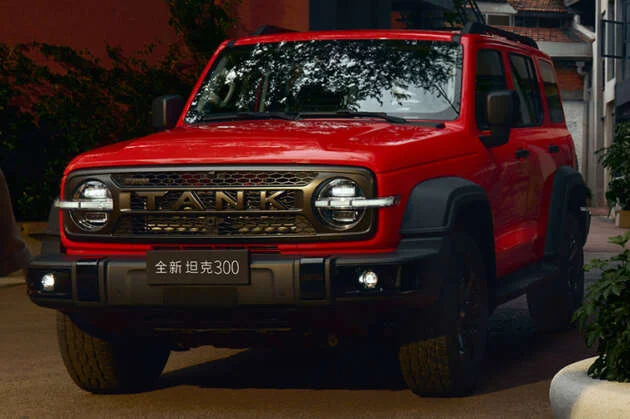
    The GWM Tank 300 is set to receive a fairly substantial facelift, with the first photos having just been released ahead of its full launch on July 6. While the styling itself has pretty much been left well alone, it hides underpinnings that have very clearly been reworked, even if we still don’t know much about it.

    Obvious from the side view is the front axle being pushed all the way to the front, with the front overhang being shortened as a result. According to a Chinese ministry of industry and information technology, the new Tank 300 measures 4,886 mm long, 1,984 mm wide and 1,927 mm tall, making it 126 mm longer, 54 mm wider and 24 mm taller than the outgoing model. But it’s the wheelbase that has grown significantly – at 3,010 mm, it’s a whole 260 mm longer.

    The “long wheelbase” Tank 300 was first shown at Auto Shanghai last year on the extra-rugged Hooke variant (named after the off-road Hooke Trail in its home country), and just like on that car, the added dash-to-axle ratio is disguised by vertical fender vents ahead of the front doors. It also brings the car closer to its inspiration, the Jeep Wrangler.

    GWM Tank 300 facelift – Hi4-Z PHEV variant with 200 km CLTC EV range, longer nose for bigger engines?

    The American 4×4 was designed to fit Hemi V8s, and interestingly, the Hooke was displayed next to a prototype 4.0 litre twin-turbo V8, featuring a Mercedes-AMG-style “hot-vee” layout. We could perhaps see a high-performance model in the long run, in the vein of the Ford Bronco Raptor or the Wrangler Rubicon 392.

    For now, however, the Tank 300 will reportedly keep the same engines, including a 2.0 litre turbo petrol four-cylinder and a 3.0 litre turbo V6 – both mated to a nine-speed automatic gearbox. Power has been boosted to 238 PS (up from 220 PS) for the four-pot, with the six-pot remaining at 360 PS, according to Autohome.

    GWM Tank 300 facelift – Hi4-Z PHEV variant with 200 km CLTC EV range, longer nose for bigger engines?

    While the diesel and hybrid models have yet to be carried over, the Hi4-T plug-in hybrid is set to make a reappearance, pairing a 245 PS 2.0 litre turbo mill with a 163 PS/400 Nm electric motor for a total system output of 408 PS and 750 Nm of torque. Unlike other Chinese PHEVs, this car still uses a nine-speed auto and a part-time four-wheel drive system, so it retains the use of a rear differential lock (front optional). With a 37.1 kWh NMC battery, the car delivers a pure EV range of 115 km on the NEDC cycle (955 km combined).

    The facelifted model will also mark the debut of a more road-biased Hi4-Z system, already seen on the Tank 400, 500 and 700. This keeps the 2.0 litre engine but swaps the mechanical 4WD with dual electric motors and a three-speed dedicated hybrid transmission (DHT). In other applications, the powertrain makes a ridiculous 863 PS and 1,135 Nm, and while outputs for the Tank 300 version has yet to be confirmed, the car will deliver a CLTC EV range of 200 km thanks to a much larger 59.6 kWh battery.

    GWM Tank 300 facelift – Hi4-Z PHEV variant with 200 km CLTC EV range, longer nose for bigger engines?

    Beyond the mechanicals, the Tank 300 gains a new grille with the “Tank” script spelt out in block letters, rather than the rectangular T badge used previously. There’s also a beefier front bumper from the Hooke, sporting outboard driving lamps and built-in tow hooks. It appears that only certain models will get the extended wheelbase, however, as one image shows the car with the old body and front bumper.

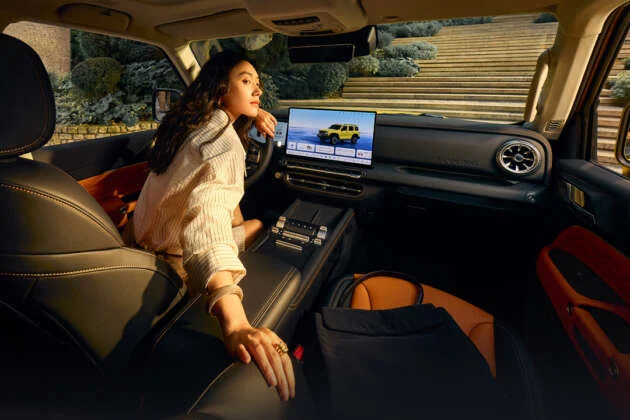
    Inside, the Tank 300 maintains the tweaks that were added last year, including a larger 14.6-inch infotainment touchscreen running GWM’s latest Coffee OS, physical air-con controls, rectangular centre air vents, a steering column-mounted gear selector and a new centre console with increased storage. However, the steering wheel ditches the oddly cutesy two-spoke design from before, moving back to a three-spoke unit.

     
  • Smart Lanes on highways are safe, with only 36 minor accidents recorded from Jan to May, 2026 – Nanta

    Smart Lanes on highways are safe, with only 36 minor accidents recorded from Jan to May, 2026 – Nanta

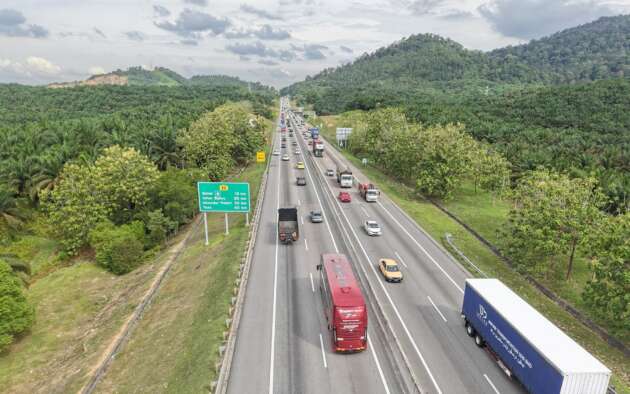
    The use of Smart Lanes on highways – to aid in the reducing traffic congestion – has not come at the expense of safety, with the rate of accidents involving these lanes considered low. Based on the latest records, only 36 accidents were recorded at 12 Smart Lane locations (which are activated on weekdays) from January to May 2026, according to works minister Datuk Seri Alexander Nanta Linggi.

    He said the majority of recorded cases only involved small accidents such as scratches or minor damage from vehicle contact. “Analysis shows that the main cause of accidents in this zone is due to users failing to comply with instructions such as using the emergency lane before the Smart Lane zone begins or after the zone ends,” he said.

    “Other contributing factors are the actions of changing lanes dangerously without signaling or without ensuring sufficient a safe distance, as well as drivers who stop vehicles on the Smart Lane channel without any valid emergency reason, thus preventing the smooth flow of traffic,” he added.

    Smart Lanes on highways are safe, with only 36 minor accidents recorded from Jan to May, 2026 – Nanta

    Nanta said this in a written reply in response to a question posed by Zakri Hassan (Kangar-Bersatu) in parliament, where the latter asked about the rate of accidents that occurred in the Smart Lane zone. Zakri also proposed that the ministry take into account the safety and comfort of motorcyclists when implementing Smart Lane routes on several PLUS highways.

    The works minister replied that his ministry, through the Malaysian Highways Authority (LLM), has always emphasised the importance of safety aspects in highway operations, including the implementation of Smart Lanes on highways to ensure the safety and comfort of all highway users, including motorcyclists.

    “A technical assessment is carried out first before the LLM allows the Smart Lane activation to be implemented by the concessionaire at a specific location along a highway. Among the aspects assessed are physical suitability to ensure that the width of the emergency lane used meets the minimum criteria for light vehicle movement and that the existing road surface structure can accommodate the traffic load when the Smart Lane is activated,” he said.

    Smart Lanes on highways are safe, with only 36 minor accidents recorded from Jan to May, 2026 – Nanta

    In addition, the visual warning aspect of Smart Lane activation has also been strengthened through the installation of notice boards at every 500 metres and green traffic lights to inform users of the Smart Lane activation time to ensure that users, including motorcyclists, are aware of the Smart Lane activation zone.

    “If necessary, the concessionaire will be asked to submit a Road Safety Audit Report (RSA) for review by the LLM before the location is allowed to activate the Smart Lane,” he explained in his written reply.

    Based on monitoring by LLM for the period from 2023 to now, he said that the Smart Lane initiative as a whole has shown a high rate of effectiveness, successfully reducing traffic congestion rates by between 30% and 50%.

     
  • Subaru Levorg Layback gains 2.5L NA hybrid version in Japan – different look from turbo model; fr RM107k

    Subaru Levorg Layback gains 2.5L NA hybrid version in Japan – different look from turbo model; fr RM107k

    The Subaru Levorg Layback becomes the third model to receive the brand’s e-Boxer (Strong Hybrid) system in Japan after the Crosstrek and Forester. If you haven’t heard of the Levorg Layback, it is essentially a more rugged version of the Levorg wagon with an increased ride height and black body cladding.

    The hybrid powertrain features a 2.5 litre Atkinson-cycle naturally-aspirated flat-four petrol engine that serves up 160 PS (158 hp or 118 kW) and 209 Nm of torque. This is accompanied by two electric motors, one being a generator that charges the 1.1 kWh lithium-ion battery, while the other is a traction motor rated at 120 PS (118 hp or 88 kW) and 270 Nm. Total system output is 197 PS (194 hp or 145 kW).

    The motors, eCVT (still branded as Lineartronic), front differential gear and electronically-controlled coupling are integrated into a single transaxle, routing both petrol and electric power to all four wheels and enabling the use of one or the other (or both) to drive the car.

    Due to the hybrid parts, the electrified version of the Layback has a slightly reduced ride height of 180 mm compared to the 200 mm of the turbo model. However, cargo capacity is unchanged at 429 litres (410 litres above floor, 19 litres under the floor) and the floor length remains at around 1,000 mm.

    You’ll be able to tell a hybrid Layback from the turbo model from the front, with the former sporting a wider grille with a more subtle chrome strip. The lack of a turbo also results in the deletion of the scoop on the bonnet, which has been reprofiled to be more streamlined and less “bulgy.”

    Elsewhere, the headlamps have also been altered to match the new grille, while a less obvious revision are the headlamp washers that no longer stand out on the bumper but are instead integrated into the grille surround for a cleaner look.

    As for the interior, there’s a power meter to show the system’s output and energy recovery status in real time. Beyond that, it looks pretty much the same as a regular Layback. Subaru says the hybrid model comes standard with a Harman Kardon sound system and a heated steering wheel. The 18-inch wheel design is unique to the Strong Hybrid-powered model too, which comes with a 100-volt AC outlet in the boot that can deliver up to 1,500 watts.

    Two variants are offered, the cheaper option being the Premium Black S:HEV EX that comes with black leather seat upholstery and price tag of 4.246 million yen (about RM107k) including local consumption tax. The top-spec variant is the Premium S:HEV EX with Nappa leather in tan or black and goes for 4.521 million yen (RM114k).

     
  • MBSA to work on safe, sheltered pedestrian walkways for LRT3 Shah Alam Line stations with Prasarana

    MBSA to work on safe, sheltered pedestrian walkways for LRT3 Shah Alam Line stations with Prasarana

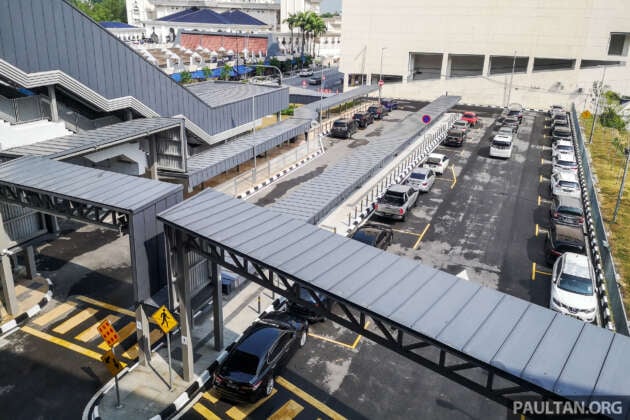
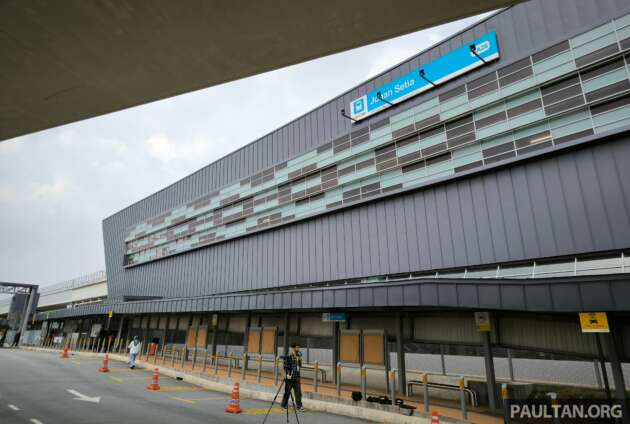
    Majlis Bandaraya Shah Alam (MBSA) will work with Prasarana to ensure safe, sheltered pedestrian walkways around LRT3 Shah Alam Line stations. This assurance comes after incidences of people encountering difficulty in walking to their destinations from LRT3 stations, which opened to the public on Monday.

    “As a city council, our planners will engage Prasarana and builders whose projects are ongoing, to ensure sheltered walkways are included. It is our commitment to enhance commuter safety, accessibility and overall urban liveability,” Shah Alam mayor Datuk Zabidah Safar said at MBSA’s full board meeting yesterday, reported by The Star.

    The six LRT3 stations in MBSA areas are Glenmarie 2, Kerjaya, Stadium Shah Alam, Dato Menteri, UiTM Shah Alam and Seksyen 7 Shah Alam.

    Zabidah said that the walkways are vital to building a connected first‑ and last‑mile network that would enable commuters to move comfortably and securely between transit hubs and nearby residential, commercial and public amenities.

    MBSA to work on safe, sheltered pedestrian walkways for LRT3 Shah Alam Line stations with Prasarana

    “MBSA aims to prioritise pedestrian-friendly infrastructure to encourage greater public transport usage, reduce reliance on private vehicles and advance Shah Alam’s vision of becoming a more sustainable, inclusive and transit-oriented city,” the mayor said, adding that meeting key walkability needs such as adequate lighting and surveillance cameras was essential. Tactile paths and gentle gradients are needed too.

    Meanwhile, MBSA said that it will start preparation works for a 200-metre pedestrian walkway to connect the Stadium Shah Alam station to the Persiaran Sukan/Persiaran Akuatik traffic light intersection in a month. As for the walking path from Persiaran Akuatik to Aeon Mall, the city council is in the process of appointing a contractor.

    Living in an apartment block that’s adjacent to a train station, with commercial activity including a grocer beneath, would ‘simplify’ the life of a busy, urban worker or student. This could soon be a reality with the transit-oriented development (TOD) affordable homes plan proposed by the government, which you can read about here.

    More on the RM16.63 billion 37.8-km line that runs from Johan Setia in Klang to Bandar Utama in PJ here. Free rides till July 31.

    GALLERY: LRT3 Shah Alam Line, Johan Setia station

    GALLERY: LRT3 Shah Alam Line, Pasar Jawa station and train

    GALLERY: LRT3 Shah Alam Line official images

     
  • Lamborghini Urus SE Performante – 810 PS/1,000 Nm PHEV 4.0L biturbo V8, Rally drive mode, more carbon

    Lamborghini Urus SE Performante – 810 PS/1,000 Nm PHEV 4.0L biturbo V8, Rally drive mode, more carbon

    Lamborghini has unveiled the Urus SE Performante, the high-performance variant that joins the Urus SE in the line-up. Like the Urus SE, the Urus SE Performante gets a plug-in hybrid petrol powertrain, featuring the 4.0 litre twin-turbocharged V8 engine and a single electric motor positioned between the engine and gearbox.

    Combined outputs for the Urus SE Performante are 596 kW (810 PS) and 1,000 Nm, up from the 800 PS and 950 Nm of the base Urus SE; these engine output increases have been achieved through a less restrictive exhaust system and revised engine management software.

    The exhaust system is a titanium setup developed with Akrapovic, which saves 10 kg compared to the standard exhaust, while a revised layout removes the X-pipe section that connects exhaust flow from each of the two cylinder banks in order to achieve smoother and more efficient exhaust gas flow.

    Lamborghini Urus SE Performante – 810 PS/1,000 Nm PHEV 4.0L biturbo V8, Rally drive mode, more carbon

    The electric drive portion of the Urus SE Performante powertrain is carried over from the base Urus SE, that is the 25.9 kWh lithium-ion battery that delivers up to an identical 60 km of purely electric running.

    A new Integrated Power Brake (IPB) system saves 4 kg, while “meticulous optimisation” of the NVH package reduces weight by a further 3.3 kg. Inside, the new Corsa Tex by Dinamica upholstery saves 2.7 kg, and the Urus SE Performante gets a total weight saving of 32 kg, arriving at a kerb weight of 2,473 kg.

    The Urus SE Performante gains the 6D sensor suite as premiered in the 29-unit run Fenomeno, which measures acceleration in the X, Y and X axes as well as for pitch, roll and yaw. Among the Strada, Sport, and Corsa modes offered, the Urus SE Performante adds a Rally mode “specifically calibrated to deliver maximum driving excitement on loose surfaces,” says Lamborghini.

    Chassis enhancements are applied to the dual-chamber, dual-valve air suspension setup on the Urus SE Performante, which offers 55% reduced roll and a 25% reduction in comfort-related vibrations compared to the previous Urus Performante. Track widths have increased 16 mm, and wheels are offered in 22-inch and 23-inch sizes, with Pirelli P Zero, Scorpion Winter 2 or 22-inch Bridgestone Potenza Race tyres.

    Bodywork revisions see more widespread use of carbon-fibre on the Urus SE Performante compared to the base Urus SE, now found on the bonnet, roof, wheel arches, side skirts and rear diffuser of the new variant.

    While it wears a more aggressive appearance relative to the Urus SE, the Urus SE Performante actually brings a 3% reduction in drag, while producing 23% more downforce compared to the Urus SE, or 16% more than the previous, ICE-only Urus Performante.

    This is achieved through its array of spoilers and splitters, as well as an S-duct that channels airflow through the bonnet, fender ducts and internal wheel arch vents, along with revised underbody panelling and a new, enlarged rear diffuser.

    Inside, the cabin of the Urus SE Performante gets a new 12.3-inch infotainment touchscreen unit with graphics inspired by the V12 Revuelto, while a new upholstery scheme sets the Urus SE Performante apart from the base Urus SE.

    Lamborghini has yet announce pricing for the Urus SE Performante, though it can be expected to be more expensive than the Urus SE – from RM1.03 million in Malaysia before taxes and options – given the new variant’s positioning.

     
  • Proton eMas 7 PHEV amasses 11,000 bookings; 26,492 Proton eMas cars sold to date, Malaysia’s top EV brand

    Proton eMas has announced on Facebook that as of end-June, the Proton eMas 7 PHEV has collected 11,000 bookings, and 26,492 Proton eMas cars have found Malaysian homes. It remains the country’s best-selling EV brand.

    Launched on February 4, Proton’s first and so far only PHEV began taking orders nationwide on January 13, so that’s an average of 65 bookings a day. In May, 1,181 units were registered, beating even its EV sister. If our calculations are correct, there should now be almost 3,000 eMas 7 PHEVs on the road.

    Proton eMas currently sells three models – 5, 7 EV and 7 PHEV. According to paultan.org Car Sales Data, Proton has sold 11,642 EVs (this obviously excludes the eMas 7 PHEV) in the first five months of 2026, giving it 45.6% of Malaysia’s EV market – full analysis here.

    2026 Proton eMas 5 CKD

    2026 Proton eMas 7 EV Premium Plus

    2026 Proton eMas 7 PHEV Premium Plus

     
  • Porsche Taycan, Macan EV in Malaysia get price hike – now up to RM410k more with CBU EV tax included

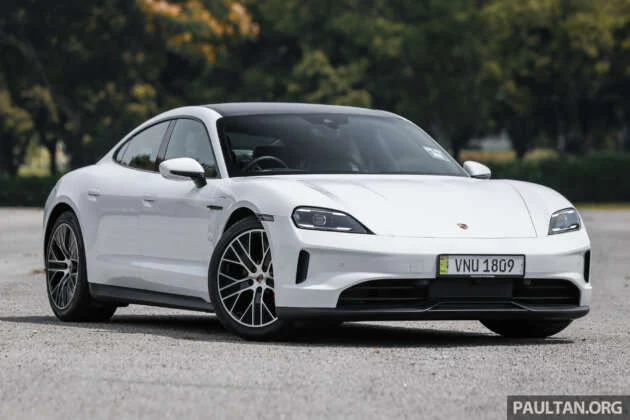
    Porsche Taycan, Macan EV in Malaysia get price hike – now up to RM410k more with CBU EV tax included

    Prices of Porsche electric vehicles (EVs) in Malaysia have increased by as much as RM410,000, with every model and variant affected.

    Starting with the Taycan, the base variant that was previously priced from RM575,000 now starts from RM775,000, or RM200,000 more than before. The increases continue as we move up the range, with the 4S going for RM215,000 more at RM890,000, while the Turbo is RM315,000 more at RM1.22 million. The Turbo S sees the highest increase across the whole Porsche EV line-up at RM410,000 to arrive at RM1.47 million.

    Similarly, the wagon version of the Taycan, the Taycan Cross Turismo, starts from RM845,000, which is RM220,000 more than before. The 4S variant is also RM220,000 up to reach RM920,000, while the Turbo is RM320,000 up to start from RM1.235 million.

    Porsche Taycan, Macan EV in Malaysia get price hike – now up to RM410k more with CBU EV tax included

    The Macan EV is the latest fully electric Porsche to go on sale here and sees its starting price bumped up by RM145,000 to RM430,000 for the base trim. Meanwhile, the Macan 4, 4S and Turbo are up by RM150,000, RM175,000 and RM210,000 respectively. The GTS variant is new and only recently got official priced at RM775,000, placing it between the RM700,000 4S and RM845,000 Turbo.

    While authorised distributor Sime Darby Auto Performance (SDAP) did not provide a specific reason for the price hike, it is likely due to the post-tax holiday catch-up. If you recall, EVs were previously exempted from import and excise duties since 2022 but this all came to an end starting January 1 this year after the government opted against an extension.

    At present, fully-imported (CBU) EVs are subject to a 30% import duty + 10% excise duty + 10% sales tax. With the ASEAN-China Free Trade Agreement (ACFTA), CBU EVs from China face 5% import duty, so it’s 5%+10%+10%. Porsche EVs sold through official channels here don’t come from China, so they face 30%+10%+10%.

    We don’t believe the price adjustment to be caused by the ministry of international trade and industry’s (MITI) revised policy for CBU EVs announced in May. Under the new policy that recently came into effect on July 1, 2026, all CBU EVs are subject to two main conditions: minimum declared cost, insurance and freight (CIF) value of RM200,000 as well as a minimum power output of 180 kW (which is equivalent to 245 PS or 241 hp). Porsche EVs clearly surpass these requirements, even when the minimum price cap was previously set at RM100,000 during the tax holiday.

    The post-tax holiday catch-up reasoning becomes more evident when we look at the Taycan, which was the first Porsche EV to go on sale here in September 2020, long before the tax holiday was implemented. At the time, the Taycan 4S was priced at RM725,000 but this was reduced to RM595,000 when the exemptions came into effect.

    As such, if we add the 30% import and 10% excise duties – the 10% sales tax isn’t new – we arrive at RM833,000. On Porsche Malaysia’s website, the Taycan 4S is listed at RM890,000, which isn’t far off from the figure roughly calculated above. Keep in mind that the Taycan got facelifted here in June 2024.

    GALLERY: Porsche Taycan

    GALLERY: Porsche Macan

     
  • Selangor Intelligent Parking system back online after cyberattack – local council enforcement resumes

    Selangor Intelligent Parking system back online after cyberattack – local council enforcement resumes

    Those who cheered and fist pumped internally when news of a cyberattack on the Selangor Intelligent Parking (SIP) system broke, leading to a break in enforcement, your joy is short-lived.

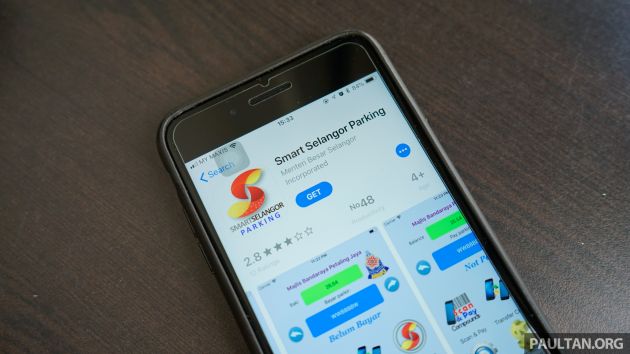
    Menteri Besar Selangor Incorporation announced this morning that the SIP service is now back in operations after the recovery process and system tests were successfully completed. As such, parking payments via the Flexi Parking and Smart Selangor Parking apps can continue as normal.

    Of course, this also means that parking enforcement by local councils using the SIP is back, and the public is reminded to pay for parking according to the usual rates and periods to avoid summonses.

    “We want to record appreciation to all users for their patience, understanding and cooperation throughout the service disruption. We also would like to apologise for the inconvenience caused and are committed to continuously improve service delivery to ensure a smooth and quality user experience,” the statement read.

    That was quick. Recap what happened here.

     
  • Bukit Aman JSPT to develop driver profiling system to curb driving under the influence of alcohol or drugs

    Bukit Aman JSPT to develop driver profiling system to curb driving under the influence of alcohol or drugs

    The Bukit Aman traffic investigation and enforcement department (JSPT) will develop a profiling system for drivers, companies and commercial vehicles to curb driving under the influence of alcohol or drugs, Bernama has reported.

    The move is being refined for the tightening of enforcement, including to ensure that companies which employ drivers who commit such offences are also held accountable, said Bukit Aman JSPT director Datuk Seri Muhammed Hasbullah Ali.

    “We are in the process of developing a profiling system for individuals, companies and vehicles, and are working with the land public transport agency (APAD), while also submitting proposals to the government to strengthen laws so that not only drivers are punished, but companies that hire them are also held responsible,” Muhammed Hasbullah said.

    Bukit Aman JSPT to develop driver profiling system to curb driving under the influence of alcohol or drugs

    The decision to develop the system was due to increased instances of commercial vehicle drivers found to be driving under the influence of alcohol or drugs, posing a significant risk to road safety, the Bukit Aman JSPT director said.

    Under the current Road Transport Act 1987, legal action is taken against individuals found to have committed offences, however the JSPT is proposing that employers and companies are also held responsible, said Muhammed Hasbullah. He also advised transport companies and commercial vehicle owners to regularly screen their drivers, including though urine tests to ensure their drivers are not involved in drug abuse.

    Through 44 operations targeting commercial vehicle drivers along the North-South Expressway and the East Coast Expressway between April and June, a total of 121 lorry drivers were among 135 people detained after testing positive for drug use, and methamphetamine was the most commonly detected drug among lorry drivers, he added.

     
  • Honda and Nissan to team up on shared tech – Honda CEO Mibe says a deal is “close to an announcement”

    Honda and Nissan to team up on shared tech – Honda CEO Mibe says a deal is “close to an announcement”

    More than a year after a planned merger between Honda and Nissan collapsed, the two Japanese automakers are set to get together again, but this time through collaboration. According to news reports, both companies are considering using shared core parts for their next-generation software-defined vehicles to reduce development and procurement costs.

    As Nikkei Asia reports, Honda CEO and president Toshihiro Mibe has confirmed that a deal with Nissan along these lines is on, telling shareholders that negotiations between the two brands were quite far along, with some aspects “close to an announcement.” He didn’t detail areas of the collaboration, merely stating that it was proceeding, with each project in “a win-win relationship.”

    Sources close to the matter say the two brands, along with Mitsubishi, are thinking of standardising the electronic control units (ECUs) for next-generation vehicles, according to Jiji Press. These shared ECUs would be used by all three brands in vehicles scheduled to arrive towards the end of the decade, with the first examples coming about as early as 2029.

    The automakers are also discussing standardising the operating system that runs in-vehicle software. Of course, the potential collaboration will have to iron out areas regarding development funding and other relevant terms, but it is expected that an agreement will come about within weeks. Renault is expected to have a say in the deal, as it still holds a 15% stake in Nissan.

    Honda and Nissan to team up on shared tech – Honda CEO Mibe says a deal is “close to an announcement”

    The re-association follows the developments from last year, when a merger between the two companies ultimately fell through. Initially stated as a merger of equals when a MoU was inked in December 2024, Honda then proposed a change in structure as discussions moved along.

    Rather than establishing a joint holding company, where Honda would appoint the majority of directors and the CEO based on a joint share transfer as initially outlined, it was proposed that Honda would be the parent company and Nissan the subsidiary through a share exchange. Nissan didn’t want to be a subsidiary, and it was officially announced in February 2025 that the deal was off.

    Despite this, both parties indicated that they would continue to “collaborate within the framework of a strategic partnership aimed at the era of intelligence and electrified vehicles,” in line with previous MoUs focusing on joint research on vehicle intelligence and electrification. It would seem that the upcoming announcement will centre around these.

     
  • MotoGP continues at Sepang Circuit from 2027 to 2031

    MotoGP continues at Sepang Circuit from 2027 to 2031

    MotoGP will continue racing at Petronas Sepang International Circuit (SIC) till 2031. A new contract signed between Malaysian Ministry of Youth and Sports and MotoGP Sports Entertainment Group – formerly Dorna – sees the world’s premier motorcycle championship running from 2027 to 2031.

    The Malaysian Grand Prix is one of the biggest sporting events in South-East Asia, with the 2025 edition of MotoGP seeing 190,977 racing fans visiting SIC. The Malaysian Grand Prix has been held since 1991, save a single year’s break in 2020 for the Covid pandemic, from the original venue at Batu Tiga circuit in Shah Alam, a single appearance at Pasir Gudang circuit in Johor in 1998 and thereafter at SIC.

    MotoGP continues at Sepang Circuit from 2027 to 2031

    Mohammed Taufiq Johari, Youth and Sports Minister, said, “We are delighted that the Government has granted full approval at the Cabinet Meeting on 15 April 2026 for the renewal of MotoGP Malaysia from 2027 to 2031. This renewal goes beyond securing Malaysia’s place on the MotoGP global calendar. It reflects our commitment to strengthening Malaysia’s position as a leading motorsports destination while creating opportunities through economic growth, talent development and industry expansion.”

    The 2026 Malaysian MotoGP Grand Prix will take place from 30 October to 1 November 2026 at SIC.

     
  • Chery O5 Hybrid in Australia – 1.5T, 204 PS electric motor, 20.4 km/l, E5 interior, coming to Malaysia?

    Chery O5 Hybrid in Australia – 1.5T, 204 PS electric motor, 20.4 km/l, E5 interior, coming to Malaysia?

    Having made its debut in Europe, the Chery O5 Hybrid has made its way to Australia, where it is known as the C5 Hybrid. The car offers a halfway house between the pure petrol model and the electric E5, offering impressive efficiency.

    Instead of a 1.5 litre turbo four-cylinder engine, you’ll find a version of the Chery Super Hybrid (CSH) powertrain seen in the Tiggo Cross, albeit with the hybrid-specific 1.5 litre naturally-aspirated mill swapped out for the turbo version from the Tiggo 7 and Tiggo 8 PHEVs, making 143 PS and 210 Nm. This generally acts as a generator for the 1.83 kWh LFP battery.

    Most of the motive power comes from the 204 PS/310 Nm electric motor, with a single-speed dedicated hybrid transmission (DHT) allowing the engine to clutch in to drive the front wheels at higher speeds, where it is most efficient. Chery quotes a combined fuel consumption of 20.4 km per litre (4.9 litres per 100 km); the same powertrain nets 18.7 km per litre (5.3 litres per 100 km) on the WLTP cycle. The powertrain is expected to feature in the Omoda C4, which should make its way to Malaysia soon.

    Chery O5 Hybrid in Australia – 1.5T, 204 PS electric motor, 20.4 km/l, E5 interior, coming to Malaysia?

    Beyond the powertrain, the Hybrid model is as per the pure petrol variant, with the only noticeable difference being the choice of 17- and 18-inch aero-optimised wheels; the larger version is identical to the E5’s but with a different two-tone finish.

    Inside is where the big changes lie. The dashboard and door cards are completely different, instead lifted from the E5 with its widescreen display panel housing twin 12.3-inch screens, lack of physical air-con controls (even the O5 petrol’s haptic ones), ripple-effect door decor, steering column-mounted gear selector and the eradication of the parking brake lever.

    Chery O5 Hybrid in Australia – 1.5T, 204 PS electric motor, 20.4 km/l, E5 interior, coming to Malaysia?

    Standard kit includes powered and heated front seats, faux leather upholstery and wireless Apple CarPlay and Android Auto, with the Ultimate model adding seat ventilation, a sunroof, an eight-speaker Sony sound system, a 360-degree camera setup and a powered tailgate. Safety-wise, all variants come with autonomous emergency braking, adaptive cruise control, lane centring assist and seven airbags, including a front centre airbag.

    Pricing for the C5 Hybrid start at AU$31,990 (RM90,200), bridging the gap between the AU$28,990 (RM81,700) petrol model and the AU$37,990 (RM107,100) E5. No word yet on whether the O5 Hybrid will make its way to Malaysia, but it would make for an interesting lower-priced alternative to the likes of the Toyota Corolla Cross Hybrid and Honda HR-V e:HEV, especially as the Japanese makes double down on hybrid technology. Would you buy it if it comes to our shores? Let us know in the comments.

     
  • Bonded lorry theft syndicate busted, seven arrested

    Bonded lorry theft syndicate busted, seven arrested

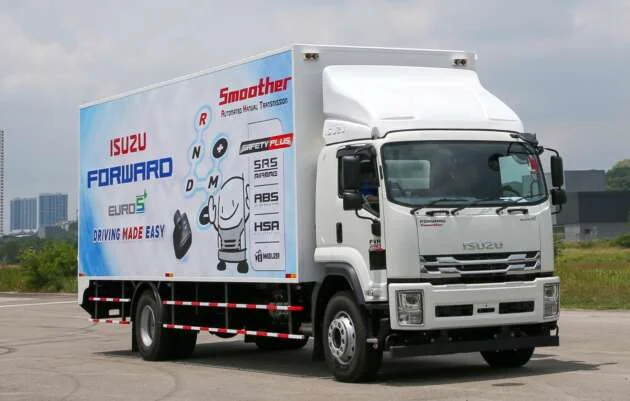
    Seven men, aged 32-48 and believed to be involved in a bonded lorry theft syndicate active in Selangor, Johor, Melaka and Kuala Lumpur, have been arrested, including the mastermind, Bernama reports.

    “All those arrested have been remanded to assist the investigation. Investigations revealed one suspect is the mastermind, acting as a middleman to recruit thieves, illegal storage operators, mechanics, runners, and buyers of stolen lorry components,” Bukit Aman criminal investigation department (CID) director Datuk M Kumar said in a statement today.

    Kumar said the syndicate is believed to be involved in about 18 bonded lorry theft cases in Johor, Melaka, Selangor and Kuala Lumpur, with losses estimated at RM1.23 million. Police seized five lorries, a car, a motorcycle and tools believed to have been used in the thefts.

    Bonded lorry theft syndicate busted, seven arrested

    “Also seized were various company documents and payment receipts believed to be linked to the syndicate’s activities, with the total value of the seizures estimated at RM400,000,” he said.

    Kumar said the syndicate’s modus operandi involved the mastermind receiving orders from workshop owners, who then instructed others to steal specific lorry models, which were then dismantled at storage facilities and workshops.

    “The components and lorry cabins were sold separately at below-market prices and advertised on social media. The mastermind is also paid a fee of between RM15,000 and RM18,000 for each successfully stolen lorry,” he said.

    Bonded lorry theft syndicate busted, seven arrested

    Kumar said the case is being investigated under Section 379A of the Penal Code and Section 4(1) of the Anti-Money Laundering, Anti-Terrorism Financing and Proceeds of Unlawful Activities Act 2001 (AMLATFPUAA), and that so far, 13 bank accounts containing RM280,836.10 have been frozen under Section 44(1) of AMLATFPUAA 2001.

    He advised lorry owners and logistics operators to install security systems and GPS tracking and to park vehicles in secure, surveillance-monitored areas.

    “Workshop owners are reminded not to purchase any vehicle components without valid ownership documents or those offered below market price, as this could expose them to legal action,” he said.

     
  • PLUS Simpang Pulai – Gopeng lane closure till Sept 11

    PLUS Simpang Pulai – Gopeng lane closure till Sept 11

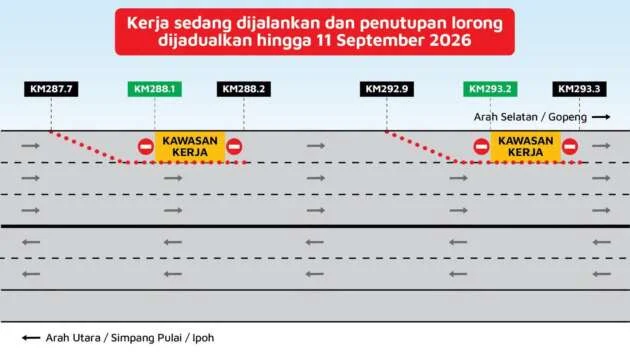
    Click to enlarge

    North South Highway users, take note. PLUS has announced a lane closure on a stretch of the highway between Simpang Pulai and Gopeng in Perak. The exact location is KM288.1 to KM293.3, southbound to KL.

    The closure is from now till September 11, and it’s for bridge barrier upgrading works. The leftmost lane is closed, leaving the stretch with two lanes, so there will be some merging going on. Check out the graphic above for a better picture.

    Those who use the North South Highway in and out of Ipoh, please take note and follow the the road signs and personnel on the ground when in the area. Drive safe.

     
  • China’s Neolix cleared for autonomous delivery vehicle trials in Malaysia – a RoboVan showdown with Zelos?

    China’s Neolix cleared for autonomous delivery vehicle trials in Malaysia – a RoboVan showdown with Zelos?

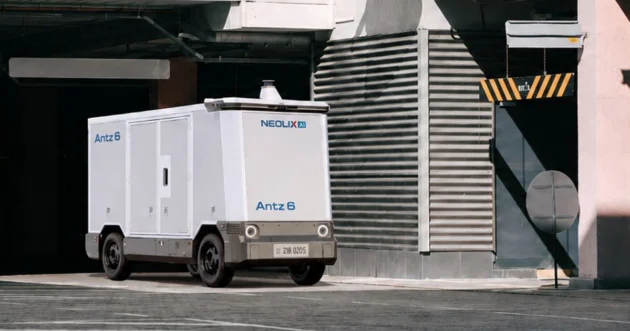
    Chinese autonomous logistics firm Neolix has been named among the first batch of companies approved by the Ministry of Transport (MOT) to begin public-road sandbox testing of driverless delivery vehicles in Malaysia. The approval was granted under the country’s National Regulatory Sandbox (NRS) framework for autonomous delivery vehicles, the Beijing-based company announced.

    The move is notable not just because it puts driverless vans on Malaysian public roads, but because it plants a second major Chinese autonomous-delivery player on local soil – setting Neolix directly against rival Zelos, whose vehicles have been running with Pos Malaysia since January. Two of China’s largest RoboVan makers are now vying for the same Malaysian last-mile market.

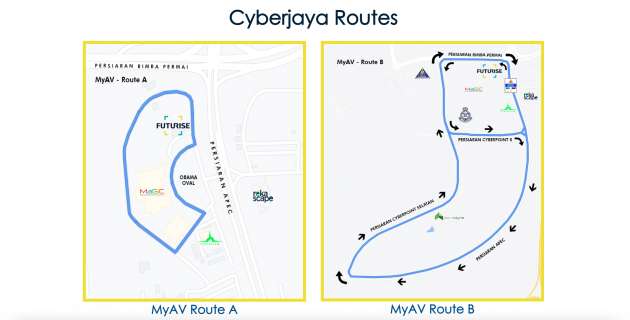
    Road trials are expected to begin in the coming weeks in Cyberjaya, Malaysia’s flagship smart city and tech hub just south of Kuala Lumpur. The company says testing will span closed-road, semi-open and public-road environments across Cyberjaya and several other locations, evaluating vehicle performance under real-world urban conditions – think traffic signals, intersections and speed bumps. Testing is set to be carried out in phases throughout the second half of 2026.

    China’s Neolix cleared for autonomous delivery vehicle trials in Malaysia – a RoboVan showdown with Zelos?

    Cyberjaya is home to Malaysia’s official Malaysia Autonomous Vehicle (MyAV) testing route, a roughly 7 km public-road testbed developed jointly by the MOT and Futurise under the National Regulatory Sandbox initiative. The route has been operational since around 2019 to 2020, letting companies validate their autonomous systems on live public roads before seeking wider approvals.

    Companies in the programme must first clear technical and safety evaluations by the MyAV Evaluation Committee before they’re allowed to operate on public roads. The NRS guideline also doesn’t override existing rules – trials still have to comply with the Road Transport Act 1987 and prevailing road traffic regulations.

    Neolix’s Malaysia pilot will be run with a consortium of local and regional partners including Tiong Nam Logistics, Asia Mobiliti (operator of Trek) and MindHub. Together, the group plans to evaluate several use cases – express parcel delivery, campus logistics and on-demand e-commerce fulfilment.

     
  • Cyberattack on Smart Selangor, Flexi Parking apps – Selangor tells local councils not to issue summonses

    Cyberattack on Smart Selangor, Flexi Parking apps – Selangor tells local councils not to issue summonses

    As reported earlier, both Flexi Parking and Smart Selangor Parking mobile applications have been down for the past day or so following a technical disruption, which was apparently caused by a cyberattack that managed to hack into into the operator’s system. With Suasa Efektif continuing to restore use of the applications, the question of summonses as a result of being unable to pay for parking has inevitably cropped up.

    There should be no issue about this in Selangor, as local councils have been requested to hold off on issuing summonses during the temporary shutdown of the Selangor Intelligent Parking (SIP) system, as The Star reports. According to state local government committee chairman Datuk Ng Suee Lim, the cyberattack, which paralysed parking payment platforms across 64 local councils nationwide, forced an immediate temporary shutdown of SIP.

    He said that as repairs were ongoing, the public is expected to face problems paying for parking over the next few days. “Because of this, we have officially requested all affected local councils not to summon motorists during this downtime,” he said, adding that the breach involved data transactions.

    The security breach, which struck over the last 48 hours, disabled digital parking payments within Selangor and several other states utilising the same platform. Ng said that operations were suspended to protect user data integrity and enable a forensic recovery process.

    Asked by reporters about potential lapses in security prioritisation, he said the vulnerability did not stem from the state’s SIP private concessionaire, Rantaian Mesra. “Instead, the breach targeted the centralised Flexi Parking platform, which recently took over the network to manage parking, including major Selangor cities and municipalities like Shah Alam, Subang Jaya and Selayang,” he stated, adding that the transition to the nationwide Flexi Parking system was what resulted in the widespread disruptions.

     
  • Budi Diesel – finance ministry has approved over 30,000 applications for additional monthly fuel quota

    Budi Diesel – finance ministry has approved over 30,000 applications for additional monthly fuel quota

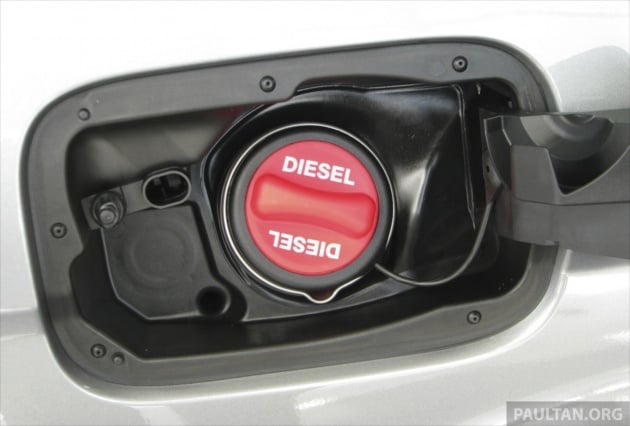
    The ministry of finance (MoF) has approved more than 30,000 applications to increase the Budi Madani Diesel (Budi Diesel) quota from 200 litres to 300 litres a month for eligible high-volume users, reported New Straits Times.

    The quota increase was introduced after considering feedback from small traders, hawkers and service providers operating in rural areas, said finance minister II Datuk Seri Amir Hamzah Azizan.

    “In the implementation of Budi Diesel, we understand that the target groups include small traders, hawkers, and those providing services to rural residents whose usage might be higher. “Therefore, we opened up avenues for them to apply for a higher quota of up to 300 litres. As of yesterday, more than 30,000 people have applied and received approval through the application provided,” Amir Hamzah said.

    Budi Diesel – finance ministry has approved over 30,000 applications for additional monthly fuel quota

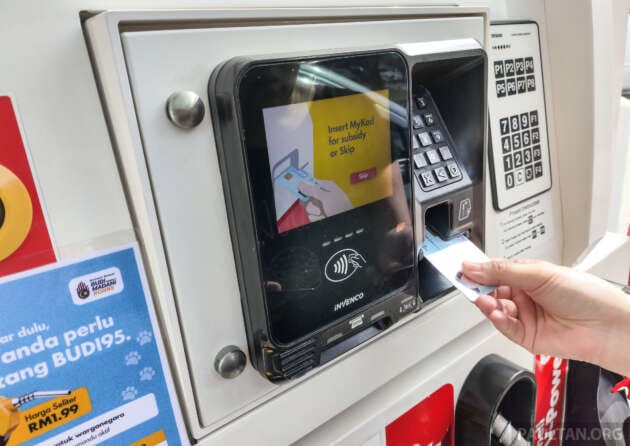
    The Budi Diesel subsidised diesel fuel programme began today, and it is expected to benefit around 400,000 private diesel vehicle owners in Peninsular Malaysia and another 300,000 in Sabah, Sarawak and Labuan, the finance ministry has said.

    This expanded significantly upon the previous Budi Diesel Individu, which involved around 180,000 recipients of monthly cash assistance in Peninsular Malaysia to cover part of the cost of purchasing diesel at market prices.

    Meanwhile, the finance ministry announced last Friday (June 26) that eligible individuals may transfer their Budi Diesel quota to a family member; this is how it works. Regarding the transfer of Budi Diesel quota, more than 1,000 people have applied to transfer their quotas to immediate family members, Amir Hamzah said.

     
  • 2026 Mitsubishi Attrage facelift launched in Thailand – new front bumper, ADAS; 1.2L CVT only; from RM69k

    2026 Mitsubishi Attrage facelift launched in Thailand – new front bumper, ADAS; 1.2L CVT only; from RM69k

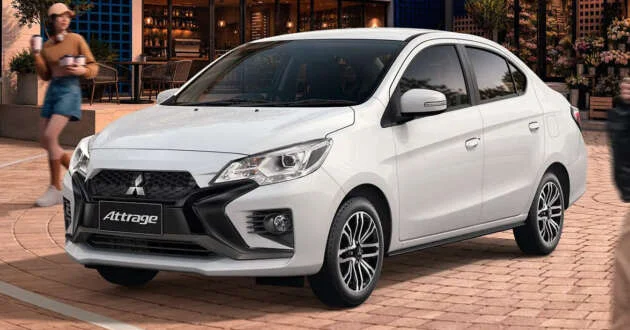
    The sixth-generation Mitsubishi Attrage has received its third facelift in Thailand as the B-segment sedan continues to live on despite being well over a decade old. The sedan version of the Mirage hatchback first debuted in Thailand in 2013, with the first facelift revealed in 2015 and the second in 2019.

    Visual changes include a revised Dynamic Shield face with more black surfacing as well as a hexagonal-shaped grille. The headlamps also get reshaped to fit the new nose and the alloys wheels are of a new design, but the interior stays pretty much unchanged.

    In Thailand, the Attrage is offered in two variants, with the base option being the Active that retails for 564,000 baht (about RM69k). The top-spec variant is called the Smart, which is priced at 619,000 baht (RM76k).

    Both share the same gasohol-compliant 3A92 naturally-aspirated inline-three engine with 1.2 litres of displacement that serves up 78 PS (76 hp or 57 kW) and 100 Nm of torque. This comes with idling stop technology and is paired exclusively with Mitsubishi’s INVECS III CVT driving the front wheels. Mitsubishi says the 3A92 is a Euro 6-compliant engine and capable of delivering 23.3 km/litre.

    In terms of kit, the Active comes with multi-reflector halogen headlamps, LED taillights, powered side mirrors, piano black and carbon print interior trim, analogue gauges with a multi-info display, manual air-conditioning, a multi-function steering wheel, a seven-inch touchscreen head unit with Android Auto and Apple CarPlay support, fabric seat upholstery, keyless entry as well as 14-inch steel wheels.

    Moving up to the Smart brings upgrades like automatic LED projector headlamps with integrated daytime running lights, side mirror indicators, a leather-wrapped steering wheel and gear knob, cruise control, automatic AC, an auto-dimming rear-view mirror, synthetic leather upholstery, keyless start, a rear-view camera and 15-inch two-tone alloys.

    On the safety front, both variants come with just two airbags in addition to passive systems like ABS, EBD, Active Stability Control, traction control and hill start assist. The Attrage does come with some driver assistance systems, with an ADAS camera being fitted to the Active for forward collision warning and lane departure warning.

    As for the Smart variant, it gets a forward collision mitigation system but this operates at a low-speed range. There’s also a radar sensor for the misacceleration mitigation system that works up to four metres ahead of the vehicle. The Attrage is available with White Diamond, Graphite Gray and Jet Black Mica exterior finishes.


Sell your car to Carro, get paid in 24 hours


Latest Fuel Prices

PETROL
BUDI 95 RM1.99
RON 95 RM3.37 (-0.10)
RON 97 RM4.00 (-0.10)
RON 100 RM6.45
VPR RM7.68
DIESEL
BUDI RM2.10
EURO 5 B10 RM3.97 (-0.10)
EURO 5 B7 RM4.17 (-0.10)
Last Updated Jul 01, 2026

Latest Videos


Tools


Related PaulTan.org Content: Malaysia: Malaysia | Motorsports | 2025 | Tech | Featured: Featured | News: News