

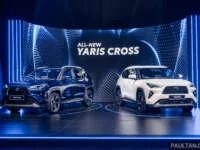
The highly-anticipated Toyota Yaris Cross is finally here in Malaysia, and with Perodua curtailing the equipment list of the Traz, this upgraded B-segment SUV is the “Traz AV” that people have been waiting for. The higher specs and the addition of the coveted T badge does incur a significant premium, but are the differences worth the extra cost?
First, let’s look at how much more you’ll be paying to get behind a Toyota-badged steering wheel instead of a Perodua one. The Yaris Cross starts at a conveniently-priced RM99,900 on-the-road without insurance for the 1.5S petrol, rising up to RM109,900 for the 1.5S Hybrid variant that is exclusive to Toyota. That makes the petrol model RM18,800 more expensive than the equivalent Traz 1.5 H – and don’t forget, the Perodua starts from just RM76,100 for the base 1.5 X.
So, what exactly are you spending the extra money on? Well, it’s got nothing to do with what’s under the bonnet, that’s for sure. You still get the same 1.5 litre 2NR-VE four-cylinder engine that produces 106 PS at 6,000 rpm and 138 Nm of torque at 4,200 rpm. Ditto the Daihatsu-derived Dual Mode CVT (D-CVT) – although the Yaris Cross gains a sequential mode with seven virtual ratios – and front-wheel drive setup.


An additional RM10,000 buys you a hybrid powertrain, headed by an Atkinson-cycle 2NR-VEX engine that makes 91 PS at 5,500 rpm and 121 Nm of torque from 4,000 to 4,800 rpm. This is paired with an 80 PS/141 Nm electric motor and an E-CVT planetary gearset for a total system output of 111 PS. This system is shared with the Vios Hybrid, and in fact, the 1.5S Hybrid costs exactly the same as a top-spec Vios Hybrid GR Sport.
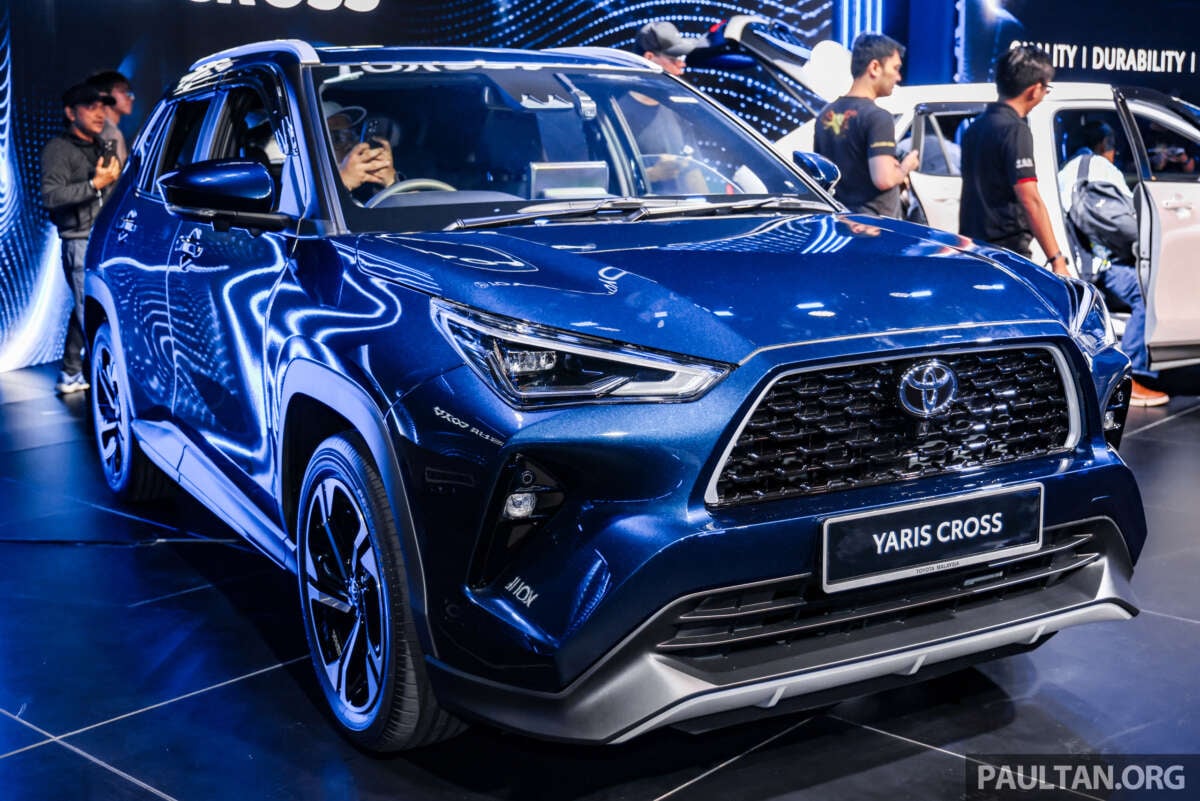
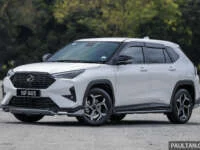
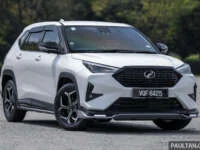
Quite a good-looking crossover, isn’t it? To our eyes, the Yaris Cross’ design is prettier and less fussy, whereas it’s almost as if Perodua’s designers couldn’t stop fiddling with the Traz’s styling. The Toyota’s trapezoidal grille bears some resemblance to the pre-facelifted Corolla Cross; it also sits proud of the headlights rather than being forcefully joined to them as is the case with the Traz’s hexagonal opening.
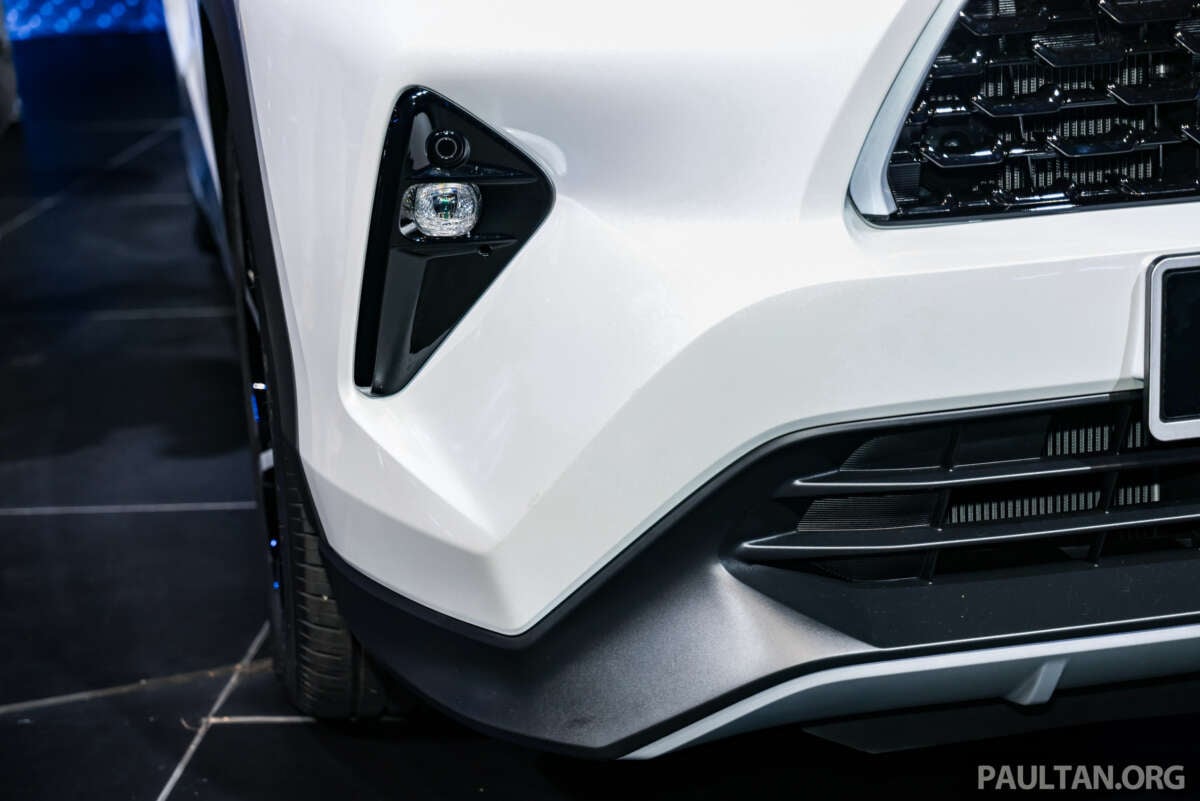
Below it, the air intake is wider, while the triangular LED fog light surrounds give the Yaris Cross high “cheekbones” versus the Traz’s slightly awkward-looking L-shaped inserts. There are smaller changes, too – the sharp LED headlights look very similar on both models, but the Toyota gains some chrome trim under the projectors for a classier look.


The wheels are also different – the Yaris Cross rolls on snazzier (and just plain better-looking) 18-inch two-tone alloy wheels that are an inch bigger than the Traz’s, wrapped in 215/55 R18 tyres (215/60 R17 for the Traz). The Perodua counters with a wider spare tyre, at 205/60 R16 versus 195/65 R16.
At the rear, the Yaris Cross ditches the Traz’s unnecessary black bar between the LED taillights, which adds to the Perodua’s busy look. The rear bumper is also slightly different, with a greater proportion of it rendered in unpainted black plastic. The silver “skid plates” on the front and rear bumper and the side skirt strips add a bit of “jewellery” to finish off the Toyota’s design; the Traz looks a little plain without them.
One area where the Traz scores a rare victory over the Yaris Cross is the availability of a black roof as an option, which is not offered on the Toyota even on the more expensive Hybrid. The Yaris Cross’ colour palette is quite similar to that of the Perodua, with Dark Turquoise (blue), Silver Metallic, Attitude Black, Spicy Scarlet SE and Platinum White Pearl (a RM400 option) all shared with other Toyota models.


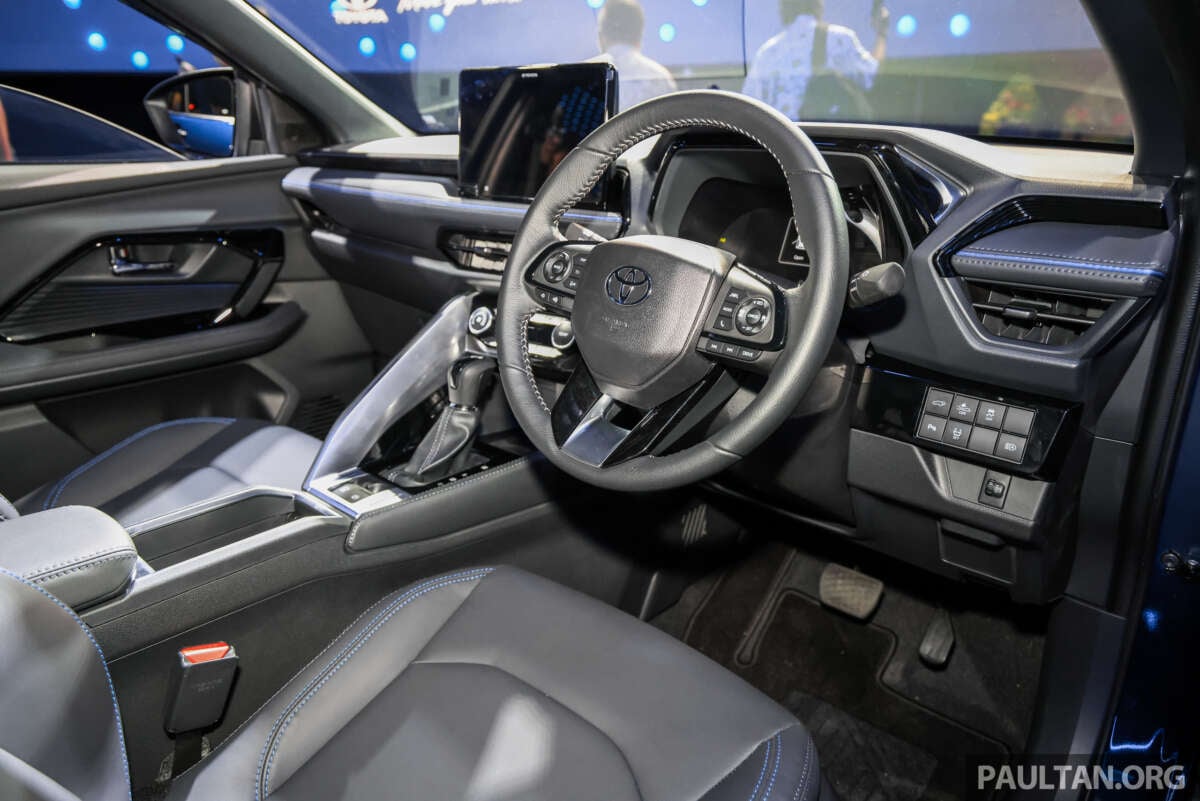
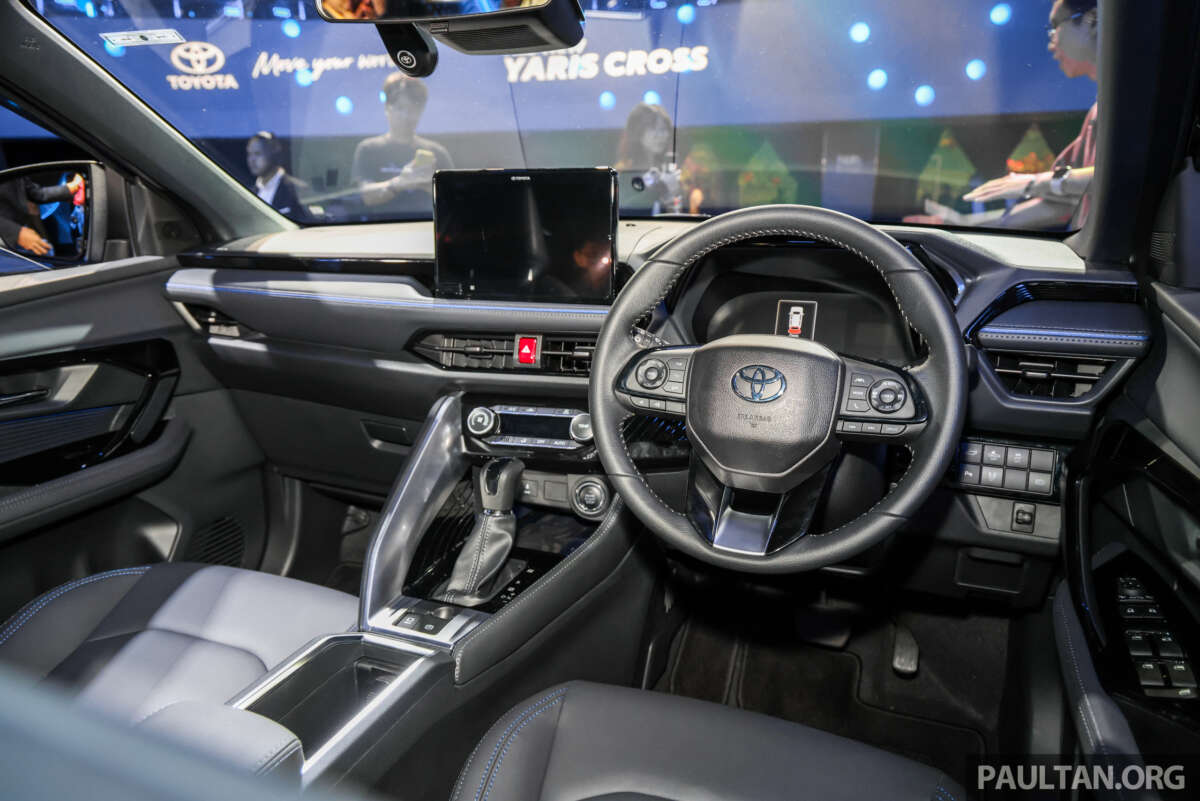
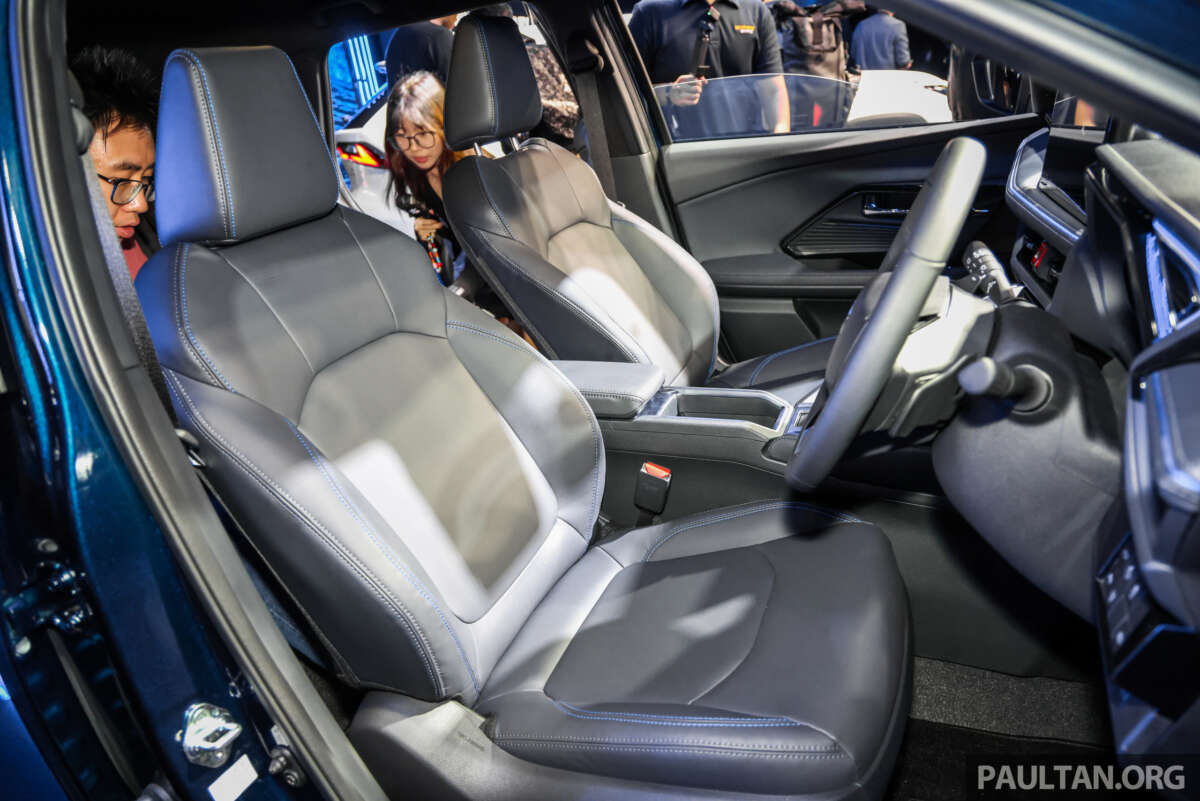
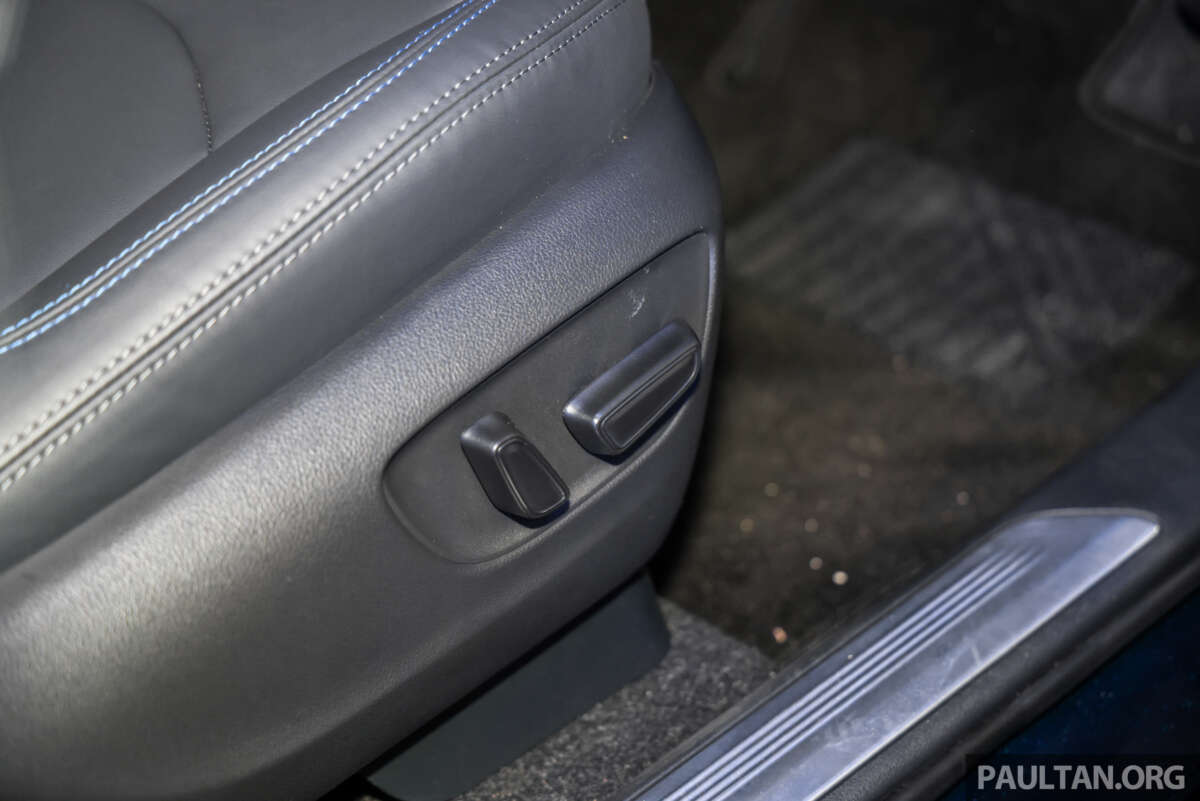
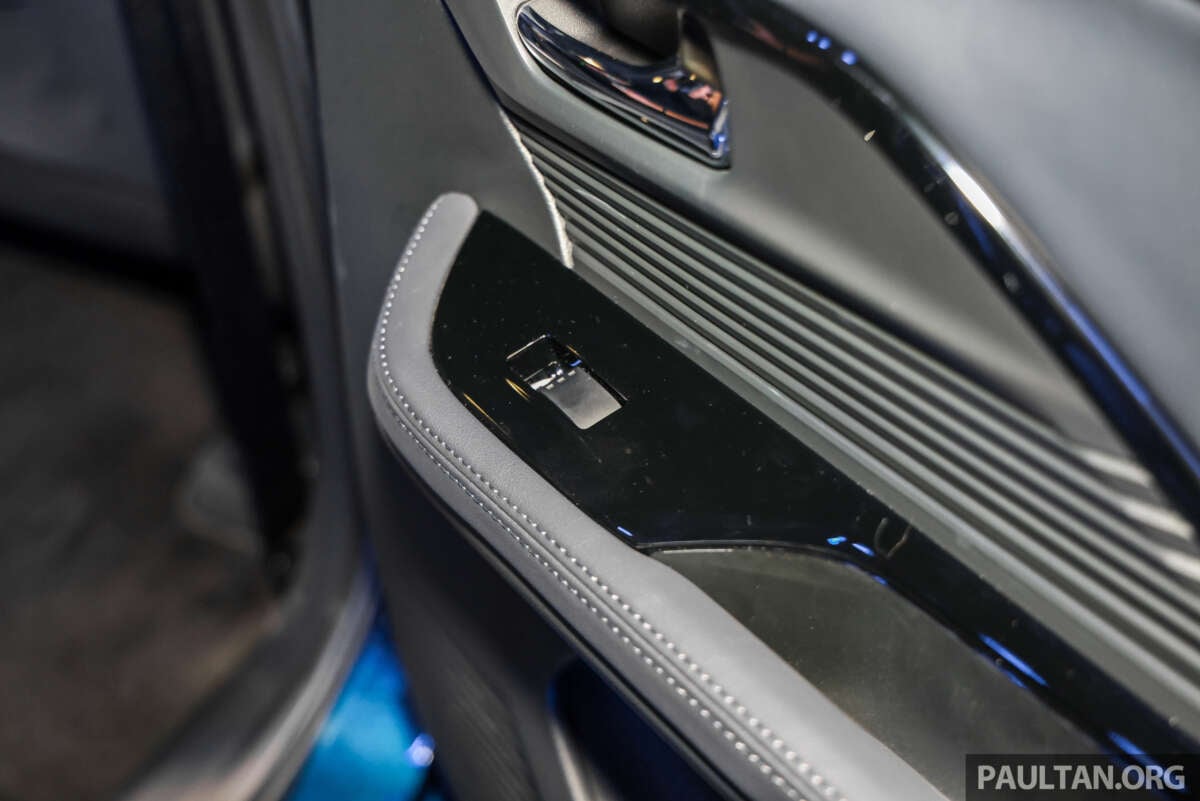
The multitude of tweaks big and small continue on the inside. Most noticeable in the Yaris Cross is the complete lack of garish gloss red trim, replaced by sober gloss black. The soft-touch panel on the dashboard also swaps the red stitching and piping for blue, while the seats gain standard faux leather (with a “breathable mesh” design for the Hybrid model) and eight-way power adjustment for the driver.
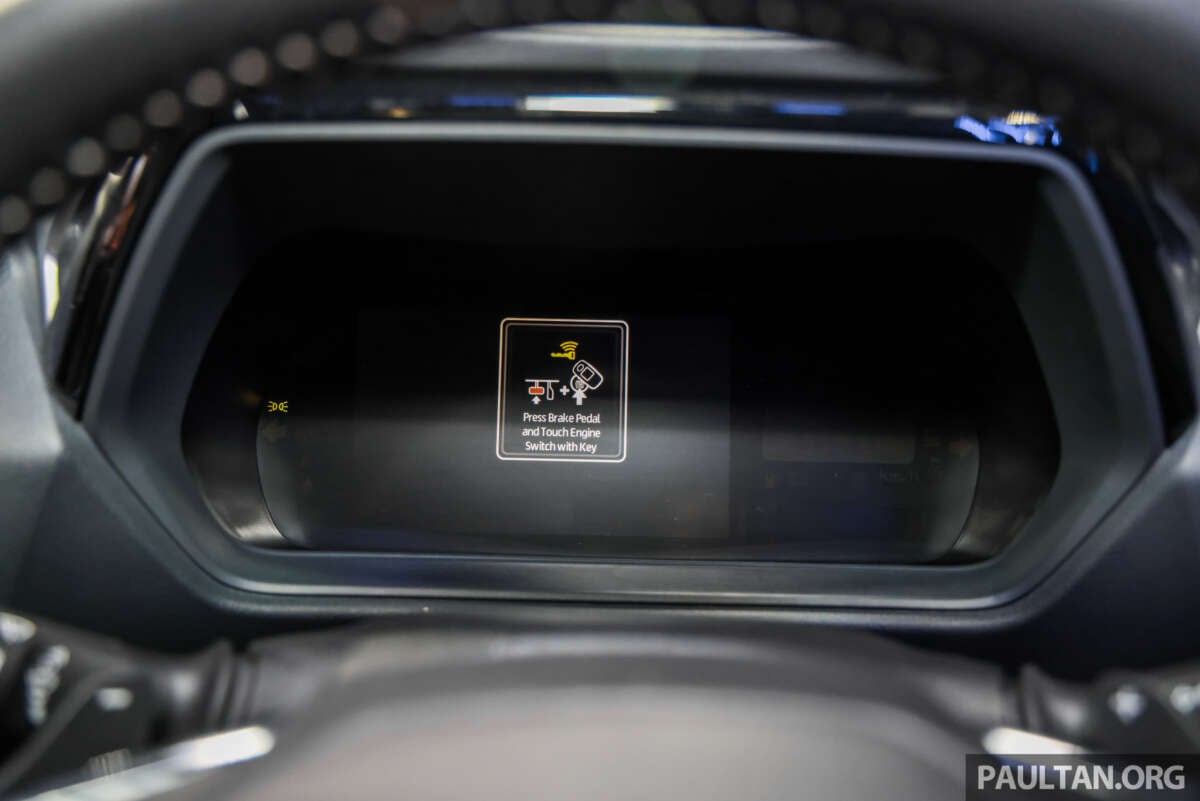
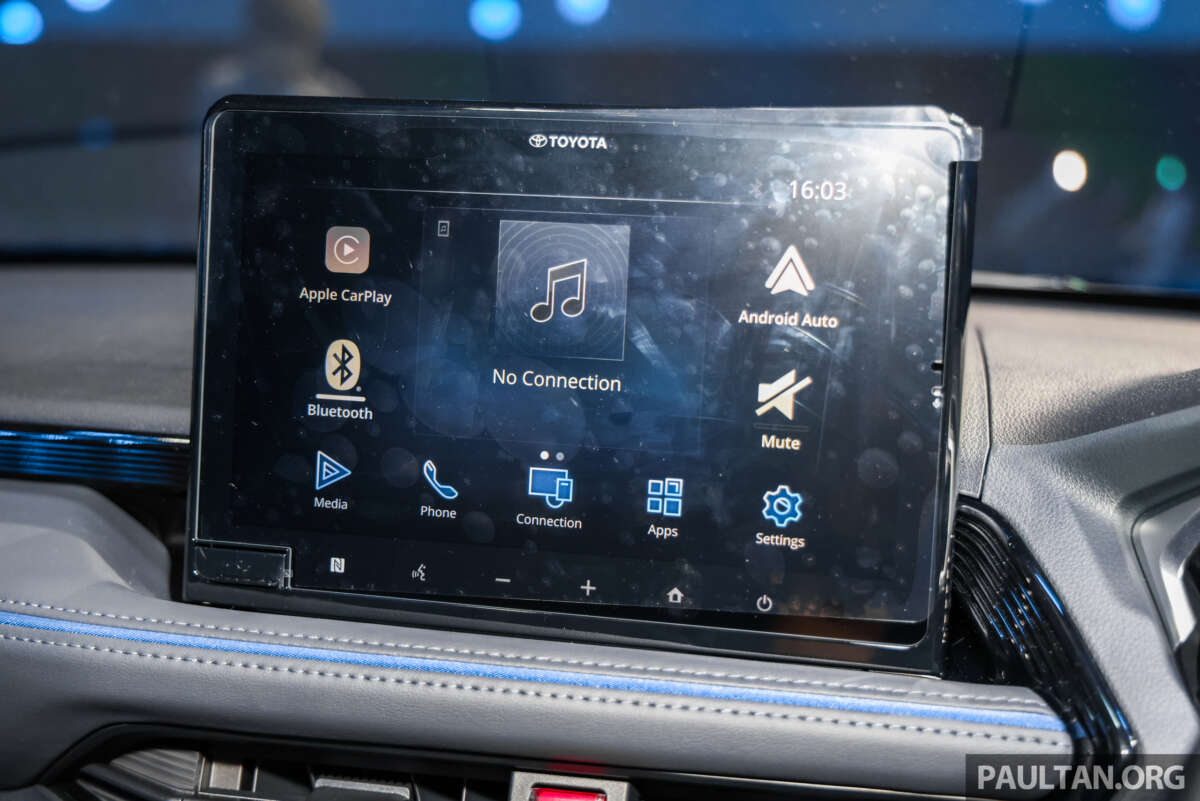
Beyond that, the Toyota gets an upgrade from the Traz’s analogue gauges (a real sore point, especially for those used to Perodua’s AV models built on the DNGA platform) to a fully-digital seven-inch instrument display. The 10.1-inch infotainment touchscreen is also an inch larger than the Traz’s and offers wireless Apple CarPlay and Android Auto, eliminating the need to plug up your phone.
Speaking of which, the Hybrid model also gets a factory-fitted Qi wireless charger under the air-con controls. The petrol version gets an optional aftermarket unit costing RM550, but oddly it’s an upgraded 25-watt Qi2 charger – meaning it has magnets for more consistent charging and can charge certain iPhones faster. Which also means the more expensive model gets an inferior charger…


Then we come to the smaller changes. The Yaris Cross gets a standard-fit 360-degree camera (offered only on the Traz H) but loses the dedicated button for it on the steering wheel. Its door lock/unlock buttons are on the driver’s door; the Traz’s are on the lower dash next to the air-con controls. Auto air con, six speakers (no Pioneer branding, unlike in Thailand) and a hands-free powered tailgate also come standard here, with the petrol version gaining paddle shifters for the CVT’s aforementioned sequential mode.
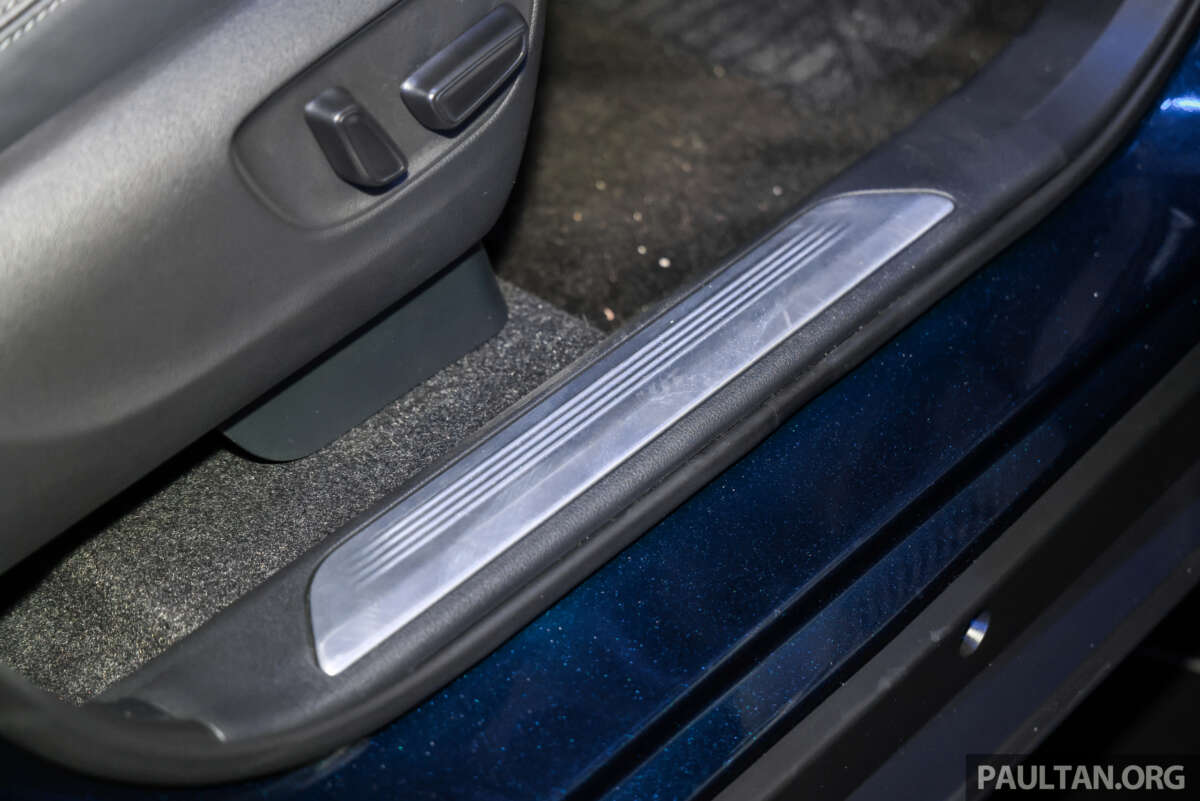
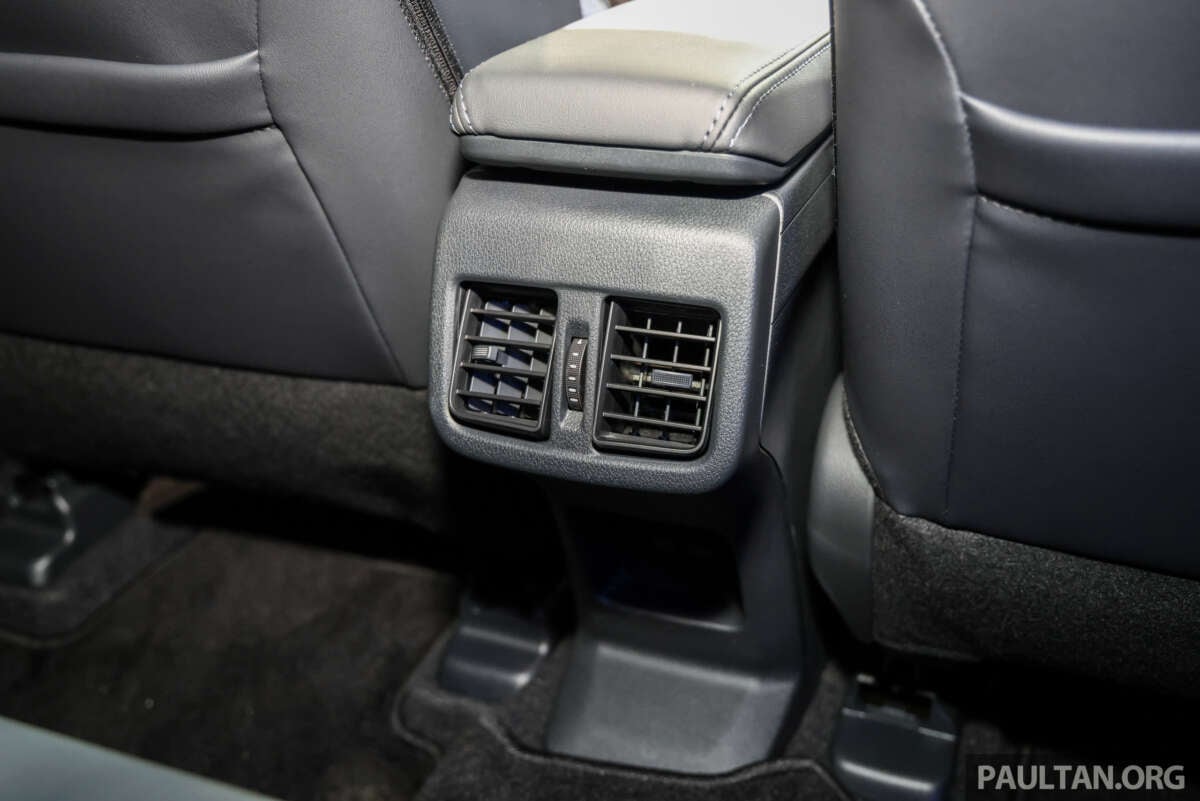
At night, the Yaris Cross further one-ups the Traz with ambient lighting on the doors and centre console. The Hybrid version adds illuminated footwells and side sill scuff plates. Beyond all that, the interior is shared across both models, with tilt and telescopic steering adjustment, black headlining, an electronic parking brake, rear air-con vents and front and rear USB-C ports all coming as standard.
Possibly the most important difference is to the driver assists. Both cars come with autonomous emergency braking, lane keeping assist, blind spot monitoring, rear cross traffic alert, front departure alert, pedal misapplication control and auto high beam. However, only the Yaris Cross gets adaptive cruise control with stop and go and lane centring assist for Level 2 semi-autonomous driving functionality.


These were the items that were controversially cut from the Traz’s kit list and left as exclusives for the Yaris Cross, which didn’t go down well. Six airbags and stability control are standard fitment, of course.
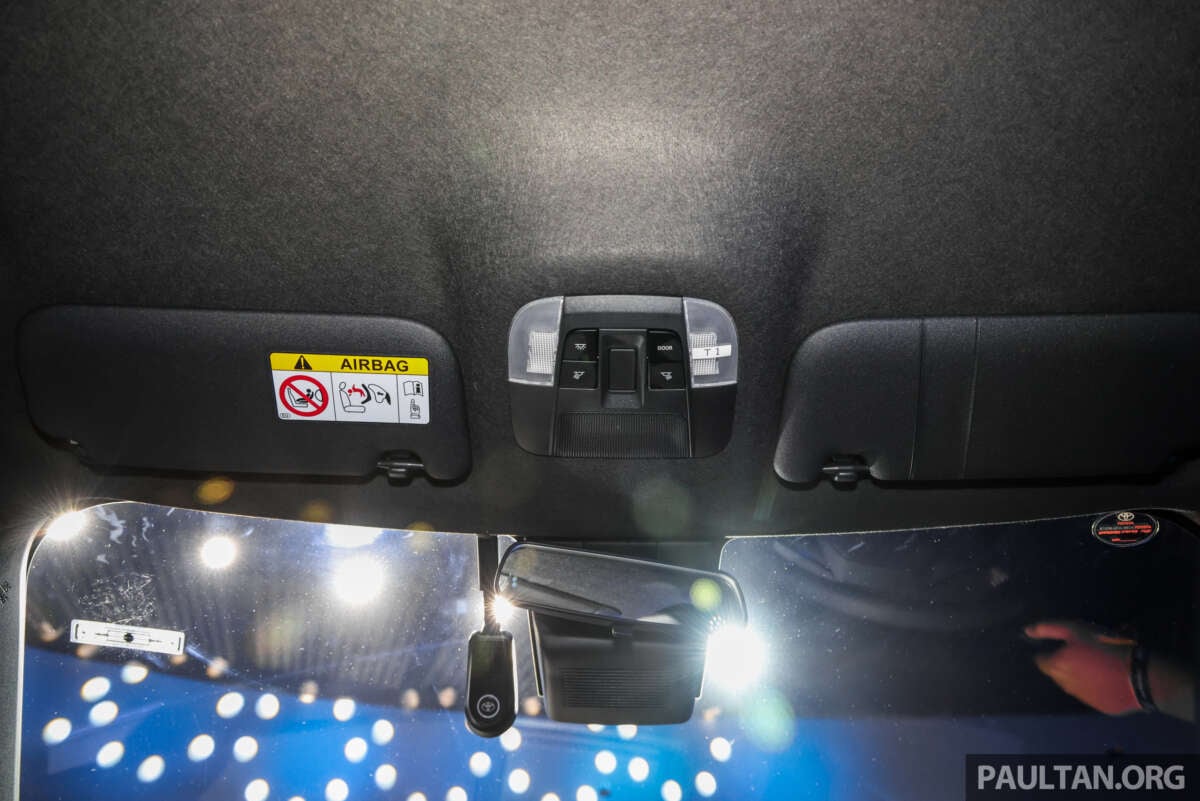
The list of locally-fitted accessories are largely shared across both models, including a front dash cam (H only on the Traz) and solar and security window tinting. But the Yaris Cross gains door visors and the option of a rear dash cam (RM380), while the Traz can be specced with a variety of GearUp visual and utility parts.
Over to you now – do you think that the Yaris Cross’ neater styling and upgraded kit are worth the higher price over the Perodua Traz? Let us know in the comments.
GALLERY: Toyota Yaris Cross 1.5S in Malaysia

















GALLERY: Toyota Yaris Cross 1.5S Hybrid in Malaysia






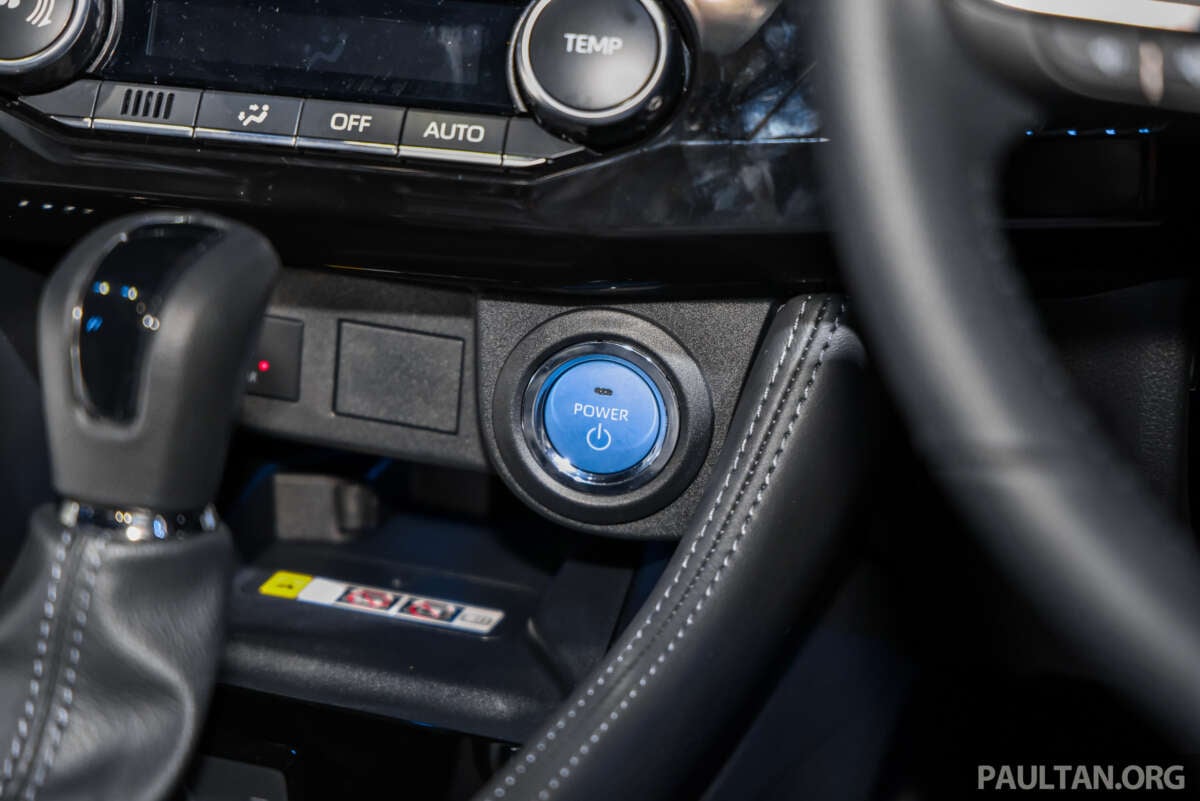


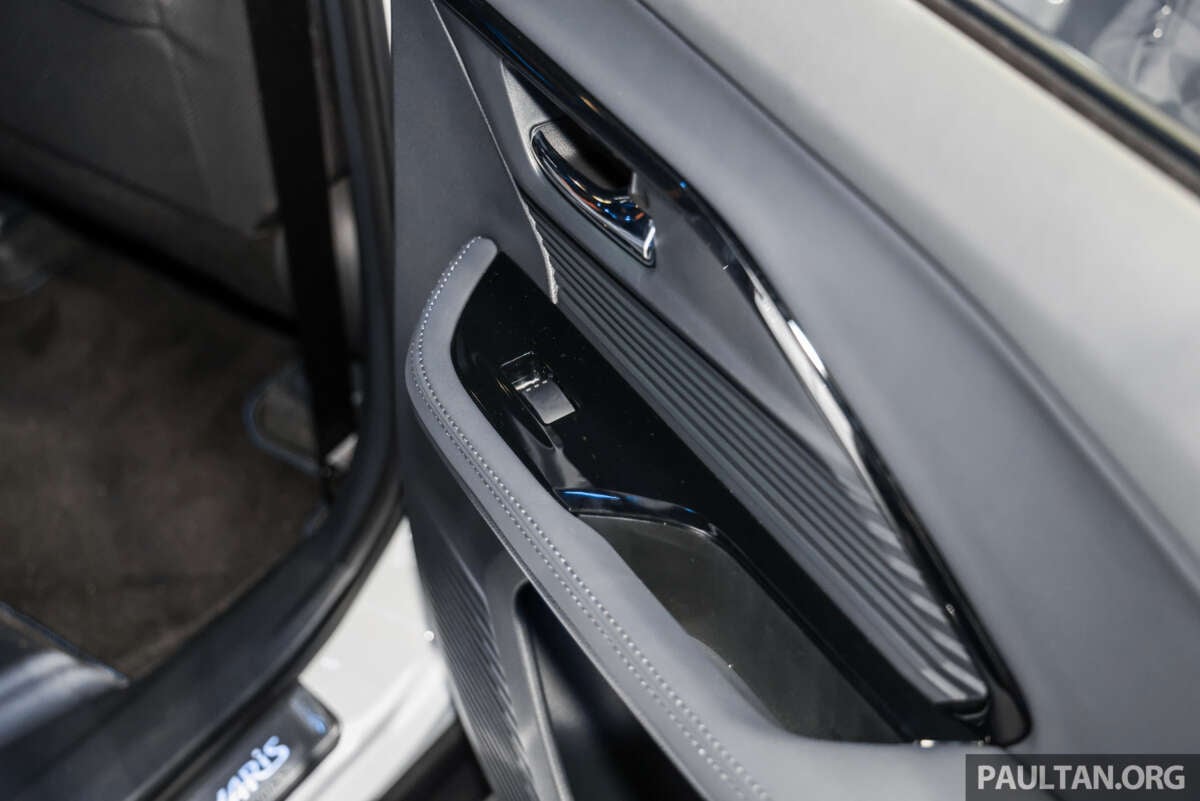


GALLERY: Perodua Traz 1.5 H in Malaysia


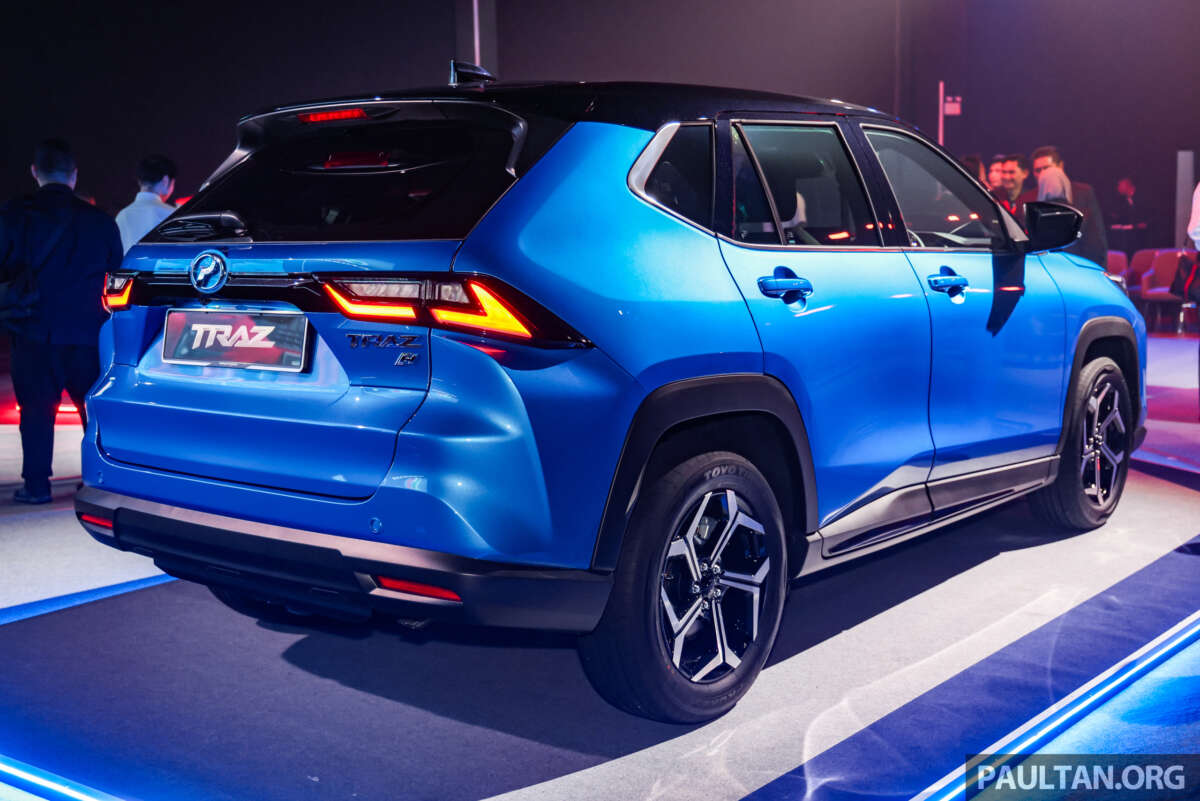


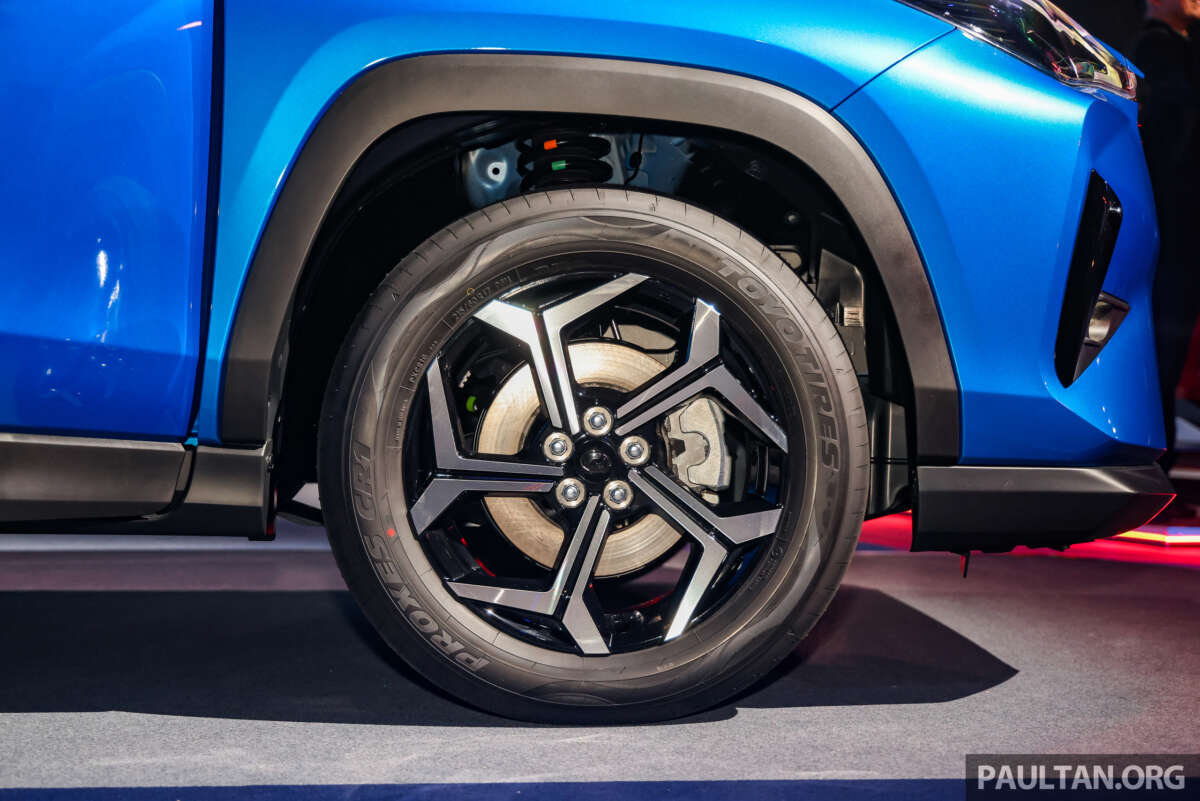





 Perodua Traz
from RM76,100
Perodua Traz
from RM76,100  Perodua QV-E
from RM69,999
Perodua QV-E
from RM69,999  Perodua Axia
from RM33,900
Perodua Axia
from RM33,900  Perodua Alza
from RM62,500
Perodua Alza
from RM62,500  Perodua Myvi
from RM46,500
Perodua Myvi
from RM46,500  Perodua Ativa
from RM62,500
Perodua Ativa
from RM62,500  Perodua Bezza
from RM34,580
Perodua Bezza
from RM34,580  Perodua Aruz
from RM68,900
Perodua Aruz
from RM68,900 

Joining a highly-contested price range battle for Compact SUVs (with some ICE).
1.5L 11s+ to 100km/h
Engine Warranty compared for the Rich Purchasing, without additional extension cost:
Yaris Cross HEV 11s+ to 100: 5 yrs Engine, 8 yrs HEV
Emas7 PHEV 8s+ to 100: 6 yrs Engine, 8 yrs PH.EV
Tiggo7,8 PHEV 7.5s+ : 7 yrs Engine, 10 yrs PH.EV
GWM Haval H6 HEV 7.5s+ to 100: 10 yrs Engine, 10 yrs HEV
Zenix HEV 10s+ to 100: 5 yrs Engine, 8 yrs HEV
Traz serves as a reminder from Toyota that they are not overpriced, you just get what you paid for. Whether it’s true or not, it’s up to the buyers.
not just Toyota MY la, never forget that UMW vampires
Obvious as hell this wasplanned long ago
.. rm20k difference, you will get back in resale value of approx rm10k more. So you are actually paying rm10k more for a toyota nameplate,and the extra kit. Just being about to access the toyota service center as oppose to the perodua one is already worth this much.
speak for yourself. i prefer to be a big fish in a small pond, when i drive my traz to perodua center because the traz is the most expensive car there so i automatically assume my status as the richest B40 there in a sea of other lower tier B40s
I happen to own a Toyota Camry and a Myvi. I can actually agree that sending car to a Toyota service center is much more pleasant and less crowded.
Extra RV is offset with higher insurance premium due to higher value. Hence paying for more expensive insurance over the years. Supposed the trash value gonna sink like a rock as it’s a relatively unpopular car. Face value of driving toyolta notwithstanding.
Toyota should step out of this no-brain game. Let Perodua sell rebadged, cheaper Toyota daihatsu models for the rakyat. UMW should bring in the new RAV4, Outlander, Tundra, or even the Corolla hatchback.
Elevate the brand to premium and luxury. Shame on you. you think rakyat poor is it lmaoo
and watch toyota sales volume diminish into hyundai level, clever you.
They can bring Toyota BZ3X EV CKD
Indonesia just announced a massive new incentive for 200,000 EVs to reduce their state budget’s fuel subsidy burden.
https://www.thejakartapost.com/business/2026/05/06/govt-to-launch-incentives-for-200000-evs-to-boost-sales-cut-fuel-subsidies.html
Just as better quality and cheaper durian keeps us at World No. 1, what is MITI doing to ensure Malaysia leads in the CKD assembly of latest technology ahead of Indonesia, Vietnam, and Thailand?
It’s either Toyota downdrade to Daihatsu/Perodua or Perodua upgraded to Toyota.
Poor Nautica, suffering due to that time the price is bot as today. CBU japan but rejected.
Too wordy.. maybe compare in a table.. or write a list of additional stuff for the Toyota.
Stupid article.. clearly this writer favours the Toyota more than the Perodua. just compare properly without bashing the other and let the readers decide which one is better.
the backlight of the toyota yaris cross 2026 is not nice at all.
if toyota doesnt change to the better look european version I will look elsewhere