

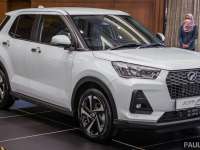
The Perodua Ativa Hybrid is finally confirmed for Malaysia, four years after its subscription-only trial programme branded by Perodua a study for EVs and long-term mobility as a service. By confirmed, we mean full local production and sales – unlike before, you’ll be able to buy one this time around.
Perodua president and CEO Datuk Seri Zainal Abidin Ahmad said that the company is finalising discussions, including production timelines and pricing, among other details. “Once we finalise all those items, we will make a proper announcement at a later date. Rest assured, the hybrid of this Ativa model will be produced locally,” he said yesterday after Japan ambassador to Malaysia Noriyuki Shikata toured P2’s Sg Choh base, reported by Bernama.
Zainal revealed that for the Ativa Hybrid project, Perodua received about 1.5 billion yen (over RM37 million) from the Global South Fund to support Japanese hybrid technology in Malaysia.

Led by Japan’s Ministry of Economy Trade and Industry (METI), the latter is a subsidy for initiatives that encourage partnerships in fields like renewable energy, digital technology and infrastructure, aimed at developing countries in the Global South. Securing the grant helps Perodua reduce costs for what would be its first ever hybrid model.
If you recall, back in 2023, before an EV project was thrust upon Perodua, the market leader was lining up hybrid as its next step, and Zainal said that P2’s first hybrid will be a variant (as opposed to a standalone model like the Toyota Prius) in a full model change a.k.a. all-new next-generation model. FMC rules out the Ativa as a host, so it looks like plans have changed since – perhaps the grant has something to do with it.
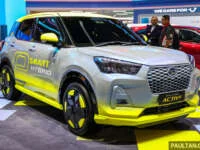
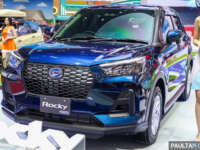
The Ativa Hybrid offered to 300 subscribers in September 2022 was a CBU import, essentially a rebadged Daihatsu Rocky e-Smart Hybrid. It is powered by a 106 PS/170 Nm electric motor (Ativa 1.0T has 98 PS/140 Nm), with a 82 PS/105 Nm 1.2-litre WA-VEX Atkinson-cycle three-cylinder naturally aspirated engine acting purely acts as a generator for the hybrid battery. This is akin to Nissan’s e-Power system in the Kicks.
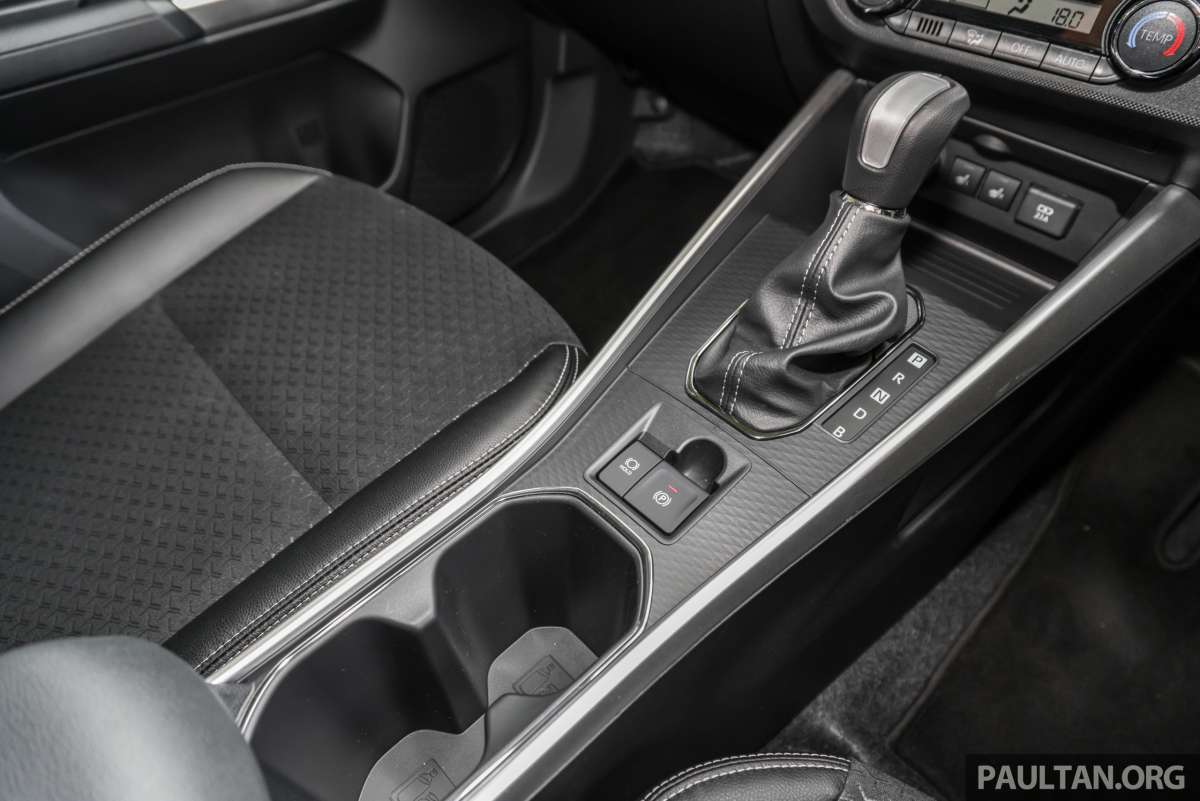
The e-motor powers the wheels via an HEV transaxle, which means that this series hybrid model works somewhat like a range extender electric vehicle. Unlike Honda’s e:HEV hybrids, there’s no direct drive connecting the ICE and the wheels, although in practice, the 1.2L engine – when active – does feel directly connected to throttle movements. Note that Daihatsu’s e-Smart is a different system from the Toyota Hybrid System used in the Vios Hybrid and Yaris Cross Hybrid.
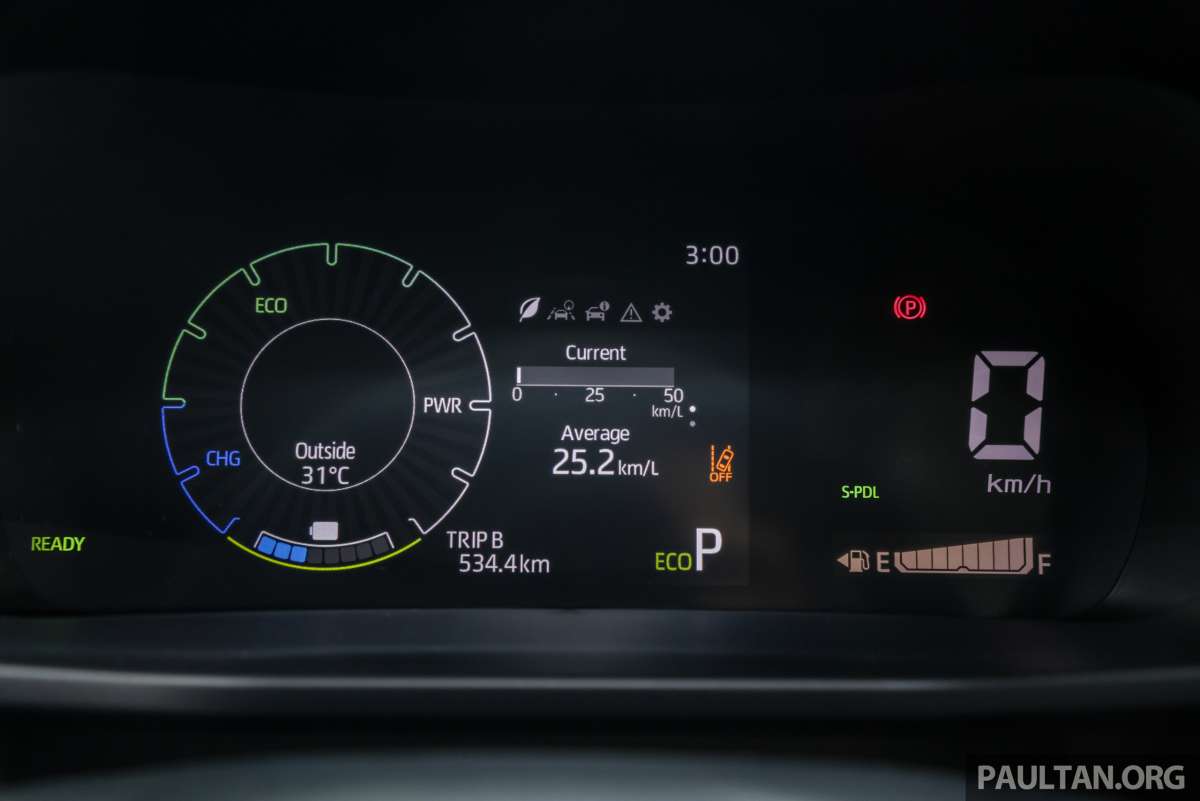
The Rocky Hybrid’s claimed fuel consumption is 3.6 litres per 100 km on the WLTP cycle, which translates to 27.8 km/l. When it launched the subscription plan, Perodua said that the Ativa Hybrid is capable of 31.3 km/l in a ‘Malaysian Driving Cycle’, which is supposed to reflect local driving conditions.
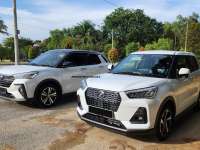
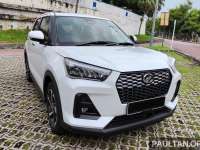
With local production, there’s room for Perodua to introduce its own design changes and suspension tune, so the eventual Rawang-made Ativa Hybrid might end up looking like the regular ICE Ativa with small cues to differentiate the electrified variant. The CBU car was a straightforward rebadge, and aside from badging, the only local items were Perodua’s head unit and key fob. We’ve detailed all the differences here.


How much will it be? For context, the 1.0-litre turbo Ativa is priced from RM62,500 to RM73,400. The Daihatsu Rocky Hybrid was launched in Indonesia in July 2025 initially as a CBU Japan model (now CKD), priced at the equivalent of RM76k then.
In my experience, the e-Smart Hybrid can achieve 25 km/l without much effort, and that’s already around 10 km/l better than my ICE Ativa (I’m averaging between 14 to 16 km/l these days) in the same routine. A fantastic car to maximise your Budi95 quota, if you can live with the compact size. What do you think of upcoming Perodua Ativa Hybrid?
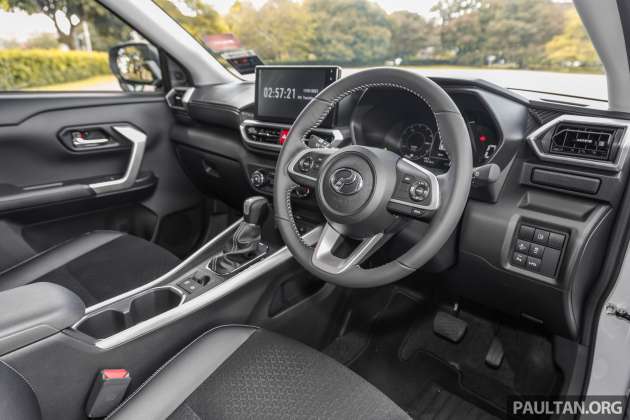
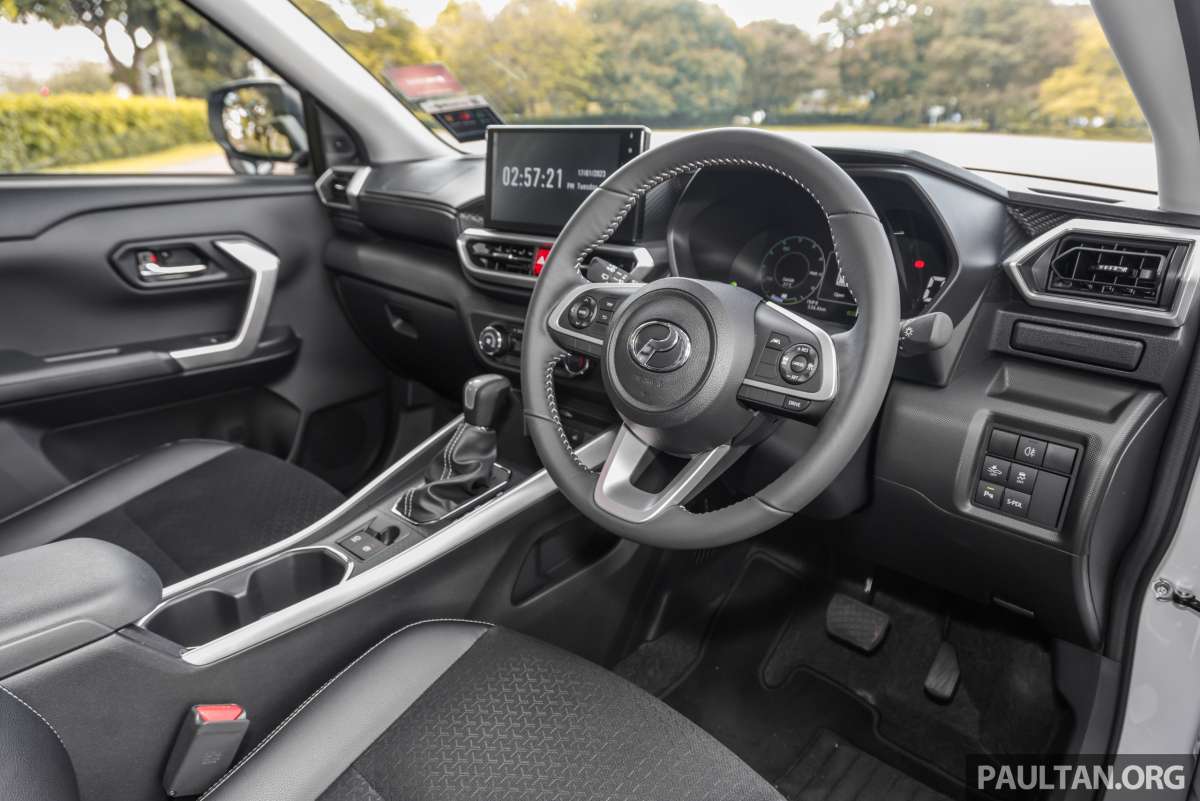
GALLERY: Perodua Ativa Hybrid, CBU











 Perodua Ativa
from RM62,500
Perodua Ativa
from RM62,500  Perodua Traz
from RM76,100
Perodua Traz
from RM76,100  Perodua QV-E
from RM69,999
Perodua QV-E
from RM69,999  Perodua Axia
from RM33,900
Perodua Axia
from RM33,900  Perodua Alza
from RM62,500
Perodua Alza
from RM62,500  Perodua Myvi
from RM46,500
Perodua Myvi
from RM46,500  Perodua Bezza
from RM34,580
Perodua Bezza
from RM34,580  Perodua Aruz
from RM68,900
Perodua Aruz
from RM68,900 
 brian use
on
brian use
on 

 B40 mmg Kena berubah
on
B40 mmg Kena berubah
on  Haji Karim
on
Haji Karim
on  Hobi Kami Mahal
on
Hobi Kami Mahal
on  Hailak
on
Hailak
on  HaiLanC
on
HaiLanC
on  Paul Chan
on
Paul Chan
on  ben ja min
on
ben ja min
on  PiggaPeppa
on
PiggaPeppa
on  alldisc
on
alldisc
on  discall
on
discall
on  Asyraf
on
Asyraf
on  muhamad Mokhtar
on
muhamad Mokhtar
on  call me by your name
on
call me by your name
on  Autodriver
on
Autodriver
on  Ultra Kiasu
on
Ultra Kiasu
on  Dino
on
Dino
on  Normal_user
on
Normal_user
on  Perodua lover
on
Perodua lover
on  Tin Kosong
on
Tin Kosong
on  No Fos
on
No Fos
on  Souminona
on
Souminona
on  PetrolHead
on
PetrolHead
on  rusty
on
rusty
on  Uuuuuuuuuuuu
on
Uuuuuuuuuuuu
on  6..7 airbags
on
6..7 airbags
on  hajikarimuseb rain
on
hajikarimuseb rain
on  Ismail Bin Mail
on
Ismail Bin Mail
on  smart_aleck
on
smart_aleck
on 
AI-generated Summary ✨
Comments mostly express excitement and positivity about the Perodua Ativa Hybrid’s local production and hybrid technology, specifically its series-hybrid system similar to Nissan's ePower. Some discuss fuel efficiency benefits and potential pricing. A few critics mention concerns about outdated technology, limited features, and competition from Toyota hybrids. Overall, commenters are hopeful about the hybrid's market debut, with some wishing for more advanced options like AWD or a more competitive price point.