Follow us:
Advanced search
           
Browse all EVs
           
Browse all used cars
           
Sell your car, get paid fastFree inspection · fast payment Sell for a higher price Add paultan.org as a preferred source on Google Add
 

Perodua QV-E review - all the good and bad

Sell your car for a higher price, get paid in 24 hours

Latest Stories

  • Qatar still planning for MotoGP, Formula 1 races despite regional tensions in Gulf

    Qatar still planning for MotoGP, Formula 1 races despite regional tensions in Gulf

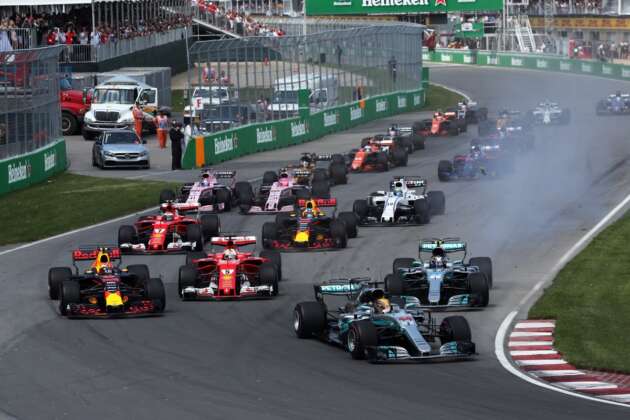
    Qatar is pressing ahead with preparations to host the MotoGP and Formula 1 races at Lusail International Circuit in November, despite continued uncertainty caused by the conflict in the region. Qatar Motor and Motorcycle Federation (QMMF) president Abdul Rahman bin Abdullatif Al Mannai said preparations for both events remain on track, with MotoGP scheduled for November 8 and the Qatar Formula 1 Grand Prix set for November 29.

    However, Formula 1 is expected to make a final decision on the Qatar race in mid-September. Should both the Qatar and Abu Dhabi rounds be unable to proceed, the 2026 F1 season could instead conclude in Europe. “Qatar has been safe for months now. Our airport is 100% operational, including transit flights between Asia and Europe. If you visit Qatar, you will see we are back to normal life, so we’re really looking forward to hosting races again soon,” Al Mannai said in a QMMF question-and-answer session.

    He added that preparations for MotoGP are already underway, while discussions with Formula 1 are continuing. “We are up and running and preparing for MotoGP and it’s the same with our discussions with Formula One. Of course, there are things that we cannot predict. It’s difficult. We don’t know what’s going to happen,” he said.

    Qatar still planning for MotoGP, Formula 1 races despite regional tensions in Gulf

    “The situation has been fluid, even though it’s been really quiet so far. It depends on what happens in the next couple of months or so. “For us, we cannot stop the plans. We have to be ready. We are taking it one step at a time to see the situation and assess. But so far, everything is good. Everything is a go-ahead.”

    The uncertainty follows the cancellation of the World Endurance Championship (WEC) Qatar round, originally scheduled for October 24, with the event moved to Europe. The developments also highlight how regional tensions have already affected the 2026 Formula 1 calendar. Bahrain’s race, originally scheduled to take place at Bahrain International Circuit, was cancelled earlier this season, with the event subsequently moved to Malaysia.

    Qatar still planning for MotoGP, Formula 1 races despite regional tensions in Gulf

    The Formula 1 Gulf Air Bahrain Grand Prix in Malaysia will take place at Sepang International Circuit from October 2-4, marking F1’s return to Sepang for the first time since 2017. The race will retain the Bahrain Grand Prix title despite being held in Malaysia.

    With Bahrain now effectively relocated to Sepang, the outcome of the Qatar and Abu Dhabi races remains important to the final shape of the 2026 F1 season. Qatar is currently scheduled for November 29, followed by Abu Dhabi on December 6. The regional conflict, which began with the US-Israeli conflict with Iran, has also affected shipping through the Strait of Hormuz and raised concerns over the security and stability of Gulf countries.

     
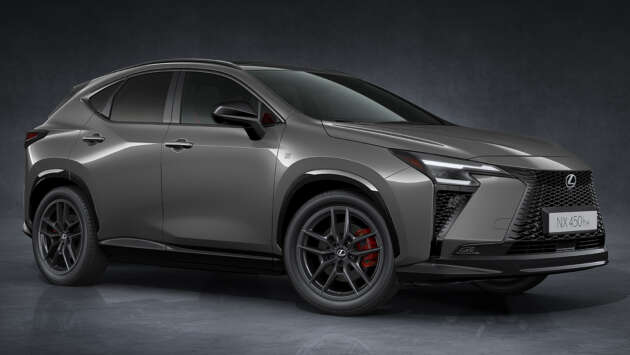
  • 2027 Lexus NX facelift – hybrid only, NX450h+ PHEV gets 100 km WLTP EV range, DC charging; ES styling, tech

    2027 Lexus NX facelift – hybrid only, NX450h+ PHEV gets 100 km WLTP EV range, DC charging; ES styling, tech

    Five years is a long time to wait for a facelift, but that’s exactly how long the second-generation Lexus NX has remained unchanged since its 2021 debut. Thankfully, the compact executive SUV has finally been given a makeover, slated to reach global markets at the end of the year – and it’s a big one, taking plenty of inspiration from the new ES sedan.

    Rather than being a simple refresh, Lexus has taken a root and branch approach to overhauling the car’s underpinnings while maintaining its shape. New floor crossmembers and a stiffer transmission tunnel work together with the strengthened front and rear ends to boost floor rigidity by 25%, while the redesigned suspension towers are 30% stiffer.

    These changes go hand-in-hand with the revised powertrain lineup. The NX is now hybrid-only with the elimination of the pure petrol variants, and the electrified versions that remain receive Lexus’ sixth-generation hybrid with the power control unit (PCU) integrated into the motor and E-CVT planetary gearset.

    2027 Lexus NX facelift – hybrid only, NX450h+ PHEV gets 100 km WLTP EV range, DC charging; ES styling, tech

    As such, the whole system is now 10 kg lighter and 10 cm slimmer, while the inverter’s silicon carbide semiconductors reduce energy losses to improve fuel efficiency, battery output and other aspects. Updated battery power management uses more electricity under acceleration to reduce engine speeds, allowing the revs to rise more in sync with the car’s speed to provide a more linear acceleration feel.

    The range starts with a new NX300h, utilising a 150 PS 2.0 litre M20A-FXS naturally-aspirated four-cylinder engine for a total system output of 197 PS. This is the same powertrain used in the UX300h, as well as the top-spec Toyota Prius.

    Move up one rung and you’ll get the NX350h, continuing to utilise a 184 PS 2.5 litre A25A-FXS NA engine (plus an additional rear motor for optional all-wheel drive) for a total output of 245 PS. The new lithium-ion battery, similar to the one in the ES350h, gets enhanced cooling that enables the number of cells to be reduced while maintaining output. As such, the pack is now 9.2 kg lighter at 23.5 kg, with the revised componentry also slashing the zero-to-100 km/h time by over half a second to 7.1 seconds.

    2027 Lexus NX facelift – hybrid only, NX450h+ PHEV gets 100 km WLTP EV range, DC charging; ES styling, tech

    But it’s the NX450h+ plug-in hybrid that has received the biggest changes. It still uses the 2.5 litre mill and a dual-motor AWD setup (the front-drive version has been dropped), but the new battery provides an eight per cent power bump to 326 PS, marginally cutting the century sprint time to six seconds flat.

    It’s more than just performance that has improved – that new battery has also had its capacity boosted by 30%, resulting in a near 30 km jump in pure electric range to over 100 km on the WLTP cycle. It’s also mounted lower under the floor for a lower centre of gravity, and the cells are aligned longitudinally instead of transversely to increase lateral rigidity.

    The big news, however, is the inclusion of DC fast charging support to significantly reduce charging times. This has necessitated a move of the charge port from the rear to the front (on the same side as the fuel filler, nice), and you now get a powered port door.

    2027 Lexus NX facelift – hybrid only, NX450h+ PHEV gets 100 km WLTP EV range, DC charging; ES styling, tech

    Road manners have been improved with revised passive dampers (the optional adaptive items are unchanged), featuring ultra-low-speed valves for more responsive damping even for minute suspension movements. This provides a flatter, more refined ride over undulations, benefitting both ride comfort and handling. More responsive variable-ratio steering is also now standard, with the EPS retuned to suit.

    The NX will also now apply the brakes subtly in the corners to quickly stabilise yaw and roll movements during abrupt manoeuvres such as sudden lane changes. Meanwhile, the throttle control and even the pedal assembly itself have been tweaked for a more linear response. Aiding refinement is a redesigned engine block and a more rigid connection between the engine and transaxle, moving resonance away from the engine’s combustion frequencies.

    All those changes are belied by an exterior that remains recognisable as an NX, although there are a fair few revisions. The spindle grille has been retained, coming in a black finish that means the car still looks like a Lexus, instead of the rather anonymous body-coloured version used on recent models like the ES, TX and TZ.

    2027 Lexus NX facelift – hybrid only, NX450h+ PHEV gets 100 km WLTP EV range, DC charging; ES styling, tech

    The mesh grille is now integrated with the sharp L-shaped headlights (now with dual-line daytime running lights and indicators) for a sportier look. Those lamps flow into the more rigid ducts that stabilise airflow around the front tyres to improve handling stability, while wheel house fins evacuate more air out to reduce pressure buildup, lowering rear-end lift.

    The side and rear are mostly unchanged, still with the fiddly electronic door pulls, sculpted flanks and the Lexus script at the back. The latter is now illuminated in concert with the full-width taillights, which feature a dual-L signature for the first time on a Lexus.

    Inside is where the NX looks the most like the new car. Gone is the sculptural dashboard, replaced by a simple horizontal piece inspired by the ES. That includes the hidden-until-lit capacitive touch air-con controls (boo) that replace the physical knobs built into the touchscreen, although haptic feedback provides a modicum of usability.

    2027 Lexus NX facelift – hybrid only, NX450h+ PHEV gets 100 km WLTP EV range, DC charging; ES styling, tech

    Speaking of the touchscreen, you still get a 14-inch panel for the infotainment, although the dispensing of those knobs means you should get more real estate back. The instrument display measures 12.3 inches, sitting behind a smaller steering wheel (also with hidden controls) with more reach adjustment for a better driving position. The redesigned centre console comes with a stubby gear selector toggle and increased storage.

    You can still get the NX with Lexus’ trademark Mark Levinson sound system, now featuring metal speaker grilles and rather crass ring lights that correspond with the ambient lighting. The latter forms part of a new Sensory Concierge that coordinates lighting, music, air-con, seat temperature and a new air fragrancing system (with five scents available to fit in the three cartridges) according to three “moods” – Inspire, Radiance and Revitalise.

    The NX can now be had with two new exterior colours – Sonic Tellus (an ashy green) and an F Sport-exclusive Titanium Carbide Grey. Inside, there’s a new Mars-inspired Abalos (brown) and a searingly red Prominence, the latter again only on the F Sport.
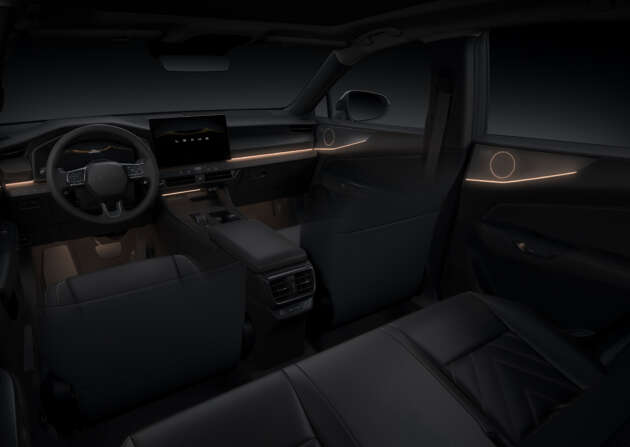
    2027 Lexus NX facelift – hybrid only, NX450h+ PHEV gets 100 km WLTP EV range, DC charging; ES styling, tech

    Safety-wise, the NX inherits the latest fourth-generation Lexus Safety Sense+, equipped with improved autonomous emergency braking with a higher speed range, plus smoother adaptive cruise control and auto lane changes. The cruise control now has an Eco mode that works with the navigation for more efficient throttle application.

    There’s also a new camera based driver attention monitor that can pull over and stop the car if it senses the driver is incapacitated, as well as improved lane keeping assist that can detect poles and barriers if road edge markings are unclear. Blind spot monitoring now detects motorcycles and bicycles, while improved adaptive high beam and a new 360-degree camera system with 3D and transparency views are also fitted.


     
  • Jaecoo J5 EV launched in Malaysia – 402 km range, 0-100 in 7.7s, CKD for RM118,800, RM10k more than ICE

    Jaecoo J5 EV launched in Malaysia – 402 km range, 0-100 in 7.7s, CKD for RM118,800, RM10k more than ICE

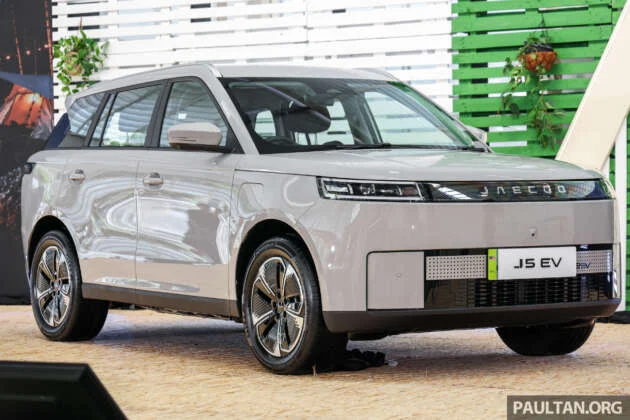
    Jaecoo Auto Malaysia launched the Jaecoo J5 EV today, the brand’s first fully electric vehicle. The EV version of J5 SUV – younger brother of the breakthrough J7 – is priced at RM118,800 on-the-road without insurance, which is lower than the RM125,000 estimated price that was announced when order books opened in July. There’s a launch package worth RM10k plus free charging for one year – more on this below.

    That makes the J5 EV’s RRP around RM10k costlier than its petrol-powered sibling, which single 2WD variant goes for RM108,000 nett without on-the-road costs and insurance. Both J5s are CKD locally assembled at Chery Corporate Malaysia’s plant in Shah Alam.

    Powering the J5 EV’s front wheels is a motor with 211 PS (155 kW) and 288 Nm of torque, good for a 0-100 km/h time of 7.7 seconds and top speed of 175 km/h. The battery is a 58.9 kWh lithium iron phosphate (LFP) unit from CATL that provides 402 km WLTP range (461 km NEDC). By the way, our J5 EV gets a bigger battery than Thailand (50.6 kWh) but a smaller one compared to Indonesia (60.9 kWh), and they all come from different suppliers.

    Jaecoo J5 EV launched in Malaysia – 402 km range, 0-100 in 7.7s, CKD for RM118,800, RM10k more than ICE

    As for charging (powered flap), the DC max rate is 130 kW, and getting from 30-80% state of charge (SoC) takes 28 minutes. AC charging peaks at 11 kW (10-100% SoC in around seven hours) and the Jaecoo has vehicle-to-load (V2L) output of 3.3 kW to power your appliances.

    Measuring 4,380 mm long and 1,860 mm wide with a 2,620 mm wheelbase, Jaecoo’s first EV is a B-segment SUV comparable in size with the likes of the Honda HR-V, Proton X50 and Chery Tiggo Cross. If you’re thinking in EV terms, BYD Atto 2 (although price wise, it’s closer to the BYD Atto 3 and Proton eMas 7, which are both a segment up). Ground clearance is 174 mm, if you need to know.

    Boot volume is 480 litres (no spare tyre here, unlike the ICE), expandable to 1,284 litres with the rear seats folded. The lack of an engine up front has freed up space for a 35-litre frunk.

    Jaecoo J5 EV launched in Malaysia – 402 km range, 0-100 in 7.7s, CKD for RM118,800, RM10k more than ICE

    The biggest exterior difference between EV and ICE J5s is in the face – the one that requires less cooling sports a slim closed-off grille with the Jaecoo logo in it, and a rectangular lower intake with an active shutter, perforated sections and discreet air curtains.

    The 18-inch wheels have a two-tone aero design (235/55 Giti tyres, better than the ICE’s Chao Yang), while the charging port is located on the driver’s side front fender. There’s an ‘EV’ badge on the tailgate. The EV’s face is a big departure from the large waterfall grille look that we’ve become accustomed to from Jaecoo – what do you think?

    Inside, the J5 EV gets the same 8.88-inch digital instrument cluster and 13.2-inch portrait infotainment touchscreen as the ICE. The TÜV-certified, pet-friendly, anti-bacterial, scratch-resistant and low-VOC faux leather upholstery is also present, albeit with blue piping and stitching.

    Other features include powered front seats with ventilation, a 1.45m panoramic glass roof, dual-zone climate control, wireless Android Auto and Apple CarPlay, a 50W wireless charging pad, ‘540-degree’ surround view camera and powered tailgate. Double-glazed front windows and heated wing mirrors with memory are nice little luxuries, and the ICE J5’s in-car karaoke mode is here too.

    There are also Pet and Camping climate control modes – which along with the V2L, frunk and upholstery – would make it a well-suited car for those who hang out at Parc Subang Jaya, the launch venue.

    As for safety, there are six airbags and the ‘Level 2+’ ADAS pack includes driver assists such as AEB, Lane Departure Warning, Lane Keeping Assist, Lane Departure Prevention, Blind Spot Detection, Lane Change Assist, Full-Speed Adaptive Cruise Control, Front Vehicle Departure Alert and Integrated Cruise Assist.

    Also in the pack are Forward Collision Warning, Rear Cross-Traffic Alert and Braking, Traffic Jam Assist, Evasive Steering Assist, Door Opening Warning, Active Speed Limiter, Rear Collision Warning, Multi-Collision Braking and Emergency Lane Keeping Assist.

    Jaecoo J5 EV launched in Malaysia – 402 km range, 0-100 in 7.7s, CKD for RM118,800, RM10k more than ICE

    Click to enlarge

    Coming in Alpine Green, Fjord Grey and Carbon Crystal Black colours the Jaecoo J5 EV is priced at RM118,800 on-the-road without insurance, which is around RM10k higher than its ICE sister.

    However, there’s a launch package for the first 1,000 units till October 31 – the package includes one-year of free unlimited charging in collaboration with JomCharge, free one-year insurance, free three years of data, a 7kW home charger, V2L cable and some accessories. The latter bundle includes the karaoke set, subwoofer, flashlight that mounts in the boot and a pet carrier – this is as per the ICE version. Jaecoo says that the freebies are worth RM10k, before the free charging.

    The vehicle warranty is for seven years or 150,000 km, and there’s a separate 10-year or 200,000 km EV battery warranty. So, what do you think of the Jaecoo J5 EV’s looks, price and package?

    GALLERY: Jaecoo J5 EV launch

    GALLERY: Jaecoo J5 EV launch presentation

     
  • Bus operators need to be included in discussions when planning for new housing projects, says 4PAM

    Bus operators need to be included in discussions when planning for new housing projects, says 4PAM

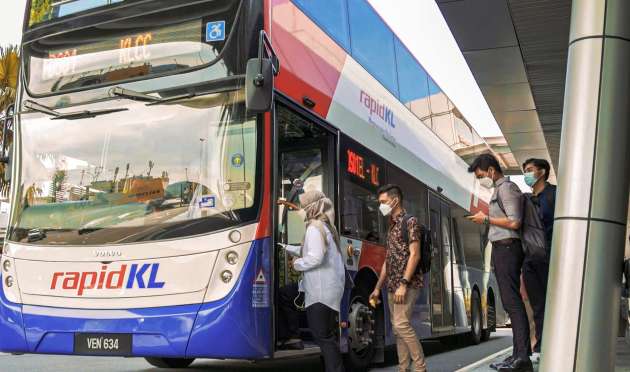
    Planning for new housing projects should include public transport as a basic utility alongside electricity, water and sewerage, or else residents could remain locked into car dependence when they move in. According to Malaysian Public Transport Users Association (4PAM) president Ajit Johl, this aspect is never covered whenever local councils coordinate proposed developments.

    He said utility providers were represented at one-stop centres in these instances, but the bus operator expected to serve the new community was usually absent. He added that bus services usually arrive only after residents have moved in, by which point many households would have already bought cars because there was no practical alternative, The Sun reports.

    “Public transport must be included when a new development is first proposed. The largest operator expected to serve that area must be present, so it can tell the developer where the bus stops should be placed and ensure the pathways leading to them are properly lit,” he said.

    Ajit said that without such input, developers often end up placing bus stops wherever they considered suitable, even when the locations were inconvenient or unsafe for passengers. He said that developers should not bear the blame alone for this, as transport authorities and operators had not advised them during the approval stage. “If the operator was involved from the beginning and knew that 1,000 homes were coming, it could start planning the routes early,” he indicated.

    Bus operators need to be included in discussions when planning for new housing projects, says 4PAM

    He said the planning process should also include continuous pedestrian pathways, safe road crossings, adequate lighting and CCTV coverage to ensure residents could reach bus stops and stations safely. He also said while such planning gaps could contribute to car dependence, the latest increase in vehicle sales should not be treated as direct proof that inadequate public transport was driving purchases.

    “There could be a correlation between increasing car sales and inadequate public transport, but there also may not be one. Examining car sales on a month-to-month basis without considering other data may not provide a fair basis for comparison,” he explained.

    Ajit said that while the government had considerably improved bus services and urban rail, weaknesses remained in first and-last-mile connectivity. As such, public transport infrastructure should be treated as an essential service at the development planning stage, rather than added only after a neighbourhood had taken shape. “If a developer must pay connection charges for electricity, water and sewerage, why should it not also be required to provide proper public transport infrastructure?” he explained.

     
  • Thailand police focus on 10 major traffic offences linked to road accidents, increased fines

    Thailand police focus on 10 major traffic offences linked to road accidents, increased fines

    Royal Thai police are focusing on 10 major traffic offences identified as key contributors to road accidents in the country, with several offences carrying maximum fines that have increased significantly from previous levels. Offences include speeding, running red lights, failing to stop at pedestrian crossings, using a mobile phone while driving, driving against traffic, riding without a helmet, failing to wear a seat belt, not carrying a driving licence, drink-driving and driving without due regard for road safety.
    Motorists caught speeding now face a maximum fine of 4,000 baht (approximately RM492), compared with 1,000 baht (RM123) previously. The same maximum fine applies to motorists who run red lights.

    Drivers who fail to stop and give way to pedestrians at designated crossings can also be fined up to 4,000 baht, while using a mobile phone while driving without approved hands-free equipment carries the same maximum penalty. Meanwhile, the maximum fine for driving against traffic has been raised to 2,000 baht (RM246), up from 500 baht (RM61) previously.

    Thailand police focus on 10 major traffic offences linked to road accidents, increased fines

    Motorcycle riders and pillion passengers who fail to wear helmets can be fined up to 2,000 baht, while drivers and passengers who fail to wear seat belts face the same maximum fine. Those who fail to carry their driving licence can be fined up to 1,000 baht (RM123) and may also face imprisonment of up to one month.

    Drink-driving carries significantly heavier penalties, with offenders facing fines ranging from 5,000 to 20,000 baht (approximately RM615 to RM2,460), or imprisonment of up to one year, depending on the circumstances of the offence. The same fine range and potential one-year prison sentence applies to motorists found driving without due regard for the safety of others.

    The focus on these 10 offences reflects efforts by Thai authorities to curb dangerous driving behaviour and reduce the number of road accidents and fatalities in the country. Malaysian motorists are reminded that they are required to produce their physical driving licence in Thailand.

     
  • Mercedes-Benz Malaysia appoints Kevin Barbian as its new COO, effective Sept 1 – replaces Nadia Trimmel

    Mercedes-Benz Malaysia appoints Kevin Barbian as its new COO, effective Sept 1 – replaces Nadia Trimmel

    Kevin Barbian (left), Nadia Trimmel (right)

    Mercedes-Benz Malaysia has announced the appointment of Kevin Barbian as its new COO, effective September 1, 2026.

    With experience across business development, digitalisation and customer experience within Mercedes-Benz, Barbian began his career in 2011 as a business development consultant. He would later lead commercial telematics and business-to-business services before founding Mercedes-Benz Connectivity Services GmbH in 2016, where he served as head of sales and marketing.

    In the past decade, Barbian held leadership roles in IT and digital transformation, including as digital lead for Mercedes-Benz’s EQ division where he dealt with over-the-air (OTA) updates and on-demand functions. This was followed by the establishment and scaling of the digital, data and AI unit within the company’s IT customer services across multiple international hubs.

    His most prior post involved leading the ‘Retail of the Future’ programme in Europe, overseeing its implementation in Germany and other markets – the programme reached Malaysia in September 2023.

    Mercedes-Benz Malaysia appoints Kevin Barbian as its new COO, effective Sept 1 – replaces Nadia Trimmel

    “Malaysia is an important and dynamic market for Mercedes-Benz, with tremendous potential for continued growth and innovation. I look forward to building on the strong momentum of the business and working alongside our talented team and retail network to further enhance the customer journey. Our focus remains on delivering desirable products, seamless experiences and meaningful value to our customers,” said Barbian.

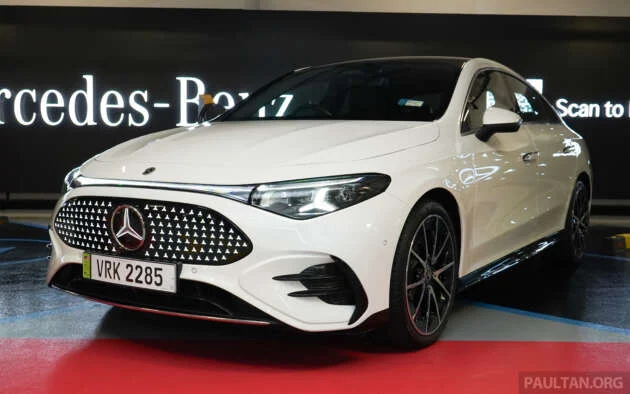
    Barbian succeeds Nadia Trimmel, who moves on to her next assignment as sales director at Mercedes-Benz Vans UK. She joined Mercedes-Benz Malaysia as vice president of sales and marketing in 2024 and oversaw the introduction ‘Retail of the Future’ programme as well as key product launches, the most recent being the electric CLA.

    “My time in Malaysia has been an immensely rewarding experience, and I am proud of what we have accomplished together. From my team and colleagues to our retail partners, customers, and stakeholders, the passion, commitment and resilience of those around me have made this chapter truly meaningful. I would like to thank everyone who has been part of this journey and extend a warm welcome to Kevin. Under his leadership, I am confident the business will build on its strong momentum and reach even greater heights in the years ahead,” commented Trimmel.

     
  • 15-20 children caught riding basikal lajak dangerously in Kajang – several flee, abandon bicycles

    15-20 children caught riding basikal lajak dangerously in Kajang – several flee, abandon bicycles

    Around 15 to 20 children were found riding basikal lajak and performing dangerous stunts on public roads in Taman Saujana Impian, Kajang, prompting police intervention following a public complaint. Kajang District Traffic Investigation and Enforcement Division (JSPT) said it received information regarding the group before enforcement personnel from the Kajang District Police Headquarters (IPD) JSPT were dispatched to the area.

    Upon arrival, police found the children gathered with their basikal lajak and carrying out various dangerous manoeuvres that could have endangered themselves and other road users. Several of the children fled after noticing the police, abandoning their bicycles behind at the scene.

    15-20 children caught riding basikal lajak dangerously in Kajang – several flee, abandon bicycles

    Police have since reminded parents to keep a close eye on their children’s activities, particularly when they are outside the home. Parents are also urged to explain the dangers associated with basikal lajak, dangerous stunts and reckless riding on public roads, while encouraging children to cycle only in safe, designated areas.

    They should also regularly remind their children about road safety and ensure that their bicycles are in safe and suitable condition. “Parents are advised to increase supervision of their children and not allow them to engage in basikal lajak activities on public roads to prevent accidents and ensure the safety of the children and other road users,” police said.

     
  • TNB AFA rate September 2026 set at +3.67 sen/kWh

    TNB AFA rate September 2026 set at +3.67 sen/kWh

    The Energy Commission’s (ST) Automatic Fuel Adjustment (AFA) rate for September 2026 has been set at +3.67 sen per kWh, down slightly from +3.80 sen/kWh in August 2026.

    The underlying cost pressure continues to ease. According to Single Buyer, the AFA for September is 3.67 sen/kWh (RM375 million), down 14% from 4.28 sen/kWh (RM452 million) in August – and the second straight month the computed surcharge has fallen. Unlike in previous months, we could find no mention of any Kumpulan Wang Industri Elektrik (KWIE) subsidy in any announcement this time.

    This is the fifth consecutive month that AFA has been positive. The KWIE cushion has swung around considerably over that stretch – RM91 million in May, RM87 million in June, RM206 million in July, RM51 million in August, but we have no mention of it this month.

    Once again, the earlier projections overshot. When the August rate was published, TNB’s three-month outlook pencilled in +5.00 sen/kWh for September – yet the pre-subsidy figure came in at just 3.67 sen/kWh, before any KWIE support is counted. As TNB itself notes, the outlook is an estimate to help customers plan, and the eventual figure is frequently lower once actual fuel costs, the true-up and the KWIE subsidy are reconciled.

    TNB AFA rate September 2026 set at +3.67 sen/kWh

    Looking ahead, TNB’s latest three-month projection has been revised down sharply once more: the AFA outlook is now +3.36 sen/kWh for October, +2.81 sen/kWh for November and +5.48 sen/kWh for December – a marked retreat from the +6.81 and +7.50 sen/kWh floated for October and November just a month ago. The near-term trend is finally pointing down, though the December figure suggests the reprieve may not last through year-end.

    The fuel price picture

    Fuel prices in September remain above the baselines used in tariff setting – which is why a surcharge still applies – but the gap continues to narrow. Tier 2 gas fell again to 57.87 RM/mmBTU from 60.42 RM/mmBTU in August (base price: 46 RM/mmBTU), while Tier 1 gas held at 31.71 RM/mmBTU, still below its 35 RM/mmBTU base. Coal retreated to 122.85 USD/MT from 131.71 USD/MT (base price: 97 USD/MT), and although the ringgit weakened slightly to 4.0944 RM/USD from 4.0557 (still firmer than the 4.307 base rate), the coal price works out to a lower 23.05 RM/mmBTU in ringgit terms (base price: 19.14 RM/mmBTU).

    What is Automatic Fuel Adjustment (AFA)?

    AFA is a component of your electricity bill. To recap, AFA replaces the previous Imbalance Cost Pass-Through (ICPT) and is automatically calculated as either a surcharge or discount of up to 3 sen/kWh depending on fuel prices – this is revised monthly, with any larger changes (beyond 3 sen) requiring cabinet approval.

    That 3 sen threshold is very much in play right now. The computed AFA has exceeded the automatic band for four months running – 3.44 sen in June, 5.55 sen in July, 4.28 sen in August and now 3.67 sen in September – and when that happens, the Energy Commission refers the matter to the government, which decides how much of the cost is passed through to consumers. The split between what KWIE absorbs and what lands on your bill as the effective rate reflects that decision.

    Introduced as part of the Electricity Tariff Restructuring that took effect from July 1, 2025, the AFA is one of five components or ‘charges’ used to calculate your electricity bill:

    • Generation charge: 27.03 sen/kWh for total consumption of 1,500 kWh and below per month or 37.03 sen/kWh for total consumption more than 1,500 kWh per month. This covers the actual cost of generating electricity from power plants.
    • Capacity charge: 4.55 sen/kWh. This covers the cost of maintaining sufficient electricity supply capacity.
    • Network charge: 12.85 sen/kWh. This covers the cost of operating and maintaining the grid and the local network to deliver electricity.
    • Retail charge: RM10/month; waived for total consumption of 600 kWh and below a month. This is a fixed cost for metering, billing and customer service.
    • AFA rate: +3.67 sen/kWh for the month of September 2026; waived for total consumption of 600 kWh and below a month.

    You can use our TNB Bill Calculator tool to get a rough estimate on how much your electricity bill will be for the month. Essentially, if you use over 1,500 kWh a month, you add the generation, capacity and network charges (totalling 54.43 sen/kWh) to retail charge (RM10) and the AFA rate (+3.67 sen/kWh for September 2026; positive number, so it’s a surcharge).

    Alternatively, if your usage is below 1,500 kWh a month, it’s 44.43 sen/kWh plus the retail charge and AFA rate. For total consumption of 600 kWh and below a month, it would only be 44.43 sen/kWh – retail and AFA charges are waived.

    Here’s a list of the monthly AFA rates so far:

    • July 2025: 0.00 sen/kWh
    • August 2025: -1.45 sen/kWh
    • September 2025: -1.10 sen/kWh
    • October 2025: -6.50 sen/kWh
    • November 2025: -8.91 sen/kWh
    • December 2025: -6.42 sen/kWh
    • January 2026: -4.99 sen/kWh
    • February 2026: -2.77 sen/kWh
    • March 2026: -2.15 sen/kWh
    • April 2026: -0.47 sen/kWh
    • May 2026: +1.38 sen/kWh
    • June 2026: +2.59 sen/kWh
    • July 2026: +3.59 sen/kWh
    • August 2026: +3.80 sen/kWh
    • September 2026: +3.67 sen/kWh

    TNB AFA rate September 2026 set at +3.67 sen/kWh

    Domestic consumers who use less than 1,000 kWh a month can enjoy a discount called ‘Insentif Cekap Tenaga‘ or ‘Energy Efficiency Incentive’. The discount provided is relative to consumption (higher usage, lower incentive), with the maximum discount being 25 sen/kWh.

    Domestic users who have smart meters also have the option to enter the Time of Use (ToU) scheme, allowing them to change their electricity usage patterns and take advantage of lower tariff rates during off-peak hours to enjoy savings on their monthly bill.

    The scheme has two time zones, with off-peak timings being from 10pm to 2pm from Monday to Friday and throughout the day (24 hours) for weekends. Peak hours are from 2pm to 10pm on weekdays. Here are the energy charges under this scheme:

    For usage of 1,500 kWh and below per month

    • Peak tariff: 28.52 sen per kWh
    • Off-peak tariff: 24.43 sen per kWh

    For usage above 1,500 kWh per month

    • Peak tariff: 38.52 sen per kWh
    • Off-peak tariff: 34.43 sen per kWh

    Is there a way to escape from paying AFA?

    Yes actually, there are two ways.

    Firstly, you can use less electricity. AFA is waived for total consumption of 600 kWh and below a month.

    Secondly, there is something called Green Energy Tariff (GET) which you can opt for. This exempts you from AFA – and, since August 1, 2025, from the 1.6% renewable energy fund (KWTBB) levy too – on the green units you subscribe.

    However, GET itself costs 5 sen/kWh if you lock in for a 1 year subscription, 4 sen/kWh for 2 years, and 3 sen/kWh for 3 years, thus it only makes economic sense to subscribe to it if AFA is more than what GET costs across the entire period that you subscribe it for.

     
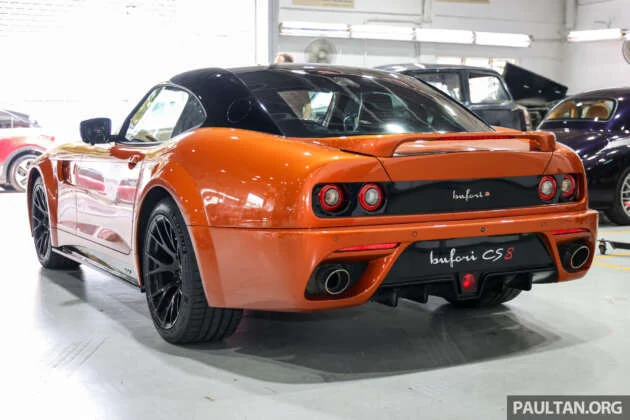
  • Bufori CS8 Malaysian review – 810 hp V8, from RM2.19 million; has Kepong built a world-class sports car?

    Bufori CS8 Malaysian review – 810 hp V8, from RM2.19 million; has Kepong built a world-class sports car?

    For all the attention Perodua and Proton have been garnering as they go at each other hammer and tongs for sales supremacy, there’s a little-known outfit in Kepong quietly churning out even more impressive work – bespoke, highly individual sports cars with a focus on distinctive prewar-inspired designs.

    I’m talking, of course, about Bufori, and its latest model, the CS8, is easily its most conventional yet. But you’re still looking at the diametric opposite of the Proton eMas 5 – a long and low two-seat sports car with a muscle car V8 at the front, a ZF eight-speed automatic sending drive to the rear wheels and an entirely hand-built cabin lined in leather.

    Plus, unlike that eMas 5, the CS8 is almost entirely made in Malaysia using local components. That includes the carbon Kevlar monocoque that is even woven in-house, as well as the wiring harness, computers, PCB chips and software. This is despite the fact that Bufori is classified as a foreign carmaker and has to pay full import and excise duties, even though its cars never cross a sea or land border to enter the country – a downright crime if you ask us.

    Bufori CS8 Malaysian review – 810 hp V8, from RM2.19 million; has Kepong built a world-class sports car?

    Those duties are the reason why the CS8 costs as much as it does – a whopping RM2,188,000 on-the-road without insurance puts it in direct competition with big-name GTs like the Aston Martin Vantage. But I digress.

    The car itself uses a supercharged Hemi V8 from Dodge’s old Hellcat models, but this isn’t simply a crate engine out of the Mopar parts catalogue. The engine has been blueprinted and comes with forged internals, resulting in a displacement boost from 6.2 to 6.4 litres.

    As you can imagine, performance is monumental, with 810 hp (750 wheel horsepower) and 975 Nm of torque pushing the CS8 to 100 km/h in just three seconds flat, on its way to a soaring top speed of 330 km/h. Your eccentric uncle’s La Joya this most certainly isn’t.

    Bufori CS8 Malaysian review – 810 hp V8, from RM2.19 million; has Kepong built a world-class sports car?

    It’s quick because it’s so light. A target weight of 1,450 kg – about as much as a base Porsche 718 Cayman – doesn’t seem all that impressive until you realise that an equivalent Dodge Challenger SRT Hellcat crushed the scales at over two tonnes. That’s despite the CS8’s interior featuring plenty of kit, including heavily-bolstered Recaro buckets and the trademark fully-featured Snap-On tool kit (itself worth RM13,000) that comes with every Bufori.

    Our man Hafriz Shah managed to have a go behind the wheel of the demo CS8 prototype as it underwent final development ahead of deliveries in the first quarter of next year. As such, the car’s parts bin interior isn’t quite the finished article, with minor changes expected to freshen the look and tweak the displays; it also rides on passive coilover suspension instead of the adaptive dampers that are expected to form part of the standard equipment.

    Think of it as a first drive rather than a full review, then. But what does Hafriz think of Malaysia’s only true homegrown sports car? He seems pretty impressed – watch the video below to find out his thoughts.

     
  • Volvo Cars to close Stockholm office in March 2027

    Volvo Cars to close Stockholm office in March 2027

    In an attempt to cut costs and improve efficiency, Volvo Cars will close its Stockholm office on March 1, 2027 and relocate responsibilities to its Gothenburg HQ, Reuters reports. The company said in a statement that it “will manage the process ⁠in ​close dialogue with employees ​and employee representatives.”

    Concentrating ​resources across fewer Swedish sites would help reduce complexity, ‌speed ⁠up cross-functional collaboration and improve competitiveness, the carmaker said yesterday. Currently, 450 people work at the office in the Swedish capital, which was established to build expertise in areas such as software development, ​AI ​and digital ⁠customer experience.

    Volvo Cars to close Stockholm office in March 2027

    According to Reuters, it’s not immediately clear how many jobs would be cut as a result of the move, but Volvo Cars did say last year that it plans to cut 3,000 mostly white-collar jobs globally amidst high costs, slowing EV demand and trade uncertainty.

    It said then that the SEK18 billion (RM7.6 billion) action plan “includes the creation of a leaner, more efficient organisation with a structurally lower cost base”, aimed at building “a stronger and even more resilient Volvo Cars at a time when the automotive industry is facing considerable challenges in its external environment.”

     
  • 2026 Proton eMas 7 PHEV CKD now on sale – massage seats, no price difference, still from RM105,800

    2026 Proton eMas 7 PHEV CKD now on sale – massage seats, no price difference, still from RM105,800

    Having previewed the car almost exactly a month ago, Proton has very quietly introduced the locally-assembled eMas 7 PHEV in Malaysia. It did so without a press release or a post to speak of, but with an updated website and pricing effective last Wednesday, August 26. A quick check with a company spokesperson confirmed that this was the case.

    That pricing is – surprise, surprise – exactly the same as before, with the base Prime kicking things off at RM105,800 on-the-road without insurance. Next up is the Premium that retails at RM119,800, while the Premium Plus with the bigger battery tops the list at RM125,800. While the actual, final prices have not changed, the nett prices have increased by RM200 to make up for the loss of the inspection fee for CBU vehicles, similar to the CKD Proton eMas 5.

    Included in these figures is the RM4,000 launch rebate that was supposed to be limited to the first 5,000 customers, but with sales likely having surpassed that figure in the past month, it’s safe to say it has been extended indefinitely. You also get a six-year, unlimited-mileage warranty and an eight-year/160,000 km battery warranty.

    2026 Proton eMas 7 PHEV CKD now on sale – massage seats, no price difference, still from RM105,800

    That prices are unchanged is a little disappointing, given that the eMas 7 EV was made cheaper with the move to local assembly, by up to RM6,000. Still, you do at least get one new piece of added kit for the Premium and Premium Plus models, which we’ll get to later.

    Mechanically, the eMas 7 PHEV is no change, continuing with a 218 PS/262 Nm front motor, a 99 PS/125 Nm 1.5 litre BHE15-BFN naturally-aspirated four-cylinder engine and a single-speed, 11-in-1 dedicated hybrid transmission (DHT). Total output is rated at 262 PS and 262 Nm of torque, thanks to the engine being able to clutch in to drive the car at higher speeds.

    The Prime and Premium both get an 18.4 kWh CATL LFP battery and deliver an EV range of 83 km on the WLTP cycle; add that to the 51 litre fuel tank and total range grows to 943 km. The Premium Plus gains a 29.8 kWh Aegis short blade pack that boosts EV range to a useful 136 km and the combined range to 996 km. By dint of its heavier battery, it’s also slightly slower to 100 km/h, taking 8.2 seconds as opposed to eight seconds flat for the others.

    2026 Proton eMas 7 PHEV CKD now on sale – massage seats, no price difference, still from RM105,800

    As for charging, the Prime and Premium support up to 30 kW of DC fast charging power and take 20 minutes to be topped up from 30 to 80%. The Premium Plus, meanwhile, can accept up to 60 kW and can be charged to the same amount in just 16 minutes. All models are capped to 6.6 kW of AC charging.

    Equipment-wise, the Prime is exactly the same as before, coming with full-LED lighting, 18-inch turbine-style alloy wheels, keyless entry with proximity locking/unlocking, a 10.2-inch instrument display, a 15.4-inch infotainment touchscreen with wireless Apple CarPlay and Android Auto, manual faux leather seats, auto air-con, six speakers and a reverse camera.

    The CKD Premium and Premium Plus, meanwhile, gain seat massage in addition to the usual ventilation function. Beyond that, they continue to add on a front light bar, 19-inch multi-spoke alloys, a head-up display, a Qi wireless charger, power-adjustable front seats, an auto-dimming rear-view mirror, 256-colour ambient lighting, a 16-speaker Flyme Audio sound system, a 360-degre camera setup, a rear armrest with cupholders, a retractable tonneau cover and a powered tailgate. The Premium Plus throws on a panoramic sunroof.

    All models come as standard with six airbags and a list of driver assists that include autonomous emergency braking, adaptive cruise control with stop and go, lane centring assist, front departure alert, traffic sign recognition and auto high beam.

    The Premium and Premium Plus add a front centre airbag (seven airbags in total) and rear radar sensors to enable blind spot monitoring with collision prevention, rear cross traffic alert with auto brake and a door opening warning. A rear seat reminder and front parking sensors (rear sensor are fitted as standard, of course) are also added.

    GALLERY: 2026 Proton eMas 7 PHEV Premium CKD


    GALLERY: 2026 Proton eMas 7 PHEV Premium Plus CKD

     
  • 2027 Mitsubishi Pajero teased again before Sept 2 debut

    2027 Mitsubishi Pajero teased again before Sept 2 debut

    Before the fifth-generation Mitsubishi Pajero makes its debut tomorrow on September 2, 2026, the Japanese automaker has dropped another teaser. This time, we’re being shown a little more of the exterior design cues that will be present on the off-road SUV with close ties to the Triton pick-up truck.

    In the 21-second teaser is a shadowy look at the Pajero’s front end, which looks to feature a sculpted bonnet to blend in with the attention-grabbing lighting signature. This is followed by a look at rearmost pillars of the SUV that are very upright and accompanied by decorative trim and flared hips.

    The front wings also appear to be flared to accentuate the vehicle’s width, with the décor piece in this area being rugged-looking with model script embossed at the top. Next comes the front light signature that is reminiscent of the Xforce, albeit with a full-width light bar connecting the clusters on either side.

    2027 Mitsubishi Pajero teased again before Sept 2 debut

    The parting shot is of the Pajero’s tailgate that has the model’s name imprinted on it between the Mitsubishi logo and what we assume is a number plate recess. Judging by what we can see, the tailgate sticks out a little further from the rear glass and there doesn’t appear to be a spare wheel holder like on previous Pajero generations.

    Recapping what we already know, the Pajero will use a pure ladder-frame construction and is expected to share turbodiesel power with the Triton. Confirmed features include the brand’s Super-All Wheel Control (S-AWC) as well as the Multi Meter with digital screens in a traditional pod gauge.

     
  • Budi95 and Diesel quota reinstated to 300L from today – extra 100L for pick-up trucks, jeeps; no need to reapply

    Click to enlarge

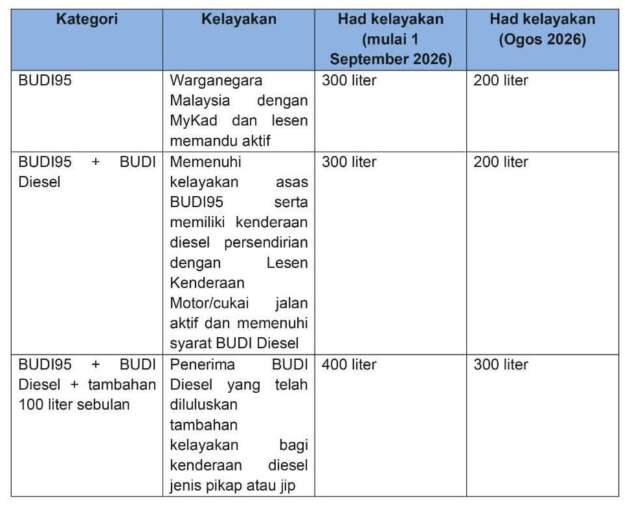
    If you somehow missed it, Budi Madani subsidised fuel quotas have been reinstated to 300 litres from 200 litres, effective today, September 1. It was announced by prime minister and finance minister Datuk Seri Anwar Ibrahim in his Merdeka Eve address, and there’s now a press release and official graphics to go along with it.

    The adjustment will be automatic for recipients of Budi Madani RON95 (Budi95) and Budi Madani Diesel, subject to each individual’s eligibility. The government says that up to 16 million users are enjoying RON95 petrol at the subsidised price of RM1.99 per litre, and from that total, over 700,000 also enjoy subsidised diesel at RM2.10 per litre.

    Over half a million of private diesel pick-up truck and jeep owners can apply for an additional 100 litres of subsidised fuel per month – with this, total monthly quota will be 400 litres. Those who have already been approved will have their quotas automatically adjusted – if you’re in this category but are yet to apply, you can do so at www.budimadani.gov.my.

    Click to enlarge

    “The restoration of monthly eligibility limits take into account more orderly management of supplies, stricter enforcement, the country’s strong economic performance and the government’s ability to afford it. The move also considers the needs of the rakyat who have to travel long distances for daily living and petty traders who depend on their vehicle to make a living,” the statement read.

    “The Madani government will continue to ensure that fuel subsidy will be channeled to Malaysians who are eligible, while strengthening efforts to curb leakage, smuggling and misuse,” it added.

    To recap, Budi95 launched with a 300L monthly quota in September 2025, before the government trimmed it to 200 litres from April this year as a temporary measure, citing the need to optimise subsidy distribution and curb misuse. Budi Diesel kicked off in July. Its base quota is not a separate allocation, but is shared with Budi95, so the increase from 200 to 300 litres applies to both fuels. As mentioned, one can apply for an extra 100L.

    How much fuel do you use a month? In July, PMX said that less than 1% of Budi95 users consistently consumed over 200L a month between October 2025 and May 2026, and on average petrol consumption stood at around 100 litres per month.

    Budi95 and Diesel quota reinstated to 300L from today – extra 100L for pick-up trucks, jeeps; no need to reapply

    Click to enlarge

     
  • 2027 Lexus IS Special Appearance Package debuts in the US – Envious green exterior, 19-inch BBS forged alloys

    2027 Lexus IS Special Appearance Package debuts in the US – Envious green exterior, 19-inch BBS forged alloys

    To celebrate 25 years of the Lexus IS being on sale in the United States, Lexus USA has introduced the new IS Special Appearance Package. This made its debut recently in in Miami, Florida, the final stop of the four-city Lexus IS 25th Legacy Tour that celebrates the brand’s sedan model.

    Since 2022, Lexus has marked each year of the IS being on sale in the US with a new Special Edition or Special Appearance Package. These special versions of the IS are aimed at owners who want something more exclusive, and the latest IS Special Appearance Package delivers on that front.

    Built on the facelifted IS 350 F Sport variant first shown in September last year, it features a striking green exterior colour called Envious and rides on 19-inch black BBS forged alloy wheels. Inside, the cabin sports seats trimmed in black NuLuxe synthetic leather with Ultrasuede inserts, accented by green stitching and satin chrome-finished trim.

    With last year’s IS 500 Ultimate Edition marking the end of the V8 for the IS, all variants of the sedan for the 2027 model year are powered by a 3.5 litre naturally-aspirated petrol V6 engine. There are six IS 350 configurations in total that are divided into three grades, the latter being the F Sport Design, F Sport and new F Sport Special Appearance Package.

    Each grade can be had with an eight-speed automatic transmission and rear-wheel drive, or a six-speed automatic and all-wheel drive. Output figures from the V6 are identical across the board, regardless of drivetrain pairing, at 315 PS (311 hp or 229 kW) and 380 Nm of torque.

    The Special Appearance Package comes with other standard features in addition to those mentioned to set it apart. These include the Handling Package that includes adaptive variable suspension, five drive modes (Eco, Normal, Sport S, Sport S+ and Custom) as well as a Torsen limited-slip rear differential (only for RWD models).

    There’s also the Technology Package with traffic jam assist, lane change assist and front cross-traffic alert, along with a moonroof, Intuitive Parking Assist, a panoramic view monitor, powered rear sunshade, a Mark Levinson audio system and smart access key card. Pricing will be announced later for the 2027 IS line-up in the US.

     
  • Jln Gasing-Templer, NPE contraflow stopped till Sept 4

    Jln Gasing-Templer, NPE contraflow stopped till Sept 4

    PJ folks, take note. MBPJ has announced that the usual weekday contraflow that’s on Jalan Gasing, Jalan Templer and the NPE highway will not operate during the Merdeka Day long weekend and school holidays.

    The contraflow, which helps to increase capacity during rush hours on working days, will not be activated till Friday, which is September 4. It will resume next Monday, September 7.

    There won’t be much impact as traffic in PJ and the Klang Valley is expected to be very light this week as many would’ve took the opportunity to balik kampung or go on holiday. For those who will be in town, enjoy the temporary peace!

     
  • Works minister urges use of AI for road maintenance

    Works minister urges use of AI for road maintenance

    Works minister Datuk Seri Alexander Nanta Linggi has urged industry players to adopt AI and digital technology to improve the efficiency of road maintenance and avoid excessive spending, Bernama reports.

    “We need to be more innovative and resourceful in using digital technology, AI and other tools. This can help us reduce the amount of funding required while improving efficiency in road construction and maintenance,” he said recently.

    Investing to improve road infrastructure is not just physical spending but saves lives, Nanta said, adding that according to the Malaysian Institute of Road Safety Research (MIROS), 18 people die in road accidents in Malaysia every day on average.

    Works minister urges use of AI for road maintenance

    Priority must be given to the quality of road maintenance, as much of the country’s road infrastructure has aged and can no longer cope with today’s heavy traffic, he said.

    The works minister added that the move supports the cabinet committee on road safety and congestion chaired by deputy prime minister Datuk Seri Dr Ahmad Zahid Hamidi, which aims to halve Malaysia’s road deaths by 2030.

    Nanta revealed in May 2025 that Malaysia was one of the countries using AI in road and infrastructure management. “Through smart monitoring technologies like drones, sensors and the internet of things (IoT), we can detect road damage in real time. AI helps us analyse this data to identify locations that need immediate attention and to predict potential future damage,” he said then.

     
  • 2026 Honda WR-V launched in Malaysia – new 10-inch head unit, 360-degree cam, wireless charger; from RM95k

    2026 Honda WR-V launched in Malaysia – new 10-inch head unit, 360-degree cam, wireless charger; from RM95k

    Honda Malaysia today launched the updated Honda WR-V, which receives exterior and interior revisions for the 2026 model year. These are being introduced over three years after the ‘Winsome Runabout Vehicle’ first went on sale here back in July 2023.

    To kick things off, the WR-V is now offered in just three variants, which is one less than four previously. The departing variant is the base S, meaning the E now takes its place as the entry-level offering.

    Pricing for the E is RM94,900 on-the-road without insurance, which is actually RM1,000 less than original amount (RM95,900) the variant launched over three years ago. The V at RM98,900 and top-spec RS at RM104,900 are also down by RM1,000 and RM3,000 from their pre-update, original launch prices, respectively.

    All three variants continue to feature a 1.5 litre naturally-aspirated inline-four petrol engine making 121 PS (119 hp or 89 kW) at 6,600 rpm and 145 Nm of torque at 4,300 rpm. The DOHC i-VTEC mill is mated to a CVT that drives the front wheels, enabling a top speed of 160 km/h. Meanwhile, 0-100 km/h acceleration times range from 11 to 11.2 seconds depending on the variant.

    Visually, the WR-V looks the same as before, with the headlining change on the outside being a new two-tone paint scheme exclusive to the range-topping RS that pairs Blazing Red Pearl with a black roof.

    Customers can also get Blazing Red Pearl without the black roof for all variants of the WR-V, with other options brought back being Platinum White Pearl, Meteoroid Gray Metallic and Stellar Diamond Pearl. It’s worth pointing out that compared to the pre-update model, Blazing Red Pearl replaces Ignite Red Metallic, while Crystal Black Pearl has been dropped from the palette.

    Moving on to kit, the previous RS’ chrome chequered grille has been replaced with an all-black unit as part of the update. All variants also receive 17-inch black alloy wheels (215/55R17 tyres), which means an upgrade for the E that came with 16s before.

    On the inside, the RS gains red ambient lighting, a wireless phone charger as well as a 360-degree camera. For the V and RS, the seats are upholstered in leather, which is different from the pre-update model that had certain areas in fabric. As before, the V’s seats get blue contrast stitching while it is red for the RS.

    Other notable updates involve the dashboard which now sports Dark Steel accents, while the seven-inch Display Audio touchscreen head unit has been upgraded to a larger 10-inch system across all variants, with wireless Android Auto and Apple CarPlay coming as standard.

    The rest of the kit list remains familiar, with the E coming with automatic halogen headlamps, remote engine start, keyless entry and start, a 4.2-inch multi-info instrument cluster display, manual air-conditioning, fabric upholstery, four speakers, four airbags, the usual array of passive safety systems (VSA, ABS, EBD, hill start assist), two reverse sensors and a multi-angle reverse camera.

    The Honda LaneWatch passenger-side blind spot camera also makes a return, as does the Honda Sensing suite that has been offered from the E onwards previously. The list of functions includes forward collision warning with autonomous emergency braking, lane keep assist, lane departure warning, road departure mitigation, adaptive cruise control, auto high beam and lead car departure notification.

    Stepping up to the V adds things like LED exterior lighting, a leather steering wheel instead of urethane in the E, a leather centre console armrest (fabric in the E), single-zone automatic air-conditioning as well as two additional speakers for six total.

    For the RS, the premium paid gets you sequential turn signals at the front, black door handles, paddle shifters, two additional curtain airbags for a total of six and Honda Connect telematics. These are on top of the revisions mentioned earlier. Every WR-V comes with a five-year/unlimited-mileage warranty as well as free labour service for up to five times within 100,000 km or five years.

    As you’d expect, Honda Malaysia also offers a range of Modulo accessories that can be optioned for any variant of the WR-V. The items in the catalogue include under spoilers, door visors, C-pillar decals, rear door sill garnish, boot lip lining protector, a cargo tray, a trunk organiser, front and rear dashcams, body coating, window coating, lock nuts and authorised window tint film.

    “We are confident that the new WR-V will further strengthen our market presence, building on the strong momentum achieved since its Malaysian debut in 2023. The WR-V has received positive market acceptance, with more than 24,000 units on the road to date. We extend our heartfelt gratitude to our customers for their continued trust, and we remain committed to delivering products that elevate their everyday mobility experiences,” said Narushi Yazaki, managing director and CEO of Honda Malaysia.

    GALLERY: 2026 Honda WR-V official images

    GALLERY: 2026 Honda WR-V brochure

     
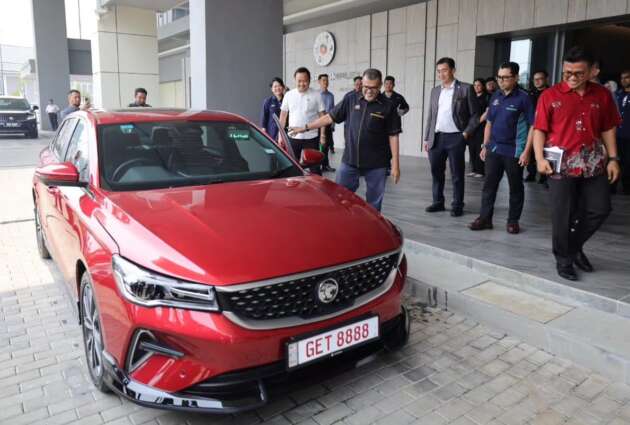
  • Teksi Madani programme expanded to Sarawak – red Proton S70 with ‘GET’ white plates, Flagship X variant

    Teksi Madani programme expanded to Sarawak – red Proton S70 with ‘GET’ white plates, Flagship X variant

    The transport ministry has expanded the Teksi Madani national renewed taxi programme to Sarawak. The programme – launched by prime minister Datuk Seri Anwar Ibrahim in July – features the Proton S70 in red with special ‘GET’ white EV-style plates. GET stands for Gabungan E-hailing dan Teksi.

    The government says that the expansion of Teksi Madani to Sarawak aims to enhance the welfare of drivers and the quality of public transport in the state. Deputy transport minister Datuk Hasbi Habibollah, who officiated the event in Kuching last week, said that taxi drivers are offered four benefits with the programme.

    The chief benefit is the Proton S70, which is described as more modern, safe and efficient. The launch in KL featured the S70 in mid-rung Premium spec, but the car we see here seems to be the range-topping Flagship X with its black bodykit and larger 17-inch wheels.

    Teksi Madani programme expanded to Sarawak – red Proton S70 with ‘GET’ white plates, Flagship X variant

    With Teksi Madani, there’s also a new (and not very distinct) identity for taxis, which does without livery and the traditional ‘topper’ on the roof, but uses the special ‘GET’ number plate and digital taxi meters.

    Hasbi added that the process of periodic inspection of licensed vehicles has also been improved by giving priority to taxis. He said that drivers are provided with more flexible financing options either through hire purchase schemes or leasing packages, according to their capabilities.

    Hasbi revealed that currently, there are 446 taxi drivers, 7,326 e-hailing drivers and 170 rental car drivers registered under Sarawak’s commercial vehicle licensing board (LPKP). The programme is a strategic cooperation between LPKP Sarawak, Perkeso, Grab and Proton. Click the links to read more on the scheme, the car and the number plate.

    GALLERY: Teksi Madani launch in KL, July 2026

     
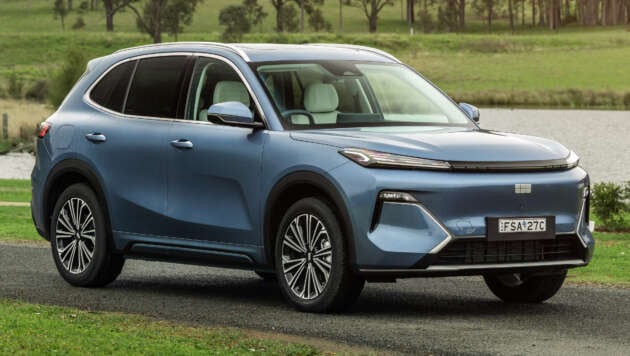
  • Geely Starray EM-i AWD – 299 PS, 412 Nm, 130 km WLTP EV, 1,065 km total, coming to Proton eMas 7 PHEV too?

    Geely Starray EM-i AWD – 299 PS, 412 Nm, 130 km WLTP EV, 1,065 km total, coming to Proton eMas 7 PHEV too?

    Geely has announced that the Starray EM-i – known to you and me as the Proton eMas 7 PHEV – will receive a range-topping all-wheel-drive variant starting in Australia, with the first units landing in showrooms Down Under in mid-September. This new version adds an electric motor at the rear axle to offer a bit more power and traction.

    How much more power? Try 109 PS and 150 Nm, which is what the rear motor brings to the table. Combine this with the 218 PS/262 Nm front motor, the 99 PS/125 Nm 1.5 litre BHE15-BFN naturally-aspirated four-cylinder engine and the single-speed, 11-in-1 dedicated hybrid transmission (DHT), however, and the total is literally less than the sum of its parts.

    In fact, the Inspire AWD trim, as it’s called, makes 299 PS and 412 Nm which, while certainly hefty, is only 37 PS more than the front-wheel-drive model. Still, that’s enough to get the car from zero to 100 km/h nearly two whole seconds quicker, in 6.3 seconds.

    Utilising the largest available 29.8 kWh Aegis short blade LFP battery, the Inspire AWD trim naturally offers slightly less electric range compared to the regular Inspire – 130 km instead of 136 km on the WLTP cycle. But it counters with a significantly larger 60 litre fuel tank (versus 51 litres for the FWD models), so its total range is quite a bit further at 1,065 km (versus 996 km for the Inspire).

    Geely Starray EM-i AWD – 299 PS, 412 Nm, 130 km WLTP EV, 1,065 km total, coming to Proton eMas 7 PHEV too?

    Combined fuel consumption is of course slightly higher at 1.7 litres per 100 km, compared to 1.6 litres per 100 km for the Inspire and 2.5 litres per 100 km for the base Complete with the smaller 18.4 kWh CATL battery. Australian models with the bigger pack can accept slightly higher DC fast charging power than the eMas 7 PHEV at 78 kW (60 kW for the Proton), although AC charging remains capped at 6.6 kW.

    Beyond the mechanicals, the Inspire AWD gains new Snow and Off-road drive modes, adding to the usual Pure, Hybrid and Power settings. The rear suspension has also been redesigned to fit the new motor with a five-link design versus the FWD’s four links, claimed to improve ride comfort, handling and stability.

    The list of equipment is otherwise identical to the standard Inspire, with highlights that include 19-inch multi-spoke alloy wheels, a 10.2-inch instrument display, a 15.4-inch infotainment touchscreen, a head-up display, a panoramic sunroof, powered, heated, ventilated and massaging front seats, 256-colour ambient lighting, a 16-speaker Flyme Audio sound system, a 360-degree camera setup, a full complement of driver assists and a powered tailgate.

    In Australia, the Inspire AWD is priced at AU$44,990 (RM130,200), versus AU$41,490 (RM120,100) for the Inspire. Could we see the all-paw version being offered on the eMas 7 PHEV? It’s certainly possible, although Malaysians aren’t exactly big buyers of AWD SUVs (they would always like more power, however), and the addition of a rear motor would likely push the price beyond RM130,000. Still, would you like to see it here?

    paultan.org
    Proton eMas 7 PHEV Premium Plus vs Geely Starray EM-i Inspire AWD
    Specification Proton eMas 7 PHEV Premium Plus Geely Starray EM-i Inspire AWD
    Drivetrain FWD AWD
    Engine 1.5L NA four-cylinder, 99 PS/125 Nm 1.5L NA four-cylinder, 99 PS/125 Nm
    Front motor 218 PS (160 kW)/262 Nm 218 PS (160 kW)/262 Nm
    Rear motor 109 PS (80 kW)/150 Nm
    System output 262 PS (193 kW)/262 Nm 299 PS (220 kW)/412 Nm
    0-100 km/h 8.2 seconds 6.3 seconds
    Battery 29.8 kWh LFP 29.8 kWh LFP
    EV range (WLTP) 146 km 130 km
    Fuel tank 51 litres 60 litres
    Combined range (WLTP) 996 km 1,065 km
    DC charging 60 kW, 30-80% in 16 min 60 kW, 30-80% in 16 min
    Rear suspension Multi-link (four-link) Five-link
    Drive modes Pure, Hybrid, Power Pure, Hybrid, Power, Snow, Off-Road

    GALLERY: Proton eMas 7 PHEV Premium Plus CKD

     
  • Honda and Nissan enter joint development agreement for ECUs used in next-gen SDVs starting from FY2029

    Honda and Nissan enter joint development agreement for ECUs used in next-gen SDVs starting from FY2029

    Honda and Nissan have announced a joint development agreement to standardise multiple electronic control units (ECUs) that will feature in next-generation software-defined vehicles (SDVs). Both parties will also work together on the in-vehicle operating system, key parts of the middleware and vehicle control software that run on these ECUs.

    The jointly-developed ECUs and software will be part of the electrical/electronic (E/E) architecture that is planned for application in future SDVs from both Japanese automakers beginning from fiscal year 2029 onward.

    This agreement is part of an ongoing strategic partnership between both parties, which will continue to explore opportunities for collaboration across a range of areas to accelerate progress toward carbon neutrality and help realize a future with zero traffic fatalities involving their vehicles. This partnership has been in place prior to the termination of the memorandum of understanding (MoU) to explore the possibility of a merger in February last year.

    “In particular, the software domain centered on SDVs, which is key to vehicle intelligence and electrification, has been identified as an important area of collaboration, given the rapid pace of technological innovation and the need to strengthen competitiveness through improved R&D speed and investment efficiency,” read the joint press release.


Sell your car for a higher price, get paid in 24 hours

Latest Fuel Prices

PETROL
BUDI 95 RM1.99
RON 95 RM3.82 (+0.05)
RON 97 RM4.30 (+0.05)
RON 100 RM6.35
VPR RM6.98
DIESEL
BUDI RM2.10
EURO 5 B10 RM4.72 (+0.05)
EURO 5 B7 RM4.92 (+0.05)
Last Updated Aug 27, 2026
Fuel price history →

Tools


Related PaulTan.org Content: Malaysia: Malaysia | Featured: Featured | Electric: Electric | Reviews: Reviews | Motorsports | News: News